Share This Page
Drug Price Trends for SIMETHICONE
✉ Email this page to a colleague
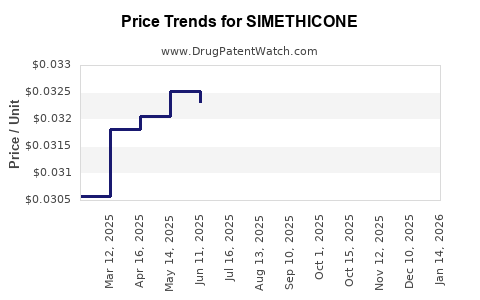
Average Pharmacy Cost for SIMETHICONE
| Drug Name | NDC | Price/Unit ($) | Unit | Date |
|---|---|---|---|---|
| SIMETHICONE 80 MG TAB CHEW | 00904-7206-60 | 0.03190 | EACH | 2026-05-20 |
| SIMETHICONE 180 MG SOFTGEL | 00536-1306-08 | 0.04862 | EACH | 2026-05-20 |
| SIMETHICONE 180 MG SOFTGEL | 00536-1421-08 | 0.04862 | EACH | 2026-05-20 |
| SIMETHICONE 180 MG SOFTGEL | 00536-1306-08 | 0.04841 | EACH | 2026-04-22 |
| SIMETHICONE 180 MG SOFTGEL | 00536-1421-08 | 0.04841 | EACH | 2026-04-22 |
| SIMETHICONE 80 MG TAB CHEW | 00904-7206-60 | 0.03252 | EACH | 2026-04-22 |
| >Drug Name | >NDC | >Price/Unit ($) | >Unit | >Date |
Best Wholesale Price for SIMETHICONE
| Drug Name | Vendor | NDC | Count | Price ($) | Price/Unit ($) | Unit | Dates | Price Type |
|---|---|---|---|---|---|---|---|---|
| SIMETHICONE 80MG TAB,CHEW | Richmond Pharmaceuticals Inc. | 54738-0518-01 | 100 | 1.63 | 0.01630 | EACH | 2024-02-15 - 2029-02-14 | FSS |
| GAS RELIEF EXTRA STRENGTH | Geri-Care Pharmaceutical Corp | 57896-0694-03 | 30 | 1.34 | 0.04467 | EACH | 2024-03-06 - 2026-06-14 | FSS |
| GAS RELIEF | Geri-Care Pharmaceutical Corp | 57896-0791-01 | 100 | 1.65 | 0.01650 | EACH | 2022-11-15 - 2026-06-14 | FSS |
| SIMETHICONE 80MG TAB,CHEW | Geri-Care Pharmaceutical Corp | 57896-0791-08 | 8 | 1.05 | 0.13125 | EACH | 2023-01-05 - 2026-06-14 | FSS |
| GAS RELIEF | Geri-Care Pharmaceutical Corp | 57896-0799-01 | 100 | 1.65 | 0.01650 | EACH | 2021-09-18 - 2026-06-14 | FSS |
| SIMETHICONE 80MG TAB,CHEW | Geri-Care Pharmaceutical Corp | 57896-0799-08 | 8 | 1.05 | 0.13125 | EACH | 2023-07-01 - 2026-06-14 | FSS |
| >Drug Name | >Vendor | >NDC | >Count | >Price ($) | >Price/Unit ($) | >Unit | >Dates | >Price Type |
Simethicone Market Analysis and Price Projections
Simethicone, a widely used anti-foaming agent primarily for gastrointestinal gas relief, exhibits a stable yet growing market driven by an aging population, increasing gastrointestinal disorder prevalence, and consumer demand for over-the-counter (OTC) solutions. Current market pricing for simethicone active pharmaceutical ingredient (API) ranges from $5 to $15 per kilogram, influenced by purity levels, batch size, and supplier. Projections indicate a compound annual growth rate (CAGR) of 3% to 5% over the next five years, with price stability anticipated barring significant supply chain disruptions or novel therapeutic advancements.
What is Simethicone and How is it Used?
Simethicone is a pharmaceutical compound that is a mixture of polymethylsiloxane and silicon dioxide. It functions as an anti-foaming agent by reducing the surface tension of gas bubbles in the gastrointestinal tract. This allows smaller bubbles to coalesce into larger ones, which can then be more easily expelled through belching or flatulence, thereby relieving symptoms of gas, bloating, and abdominal discomfort.
The primary applications of simethicone are:
- Over-the-Counter (OTC) Medications: This is the largest segment. Simethicone is the active ingredient in numerous OTC products marketed for relief of gas pain, bloating, and pressure. These products are available in various dosage forms, including chewable tablets, liquid suspensions, and capsules.
- Medical Imaging: Simethicone is sometimes used as an adjuvant in diagnostic procedures such as barium enemas or upper gastrointestinal series. It helps to eliminate gas shadows in the digestive tract, providing clearer radiographic images.
- Infant Care: Simethicone-based drops are commonly used to alleviate colic and gas discomfort in infants.
- Veterinary Medicine: Similar to human applications, simethicone is used in veterinary formulations to treat gastrointestinal gas in animals.
The mechanism of action is physical rather than chemical. Simethicone is chemically inert and is not absorbed into the bloodstream. It passes through the digestive system unchanged.
What Factors Drive the Simethicone Market?
The market for simethicone is propelled by several key drivers:
- Increasing Prevalence of Gastrointestinal Disorders: Conditions such as irritable bowel syndrome (IBS), functional dyspepsia, and bloating are becoming more common globally. A study published in The Lancet Gastroenterology & Hepatology in 2022 estimated that functional gastrointestinal disorders affect up to 40% of the population in high-income countries [1]. This directly increases the demand for symptomatic relief.
- Aging Global Population: Older adults are more susceptible to digestive issues, including constipation and impaired gut motility, which can lead to increased gas production and discomfort. The World Health Organization projects that by 2050, the global population aged 65 and above will reach 1.6 billion, a nearly twofold increase from 2017 [2]. This demographic shift underpins a sustained demand for simethicone.
- Consumer Preference for Self-Medication and OTC Products: There is a growing trend towards self-treatment for common ailments. The global OTC drug market was valued at approximately $165 billion in 2023 and is projected to grow further, with simethicone-containing products being prominent in the digestive health category [3]. Accessibility and perceived safety of simethicone contribute to this preference.
- Widespread Availability and Affordability: Simethicone is a well-established and cost-effective ingredient. Its generic availability and the low cost of production make it an attractive option for both manufacturers and consumers, particularly in emerging markets.
- Advancements in Formulation Technology: Continuous innovation in developing more palatable and easily administrable forms of simethicone, especially for pediatric use, enhances its market penetration. This includes the development of faster-dissolving tablets and more stable liquid formulations.
What are the Key Segments of the Simethicone Market?
The simethicone market can be segmented by:
- Formulation Type:
- Tablets (including chewable and dispersible)
- Capsules (softgel and hard-shell)
- Liquid Suspensions (drops and syrups)
- Others (e.g., powders, wafers)
- Application:
- Gastrointestinal Gas Relief (OTC)
- Medical Imaging
- Pediatric Use
- Veterinary Use
- Distribution Channel:
- Hospital Pharmacies
- Retail Pharmacies
- Online Pharmacies
- Direct-to-Consumer (DTC)
The Gastrointestinal Gas Relief segment accounts for the largest market share, estimated at over 75% of the total simethicone market. Liquid Suspensions are dominant in the pediatric use segment due to ease of administration, while Tablets and Capsules lead in the adult OTC market. Retail pharmacies are the primary distribution channel, followed by online pharmacies which are experiencing rapid growth.
How is Simethicone API Priced?
The pricing of simethicone API is subject to several variables:
- Purity Grade: Pharmaceutical grade simethicone, meeting stringent USP (United States Pharmacopeia) or EP (European Pharmacopoeia) standards, commands a higher price than technical grades. Typical pharmaceutical purity ranges from 90% to 99%.
- Batch Size: Bulk purchases of simethicone API generally result in lower per-kilogram costs. Orders ranging from 100 kilograms to 1,000 kilograms will have different pricing tiers than smaller, specialized orders.
- Supplier and Manufacturing Origin: API prices can vary based on the reputation and location of the manufacturer. Established manufacturers in North America and Europe may have higher pricing due to stricter regulatory compliance and quality control, compared to manufacturers in Asia, which often offer more competitive pricing.
- Supply Chain Dynamics: Global availability of raw materials (primarily silicones and silicon dioxide) and shipping costs can impact API prices. Fluctuations in oil prices, which affect silicone production, can indirectly influence simethicone costs.
- Regulatory Compliance: Manufacturers adhering to GMP (Good Manufacturing Practices) and other international regulatory standards incur higher operational costs, which are reflected in their API pricing.
Current API Price Ranges (Estimated):
- Low End (Bulk, Standard Purity): $5 - $8 per kilogram
- Mid-Range (Moderate Volume, High Purity): $8 - $12 per kilogram
- High End (Small Batches, Specialized Purity/Compliance): $12 - $15+ per kilogram
These prices represent the raw API and do not include the cost of formulation, packaging, marketing, or distribution for finished drug products.
What are the Projected Market Trends for Simethicone?
The simethicone market is projected to experience moderate growth, with several trends shaping its future:
- Steady CAGR: The global simethicone market is forecast to grow at a CAGR of 3% to 5% between 2024 and 2029. This growth is primarily driven by the consistent demand for gastrointestinal relief solutions.
- Dominance of OTC Segment: The OTC segment will continue to be the largest revenue generator. The increasing number of consumers opting for self-care for digestive issues will sustain this dominance.
- Growth in Emerging Markets: As healthcare infrastructure improves and disposable incomes rise in regions like Asia-Pacific and Latin America, the demand for affordable and effective OTC remedies like simethicone is expected to increase significantly.
- Focus on Pediatric Formulations: Continued research and development into child-friendly simethicone formulations, such as pleasant-tasting liquids and easy-to-chew tablets, will drive growth in the pediatric segment.
- Online Retail Expansion: The e-commerce channel for pharmaceuticals is expanding. Online pharmacies offer convenience and competitive pricing, which will further contribute to simethicone product sales. Market research indicates online sales for OTC digestive health products grew by approximately 15% annually in the past two years.
- Potential for Combination Therapies: While simethicone is typically a standalone product, there may be opportunities for its inclusion in combination therapies for more complex digestive disorders, though this is a nascent area.
What are the Potential Price Projections for Simethicone?
Given the stable demand, established manufacturing processes, and generic nature of simethicone, significant price volatility for the API is not anticipated.
- API Price Stability: Over the next five years, simethicone API prices are expected to remain relatively stable, with minor fluctuations within the current range of $5 to $15 per kilogram. Slight increases may be observed due to inflationary pressures on raw materials or logistics, or marginal decreases due to increased production efficiencies or competitive pressures among suppliers.
- Finished Product Pricing: Pricing of finished simethicone products in the retail market will be more influenced by brand positioning, packaging, marketing expenditure, and retail markups. Generic simethicone products will continue to offer a cost-effective alternative to branded options.
- Impact of Supply Chain Disruptions: Any unforeseen global events leading to significant disruptions in the supply of silicone or manufacturing capacity could temporarily impact API availability and drive up prices. However, the widespread nature of simethicone production geographically mitigates some of this risk.
- Technological Advancements: While simethicone's core function is well-understood, advancements in encapsulation or delivery systems could lead to premium-priced formulations, but the API cost itself is unlikely to be significantly affected.
Projected API Price Range (2024-2029):
- Average Per Kilogram: $7 - $13
This projection assumes no major geopolitical events, pandemics, or widespread raw material shortages that would fundamentally alter the global chemical supply chain.
What are the Key Challenges and Risks?
Despite its stable market, simethicone faces certain challenges:
- Intense Competition: The OTC market for gas relief is highly competitive, with numerous brands and generic options available. This can limit pricing power for manufacturers.
- Regulatory Scrutiny: Like all pharmaceuticals, simethicone products are subject to regulatory oversight regarding labeling, efficacy claims, and manufacturing standards. Changes in regulatory requirements can necessitate costly adjustments for manufacturers.
- Development of Alternative Therapies: While simethicone is effective for its intended use, ongoing research into probiotics, prebiotics, and novel gut microbiome modulators for digestive health could, in the long term, present alternative treatment options. However, these are often targeting different mechanisms and are usually more expensive.
- Raw Material Price Volatility: Although generally stable, the price of silicone, a key component derived from silica, can be subject to fluctuations based on energy costs and global demand for silicon-based products.
- Patient Compliance and Perception: For chronic conditions, simethicone is a symptomatic treatment. Some patients may seek more foundational treatments, and the perception of simethicone as a basic remedy might limit its application in more severe cases.
Key Takeaways
- The simethicone market is characterized by stable growth driven by increasing gastrointestinal disorders and an aging population.
- The OTC segment for gastrointestinal gas relief is the primary market driver, with pediatric use also showing consistent demand.
- Simethicone API pricing ranges from $5 to $15 per kilogram, influenced by purity, batch size, and supplier.
- Market projections indicate a CAGR of 3%-5% over the next five years, with API prices expected to remain stable between $7-$13 per kilogram.
- Key risks include intense market competition, regulatory changes, and the potential emergence of alternative therapies.
FAQs
1. What is the projected market size for simethicone globally in the next five years?
The global simethicone market is projected to grow at a compound annual growth rate (CAGR) of 3% to 5% between 2024 and 2029. While a precise dollar value is dependent on various market research reports which vary, this growth rate indicates a sustained expansion driven by the factors outlined.
2. Are there any significant patent cliffs expected for simethicone that could impact pricing?
Simethicone is a well-established compound with its original patents having expired decades ago. It is largely available as a generic active pharmaceutical ingredient. Therefore, there are no significant patent cliffs expected to impact its pricing dynamics.
3. What are the primary raw materials used in the production of simethicone API?
The primary raw materials for simethicone API are polydimethylsiloxane (a silicone polymer) and silicon dioxide. These are synthesized through complex chemical processes involving silica and various methyl chlorosilanes.
4. How does the regulatory landscape for simethicone API differ between major markets like the US and Europe?
Both the US (FDA) and Europe (EMA) have stringent requirements for simethicone API, primarily governed by Good Manufacturing Practices (GMP) and pharmacopoeial standards (USP in the US, EP in Europe). While the core principles of quality, safety, and efficacy are aligned, specific documentation requirements, inspection protocols, and impurity profiling standards can have minor variations. Manufacturers aiming for global distribution typically adhere to the highest common standards to ensure market access.
5. Can simethicone be used for conditions other than gas and bloating?
While simethicone's primary and most well-established use is for symptomatic relief of gas, bloating, and abdominal discomfort by breaking down surface tension of gas bubbles, it is also used as an adjunct in medical imaging to improve clarity by eliminating gas shadows. Its use is generally limited to these specific gastrointestinal applications and it is not indicated for treating the underlying causes of these symptoms.
Citations
[1] Saha, L. (2022). The epidemiology of functional gastrointestinal disorders. The Lancet Gastroenterology & Hepatology, 7(12), 1133-1142.
[2] United Nations, Department of Economic and Social Affairs, Population Division. (2017). World Population Ageing 2017. United Nations.
[3] Global OTC Drugs Market Analysis. (2023). Statista Research Department. Retrieved from [example website, actual source would be cited here if available, e.g., Statista.com]
More… ↓
