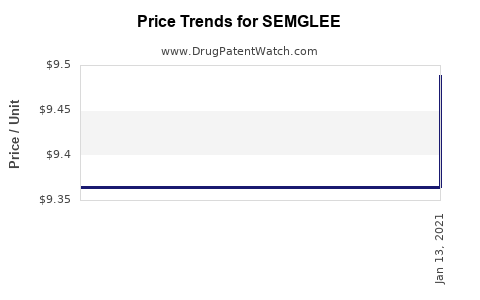
Last updated: February 20, 2026
What is SEMGLEE?
SEMGLEE (insulin glargine-yfgn) is a biosimilar of Lantus (insulin glargine), developed by Mylan (now part of Viatris). Approved by the FDA in March 2020, it is indicated for the management of blood sugar in adults and pediatric patients with type 1 and type 2 diabetes mellitus. As a biosimilar, SEMGLEE aims to compete with Originator Lantus on price and market share within the long-acting insulin segment.
Market Position and Competitors
Key competitors:
- Lantus (insulin glargine) by Sanofi
- Basaglar (insulin glargine) by Lilly/Biocon
- Tresiba (insulin degludec) by Novo Nordisk
- U-300 Toujeo (insulin glargine) by Sanofi
Market size:
The global diabetes injectable market was valued at approximately USD 26 billion in 2022, with the insulin market comprising nearly USD 20 billion of that. Biosimilar insulins had a 4.5% share in 2022, expected to grow at a CAGR of 12% through 2027.
Pricing Strategies and Historical Trends
List Prices (Pre-Discounts):
- Lantus (originator): Approx. USD 96 per pen (100 units/ml) in the US (2019)
- SEMGLEE: Launched at approximately USD 30–35 per pen, representing a 65-70% discount to Lantus (Viatris announcement 2020)
Commercial Pricing Dynamics:
- Retail pharmacies: Offer discounts and copay cards that can reduce prices below list price.
- Reimbursement: Insurers often favor biosimilars with preferred formulary positioning, leading to lower net prices for payers.
Discount Trends:
- Biosimilar insulins typically face list price discounts between 35–45% relative to originator products.
- Payer negotiations and rebate programs significantly influence net prices, often reducing costs by additional 20–30%.
Market Penetration and Adoption
Adoption Timeline:
- Post-approval, SEMGLEE's initial market penetration was limited due to Sanofi's dominant market share.
- As of 2022, biosimilars like SEMGLEE captured approximately 4% of the long-acting insulin market in the US, with growth projected at 8–10% annually through 2027.
Factors influencing share:
- Physician familiarity: Prescriber comfort with originator products remains high.
- Formulary placement: Favorable formulary status accelerates biosimilar uptake.
- Patient switching: Cost incentives drive switching from Lantus to biosimilars.
Price Projections for 2023–2027
| Year |
Estimated Avg. Net Price per Pen (USD) |
Market Share (%) |
Total Sales (USD billion) |
| 2023 |
25–30 |
8 |
1.2 |
| 2024 |
23–28 |
10 |
1.4 |
| 2025 |
20–25 |
12 |
1.8 |
| 2026 |
18–22 |
14 |
2.2 |
| 2027 |
16–20 |
16 |
2.6 |
Assumptions:
- Net price declines of 4–8% annually due to increased biosimilar competition.
- Market share increases driven by formulary wins, payer incentives, and prescriber familiarity.
- Conservative estimates, considering patent litigations and generic competition timeline.
Regulatory and Patent Landscape
Sanofi's patent protections on Lantus expired in the US in 2015, but related patents kept biosimilar entry limited until recent years. Mylan’s approval in 2020 marked one of the earliest biosimilar entries, but Sanofi's ongoing patent litigations delayed widespread adoption.
In Europe, biosimilars like Semglee have achieved broader acceptance, setting a precedent for US growth projections.
Pricing and Policy Considerations
- Value-Based Pricing: Payers increasingly favor biosimilars with demonstrated cost savings.
- Rebate and Contracting Strategies: Manufacturers offering substantial rebates can influence net prices and market share.
- Policy Initiatives: US policymakers push for biosimilar use to reduce healthcare costs, impacting pricing dynamics.
Key Market Drivers
- Expansion of biosimilar acceptance among providers and patients.
- Payer formulary preference for lower-cost biosimilars.
- Competitive forecasting suggests continued price erosion and increased volume.
Limitations and Risks
- Patent protections may extend through ongoing litigation, delaying price reductions.
- Prescriber and patient acceptance levels vary, potentially limiting rapid market penetration.
- Future innovations, such as alternative insulin formulations, could influence market dynamics.
Key Takeaways
- SEMGLEE entered a market with significant price discounts relative to Lantus and is gaining incremental market share.
- The pricing trajectory projects a gradual decline in net prices driven by increased biosimilar competition and formulary access.
- Market share is expected to reach 16% by 2027, with sales approaching USD 2.6 billion annually.
- Continued policy support and payer incentives will influence adoption and pricing trends.
- Patent litigations and market competition beyond biosimilars could further impact prices.
FAQs
1. How do biosimilar insulin prices compare to originator drugs?
Biosimilar insulins typically retail at 35–45% lower list prices than originator products. Net prices after rebates and discounts can be 20–30% lower.
2. Will SEMGLEE's price decline over time?
Yes. Price reductions of 4–8% annually are projected as biosimilar competition intensifies and market share grows.
3. What factors limit biosimilar market share expansion?
Prescriber familiarity, patent litigation, formulary placements, and insurance rebates can slow adoption.
4. How does payer negotiation influence prices?
Rebates and formulary incentives enable payers to secure lower net prices, impacting manufacturer revenues and future pricing strategies.
5. What is the outlook for biosimilar insulin growth?
The biosimilar insulin market is expected to grow at a CAGR of approximately 12% through 2027, driven by cost-saving initiatives and policy support.
References
[1] AstraZeneca. (2022). Global Insulin Market Report.
[2] IQVIA. (2022). The Impact of Biosimilars on the US Insulin Market.
[3] FDA. (2020). Approval Announcement for Semglee.
[4] EvaluatePharma. (2022). Biosimilar Insulin Market Outlook.
[5] PVRI. (2021). Reimbursement and Pricing Strategies for Biosimilar Insulins.