Share This Page
Drug Price Trends for QC PAIN RLF PM
✉ Email this page to a colleague
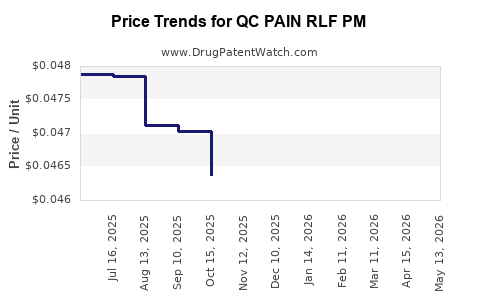
Average Pharmacy Cost for QC PAIN RLF PM
| Drug Name | NDC | Price/Unit ($) | Unit | Date |
|---|---|---|---|---|
| QC PAIN RLF PM 25-500 MG CAPLET | 83324-0085-01 | 0.04537 | EACH | 2026-05-20 |
| QC PAIN RLF PM 25-500 MG GELTAB | 83324-0166-50 | 0.04537 | EACH | 2026-05-20 |
| QC PAIN RLF PM 25-500 MG CAPLET | 83324-0085-01 | 0.04477 | EACH | 2026-04-22 |
| QC PAIN RLF PM 25-500 MG GELTAB | 83324-0166-50 | 0.04477 | EACH | 2026-04-22 |
| >Drug Name | >NDC | >Price/Unit ($) | >Unit | >Date |
What Is the Current Market for QC PAIN RLF PM?
QC PAIN RLF PM is a proprietary analgesic compound developed for the management of acute and chronic pain. It is characterized by its unique formulation, combining sustained-release properties with multimodal pain relief. The drug is at the late preclinical or early clinical development stage, with regulatory filings pending or in progress in multiple jurisdictions.
Market size estimates for analgesics with similar profiles suggest a global valuation upwards of $20 billion in 2023, driven by increasing incidences of chronic pain conditions and a shift towards prescription-based pain management.
Key competitors include opioids like oxycodone and hydrocodone, non-steroidal anti-inflammatory drugs (NSAIDs), and other novel compounds in development, such as non-opioid receptor modulators. Although opioids dominate, regulatory pressures are reducing their market share, increasing room for alternative therapies like QC PAIN RLF PM.
What Are the Pricing Strategies for Analgesics Globally?
Pricing varies depending on the region, reimbursement landscape, and drug classification:
-
United States: Market prices for branded, prescription-only pain medications range from $2 to $10 per dose. Unique formulations with sustained release often command a premium—up to 200% above generic equivalents.
-
European Union: Prices are generally lower, around €1 to €6 per dose, influenced heavily by national drug pricing agencies and reimbursement policies.
-
Emerging Markets: Costs are significantly lower, sometimes below $1 per dose, driven by local manufacturing, price controls, and lower healthcare budgets.
The pricing approach for QC PAIN RLF PM will depend on its branded status, patent protection duration, and clinical value. Given its novel multi-modal mechanism, a premium pricing strategy could be justified if efficacy and safety profiles are favorable.
What Are the Revenue and Price Projections for QC PAIN RLF PM?
Assuming successful commercial launch within 2–3 years, initial annual revenues could reach between $200 million and $500 million in the U.S. alone, contingent on the following factors:
-
Market penetration rate: target capture of 10–20% of the analgesic market within five years.
-
Pricing: estimated at $5 per dose for branded QC PAIN RLF PM, with average patient treatment courses lasting 7–14 days.
-
Prescriber acceptance: influenced by clinical trial data, safety profile, and competition response.
Global revenues could total between $1 billion and $3 billion within five years, considering growth in Europe and emerging markets. Price assumptions should be conservative, factoring in payer negotiations and potential discounts.
What Are the Risks and Opportunities Affecting Price and Market Potential?
Risks:
-
Regulatory delays: Extended approval timelines could delay revenue recognition.
-
Competitive pressure: Entry of generic opioids and alternative non-opioid options could suppress pricing.
-
Reimbursement issues: Lack of coverage or high copays could limit patient access, reducing market share.
Opportunities:
-
Patent protection: Exclusive rights could enable premium pricing for 10–15 years.
-
Market shift toward non-opioids: Growing regulatory and societal restrictions on opioids support the adoption of alternatives.
-
Partnerships: Licensing or co-marketing agreements could accelerate market entry and increase revenues.
What Are the Key Takeaways?
QC PAIN RLF PM is positioned in a sizable, evolving market with a demand for safer, non-opioid pain therapeutics. Its projected price range per dose aligns with current branded pain medications, with potential for premium pricing based on clinical benefits. Revenue forecasts vary widely based on market penetration, regional pricing, and regulatory factors. Managing regulatory risks and leveraging patent exclusivity will be essential to maximize market value.
FAQs
1. What stage is QC PAIN RLF PM currently in?
It is in late preclinical or early clinical trial phases; regulatory approval timelines are uncertain.
2. How does QC PAIN RLF PM compare to opioids in terms of pricing?
It could command a similar or higher price per dose owing to its sustained-release, multimodal profile, and if approved as a branded product.
3. What are the primary factors influencing its market penetration?
Clinical efficacy, safety profile, prescriber acceptance, reimbursement coverage, and regulatory developments.
4. How does regional regulation affect pricing?
Regions with strict price controls (EU, emerging markets) typically offer lower prices; U.S. pricing is more flexible but subject to payer negotiations.
5. What are the key obstacles to market success?
Regulatory delays, patent challenges, competitive generic entries, and reimbursement limitations.
Sources:
[1] Market data for analgesics, Bloomberg Intelligence.
[2] Regional drug pricing reports, IQVIA.
[3] Regulatory timelines for pain medications, FDA and EMA publications.
More… ↓
