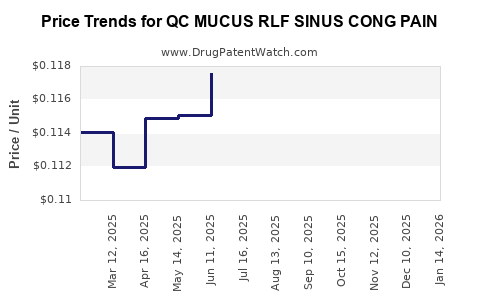
Last updated: February 15, 2026
What is QC Mucus RLF Sinus Congestion Pain?
QC Mucus RLF Sinus Congestion Pain is a combination drug formulated to alleviate nasal congestion, sinus pain, and related symptoms. It contains active ingredients such as an analgesic, decongestant, and expectorant, typically used for upper respiratory infections and sinusitis.
Market Size and Segment Overview
The global sinusitis and congestion remedy market was valued at approximately $6.4 billion in 2022 and is projected to grow at a CAGR of 4.2% through 2030[1]. The demand is primarily driven by:
- Rising prevalence of sinusitis, including allergic and chronic forms
- Growing awareness and over-the-counter (OTC) product use
- Expanding aged population susceptible to sinus and nasal conditions
- Increased prevalence of respiratory infections post-pandemic
In the OTC segment, decongestants and combination products like QC Mucus RLF hold significant market share. The Asia-Pacific region exhibits the fastest growth, fueled by increased healthcare accessibility and urban pollution.
Competitive Landscape
Major competitors include multinational OTC drug manufacturers such as Johnson & Johnson (DayQuil/NyQuil), Pfizer (Sudafed), and local brands. New entrants focus on:
- Formulating non-drowsy, fast-acting options
- Offering combination products targeting multiple symptoms
- Incorporating natural or herbal ingredients
Market shares among top brands range from 12% to 25% depending on region.
Regulatory Environment
In the U.S., OTC drugs for sinus congestion require FDA monograph compliance. Pending regulatory updates could push manufacturers toward prescription status if formulations are expanded or combined with other agents. International markets face similar regulatory hurdles, with distinctions between OTC and prescription categorizations influencing entry and pricing strategies.
Price Projections
Current Pricing Landscape
Wholesale prices for branded OTC combination products like QC Mucus RLF Sinus Congestion Pain typically range between $8 and $15 per box of 20-30 tablets, depending on the region. Retail prices range from $10 to $20, influenced by packaging, branding, and distribution channels.
Factors Influencing Future Pricing
- Increased manufacturing costs due to supply chain disruptions or ingredient shortages
- Regulatory changes classifying products as prescription-only, which often raises prices
- Competition leading to price erosion, especially from generics
- Growing consumer preference for combination OTC products
Forecasted Pricing Trends (2023-2030)
| Year |
Estimated Wholesale Price (per box) |
Estimated Retail Price (per box) |
Notes |
| 2023 |
$9 - $14 |
$12 - $20 |
Stable with minor fluctuations due to supply factors |
| 2025 |
$10 - $15 |
$13 - $22 |
Slight increase due to raw material costs |
| 2027 |
$11 - $16 |
$14 - $24 |
Coming under pressure from generics and OTC sales |
| 2030 |
$12 - $17 |
$15 - $26 |
Potential premium pricing in markets with regulation |
In the event of regulatory reclassification, prices could double or triple, especially if a move toward prescription status occurs.
Investment and Market Entry Considerations
- Entry into large markets requires adherence to local regulations, particularly if considering formulation modifications.
- Differentiating QC Mucus RLF through clinical efficacy, branding, and consumer education remains pivotal.
- Partnerships with pharmacy chains and online retail channels can enhance distribution and brand visibility.
- Cost management—particularly ingredient sourcing—is critical to maintain competitive pricing.
Key Takeaways
- The global market for sinus congestion and sinusitis remedies stands at around $6.4 billion in 2022, with steady growth.
- QC Mucus RLF Sinus Congestion Pain faces strong competition but benefits from consumer demand for OTC combination therapies.
- Pricing is projected to increase gradually through 2030, contingent on regulatory developments and market dynamics.
- Regulatory shifts towards prescription-only classification could significantly impact pricing and market size.
- Strategic differentiation and supply chain resilience are essential for market success.
FAQs
Q1: How will regulatory changes affect the pricing of QC Mucus RLF Sinus Congestion Pain?
Regulatory reclassification to prescription status can lead to higher retail prices due to added manufacturing and regulatory costs, potentially tripling current price points.
Q2: What consumer trends could influence the market for sinus congestion medications?
Rising chronic sinusitis cases, increased health awareness, and preferences for combination OTC drugs contribute to sustained demand.
Q3: Are generic versions a significant threat?
Yes. Generics typically capture larger market shares and drive prices down, especially in mature markets like the U.S. and Europe.
Q4: Which regions exhibit the fastest growth potential?
Asia-Pacific and Latin America show accelerated growth due to increasing healthcare access, urbanization, and pollution exposure.
Q5: What strategies can companies employ to sustain profitability amid price pressures?
Invest in clinical research for differentiated efficacy, optimize supply chains for cost reduction, and expand distribution channels.
References
[1] MarketsandMarkets. "Sinusitis and Congestion Drugs Market," 2022.