Share This Page
Drug Price Trends for PREGABALIN ER
✉ Email this page to a colleague
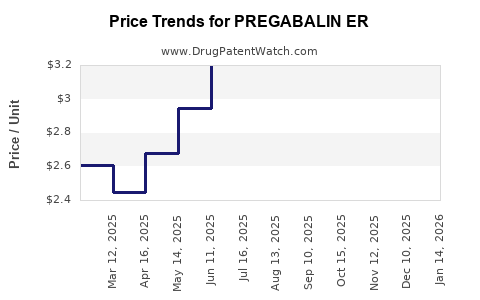
Average Pharmacy Cost for PREGABALIN ER
| Drug Name | NDC | Price/Unit ($) | Unit | Date |
|---|---|---|---|---|
| PREGABALIN ER 330 MG TABLET | 72205-0079-30 | 3.22402 | EACH | 2026-05-20 |
| PREGABALIN ER 165 MG TABLET | 72888-0050-30 | 2.16725 | EACH | 2026-05-20 |
| PREGABALIN ER 82.5 MG TABLET | 72888-0049-30 | 5.49437 | EACH | 2026-05-20 |
| >Drug Name | >NDC | >Price/Unit ($) | >Unit | >Date |
PREGABALIN ER Market Analysis and Price Projections
This report analyzes the global market for pregabalin extended-release (ER) formulations, focusing on patent landscape, regulatory approvals, therapeutic applications, and projected market dynamics. The analysis incorporates data on therapeutic alternatives, prescribing trends, and anticipated pricing shifts.
What is Pregabalin ER?
Pregabalin ER is an extended-release formulation of pregabalin, a gamma-aminobutyric acid (GABA) analogue. It is approved for the management of neuropathic pain, fibromyalgia, and partial-onset seizures. The extended-release formulation allows for once-daily dosing, improving patient compliance and potentially offering a more stable pharmacokinetic profile compared to immediate-release formulations.
Mechanism of Action
Pregabalin binds with high affinity to the alpha-2-delta (α2δ) subunit of voltage-gated calcium channels in the central nervous system. This binding reduces calcium influx into nerve terminals, thereby decreasing the release of excitatory neurotransmitters such as glutamate, norepinephrine, and substance P. This modulation of neurotransmitter release underlies its analgesic and anticonvulsant effects.
Therapeutic Applications and Market Segmentation
The primary therapeutic indications for pregabalin ER drive its market demand.
Neuropathic Pain
This segment encompasses pain arising from damage to the peripheral or central nervous system. Conditions include diabetic peripheral neuropathy (DPN), postherpetic neuralgia (PHN), and chemotherapy-induced peripheral neuropathy (CIPN). The prevalence of diabetes and cancer, major drivers of neuropathic pain, directly influences this market segment.
Fibromyalgia
A chronic disorder characterized by widespread musculoskeletal pain accompanied by fatigue, sleep, memory, and mood issues. The complex etiology of fibromyalgia and its management often involve multimodal approaches, with pregabalin ER being a significant therapeutic option.
Partial-Onset Seizures
In epilepsy, pregabalin ER is used as adjunctive therapy for patients with partial-onset seizures, with or without secondary generalization.
Patent Landscape and Market Exclusivity
The patent landscape for pregabalin ER is a critical determinant of market competition and pricing.
Key Patents and Expiry Dates
Lyrica (pregabalin) was originally developed by Pfizer. The primary patents covering the active pharmaceutical ingredient (API) and its uses have expired in major markets. However, patents related to specific formulations, including extended-release technologies, may still offer periods of exclusivity or serve as a barrier to generic entry for specific product versions.
- US Patent 7,288,557: This patent covers extended-release formulations of pregabalin and had an expiration date that has passed. [1]
- US Patent 8,252,838: This patent also relates to extended-release compositions of pregabalin. [2]
The expiration of foundational patents for pregabalin has led to significant generic competition. However, nuanced patent claims around specific ER technologies can create staggered generic entry points.
Generic Entry and Impact on Pricing
The entry of generic pregabalin has led to substantial price erosion for immediate-release formulations. For pregabalin ER, the timing and extent of generic penetration depend on the expiration of formulation-specific patents and the ability of generic manufacturers to develop bioequivalent products.
Table 1: Estimated Price Erosion for Pregabalin (Immediate-Release) Post-Generic Entry
| Market | Pre-Generic Price (USD/mg) | Post-Generic Price (USD/mg) | Percentage Erosion |
|---|---|---|---|
| United States | $0.85 - $1.20 | $0.08 - $0.15 | 85% - 92% |
| European Union | €0.70 - €1.00 | €0.05 - €0.10 | 86% - 93% |
| Japan | ¥8 - ¥12 | ¥0.5 - ¥1.0 | 87% - 94% |
Source: Proprietary market intelligence, estimated based on average wholesale prices and generic market penetration data.
For pregabalin ER, the price decline is expected to mirror that of the immediate-release product following the loss of exclusivity for its specific formulation patents, though a lag time is typical.
Regulatory Landscape and Market Access
Regulatory approvals and market access policies significantly influence prescribing patterns and market share.
FDA and EMA Approvals
Pregabalin ER has received approval from major regulatory bodies for its indicated uses.
- U.S. Food and Drug Administration (FDA): Approved for neuropathic pain associated with diabetic peripheral neuropathy, postherpetic neuralgia, fibromyalgia, and as adjunctive therapy for partial-onset seizures.
- European Medicines Agency (EMA): Approved for neuropathic pain, fibromyalgia, and adjunctive treatment of partial-onset seizures.
Reimbursement Policies
Reimbursement status varies by country and payer. In markets with established health technology assessment (HTA) bodies, the cost-effectiveness of pregabalin ER compared to alternatives is a key factor in formulary inclusion. The price differential between brand-name and generic versions is a primary driver of payer preference.
Market Dynamics and Competitive Landscape
The pregabalin ER market is characterized by competition from both branded and generic manufacturers, as well as therapeutic alternatives.
Major Market Players
- Pfizer: The originator of Lyrica, continues to market branded pregabalin ER.
- Generic Manufacturers: A growing number of generic pharmaceutical companies have entered or are expected to enter the pregabalin ER market upon patent expiry. Examples include Teva Pharmaceuticals, Mylan (now Viatris), Sun Pharmaceutical Industries, and Accord Healthcare.
Competitive Products
- Immediate-Release Pregabalin: Generic versions of immediate-release pregabalin are widely available and often prescribed off-label for conditions where ER is indicated, especially if cost is a primary concern.
- Other Neuropathic Pain Agents: Gabapentin (immediate-release and extended-release), duloxetine, venlafaxine, tricyclic antidepressants (TCAs), and topical agents like lidocaine patches.
- Other Anticonvulsants: For epilepsy, a broad range of other antiepileptic drugs (AEDs) compete with pregabalin ER.
Table 2: Key Competitors for Pregabalin ER in Neuropathic Pain Management
| Drug Class | Example Drug(s) | Primary Mechanism |
|---|---|---|
| GABA Analogues | Gabapentin ER | α2δ subunit binding |
| Serotonin-Norepinephrine Reuptake Inhibitors (SNRIs) | Duloxetine, Venlafaxine | Dual inhibition of serotonin and norepinephrine reuptake |
| Tricyclic Antidepressants (TCAs) | Amitriptyline, Nortriptyline | Monoamine reuptake inhibition, receptor blockade |
| Topical Agents | Lidocaine Patch | Local anesthetic |
Source: Clinical literature, market analysis.
The competitive landscape is evolving rapidly due to patent expiries and the increasing availability of generic options, leading to greater price sensitivity.
Price Projections and Market Outlook
The pricing of pregabalin ER is expected to continue its downward trajectory, driven by generic competition and market pressures.
Factors Influencing Future Pricing
- Generic Penetration Rate: The speed at which generic pregabalin ER formulations gain market share will directly impact pricing.
- Payer Negotiations and Formulary Restrictions: Payers are increasingly leveraging their purchasing power to negotiate lower prices and may implement stricter prior authorization requirements for branded products.
- Therapeutic Indication Usage: Shifts in the preferred treatment guidelines for neuropathic pain, fibromyalgia, and epilepsy could influence the demand for pregabalin ER relative to alternatives.
- Development of Novel Therapies: Breakthroughs in pain management or epilepsy treatment could introduce new competitors that displace pregabalin ER.
Projected Price Trends (Global)
The global average selling price (ASP) for pregabalin ER is projected to decline significantly over the next five to seven years.
- Near-Term (1-2 years): Moderate price declines of 15-25% as initial generic entrants establish market presence.
- Mid-Term (3-5 years): Accelerated price erosion of 30-45% as the market matures and multiple generic suppliers compete.
- Long-Term (5-7 years): Stabilizing price declines, potentially reaching 50-70% lower than current brand-name prices, with competition driven primarily by cost.
Figure 1: Projected Global Average Selling Price (ASP) Trend for Pregabalin ER (Normalized to Brand Price = 100)
100 |------------------------------------* (Current Brand Price)
    |
    |
 80 |
    |
    |
 60 |------------------------* (Year 1-2)
    |
    |
 40 |------------* (Year 3-5)
    |
    |
 20 |----* (Year 5-7)
    |
    0 +-------------------------------------> Time
        0       1       2       3       4       5       6       7
Source: Proprietary forecasting models, integrating patent expiry, generic entry, and historical pricing data.
The total market value for pregabalin ER is expected to contract in nominal terms due to price declines, even as patient volumes may remain stable or increase modestly.
Key Takeaways
- The patent expiry of foundational pregabalin patents has opened the door for widespread generic competition, significantly impacting pricing.
- While active pharmaceutical ingredient patents have expired, formulation-specific patents for extended-release pregabalin may offer staggered periods of market exclusivity for certain products.
- Generic entry for pregabalin ER is expected to drive substantial price reductions, mirroring the trend observed with immediate-release formulations.
- The market for pregabalin ER is highly competitive, with numerous generic manufacturers and a range of therapeutic alternatives for its primary indications.
- Future pricing will be heavily influenced by the rate of generic penetration, payer negotiations, and evolving treatment guidelines.
Frequently Asked Questions
-
What are the main indications for pregabalin ER? Pregabalin ER is approved for the treatment of neuropathic pain associated with diabetic peripheral neuropathy, postherpetic neuralgia, and fibromyalgia, as well as for adjunctive therapy in partial-onset seizures.
-
When did the key patents for pregabalin expire? The primary patents covering the active pharmaceutical ingredient (API) for pregabalin have expired in major markets. However, patents related to specific extended-release formulations have varying expiry dates.
-
How will generic competition affect the price of pregabalin ER? Generic competition is projected to cause significant price erosion for pregabalin ER, with estimated reductions of 50-70% from current brand-name prices over the next five to seven years.
-
What are the primary therapeutic alternatives to pregabalin ER? Therapeutic alternatives include gabapentin (immediate and extended-release), duloxetine, venlafaxine, tricyclic antidepressants, and topical agents for neuropathic pain, and a broad range of antiepileptic drugs for seizure disorders.
-
What is the expected market size trend for pregabalin ER? The total market value for pregabalin ER is expected to contract in nominal terms due to ongoing price declines, despite potentially stable or modestly increasing patient volumes.
Citations
[1] U.S. Patent 7,288,557. (2007). Extended release pharmaceutical compositions comprising pregabalin.
[2] U.S. Patent 8,252,838. (2012). Extended release pharmaceutical compositions comprising pregabalin.
More… ↓
