Last updated: February 12, 2026
Market Overview and Price Projections for Pantoprazole
Market Size and Trends
Pantoprazole, a proton pump inhibitor (PPI), is used primarily for treating gastroesophageal reflux disease (GERD), peptic ulcers, and Zollinger-Ellison syndrome. It holds a significant share in the global PPI market, which was valued at approximately $13 billion in 2022. The market is expected to grow at a compound annual growth rate (CAGR) of 4-6% through 2030, driven by increasing prevalence of acid-related disorders, expanding aging populations, and rising awareness about gastrointestinal health.
Key Market Players
Leading manufacturers of pantoprazole include:
- Pfizer Inc. (branded as Protonix in the U.S.)
- Takeda Pharmaceutical (distributes generic versions)
- HCS Pharma (generic formulations)
- Other regional generic players.
Pfizer remains dominant in the North American market, while generic manufacturers hold a larger share in Europe and Asia.
Patent and Regulatory Landscape
Pfizer's patent for Protonix expired in the U.S. in 2013, leading to increased generic competition. Multiple generics entered markets globally from 2014 onward, resulting in substantial price erosion. In the U.S., the Food and Drug Administration (FDA) approved the first generics in 2014, leading to a price decline of approximately 70% for off-patent formulations.
Globally, regulatory approvals vary, influencing market entry and pricing. Patent cliffs, patent extensions, and litigation influence the dynamics of product availability and pricing.
Current Pricing Analysis
Brand-Name (Protonix):
- 20 mg tablet: Approx. $17–$25 per dose in the U.S. (retail price).
- Monthly supply (30 tablets): About $510–$750.
Generic Versions:
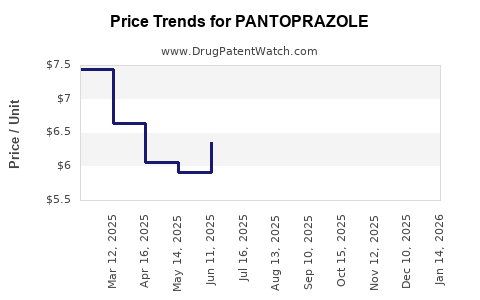
- 20 mg tablets: $4–$7 per tablet.
- Monthly supply: $120–$210.
Distribution Variations:
- European markets, such as the UK, show generics priced at approximately £1–£2 per tablet (~$1.30–$2.60).
- Asian markets exhibit lower prices, driven by local manufacturing and regulatory practices.
Price Trends and Drivers
- Patent expiration in major markets reduces prices by 50–70%.
- Generic competition continues to press prices downward.
- Regulatory price caps in several countries limit increases, especially for generics and OTC formulations.
- Supply chain factors and raw material costs influence manufacturing expenses, affecting resale prices.
Future Price Projections (2023–2030)
| Year |
Estimated Average Price per 20 mg Tablet (USD) |
Notes |
| 2023 |
$3.50 – $6.00 |
Post-patent cliff stabilization, ongoing generic presence. |
| 2025 |
$2.50 – $4.50 |
Increased generic market penetration. |
| 2030 |
$1.50 – $3.00 |
Market saturation with generics, price pressure continues. |
Projections assume continued generic market growth, regulatory controls, and potential biosimilar developments. Prices could stabilize or decrease further if biosimilar-like formulations or novel delivery systems emerge.
Factors Impacting Future Prices
- Generic market saturation will maintain downward pressure.
- Regulatory changes may introduce price controls, especially in Europe and North America.
- Patent litigations or extensions could temporarily delay generic entry, maintaining higher prices.
- Emergence of biosimilars or innovative formulations could alter price structures.
Key Takeaways
- The global pantoprazole market was valued at ~$13 billion in 2022, with growth driven by increased gastrointestinal disease prevalence.
- Pfizer historically dominated the branded segment; generics have eroded prices since 2014.
- As patent protections expire, prices are expected to decline further, stabilizing around $1.50–$3.00 per tablet by 2030.
- Market dynamics are influenced by patent status, regulatory frameworks, and regional pricing policies.
- Continued generic competition and potential biosimilar advances predict sustained price compression.
FAQs
1. What is the primary driver of price reduction in pantoprazole?
Patent expiration and the subsequent entry of generics boost competition, significantly lowering prices.
2. How does regional regulation influence pantoprazole prices?
Regulations such as price caps and approval processes vary, affecting the availability and pricing of generics across regions.
3. Are there any upcoming patent protections or exclusivities for branded pantoprazole?
Pfizer’s Protonix patent expired in the U.S. in 2013. No new patents are expected to extend exclusivity; future protections depend on formulation patents and regulatory strategies.
4. What role could biosimilars play in the pantoprazole market?
Currently, biosimilars are unlikely for PPIs due to their chemical nature, but innovative formulations or drug delivery methods may impact prices similarly.
5. How might supply chain disruptions affect future prices?
Raw material shortages or manufacturing delays could increase costs temporarily, but long-term effects favor downward pricing due to competition.
References
- MarketWatch. “Proton Pump Inhibitors (PPIs) Market Size, Share & Trends Analysis Report.” 2022.
- U.S. FDA. “Generic Drug Approvals and Patent Expirations.” 2014-2022.
- IQVIA. “Global Outlook for Gastrointestinal Drugs,” 2022.
- Reuters. "Generic Competition Drives Down Price of Proton Pump Inhibitors." 2014.
- Statista. “Global Proton Pump Inhibitors Market Size and Forecast.” 2022.