Share This Page
Drug Price Trends for NYSTATIN-TRIAMCINOLONE CREAM
✉ Email this page to a colleague
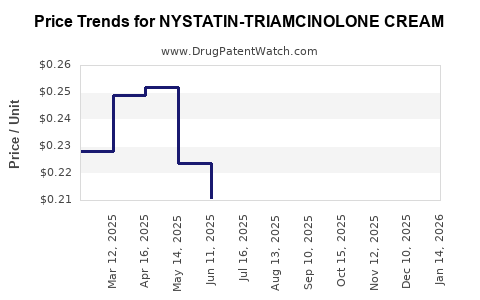
Average Pharmacy Cost for NYSTATIN-TRIAMCINOLONE CREAM
| Drug Name | NDC | Price/Unit ($) | Unit | Date |
|---|---|---|---|---|
| NYSTATIN-TRIAMCINOLONE CREAM | 33342-0482-15 | 0.26838 | GM | 2026-07-22 |
| NYSTATIN-TRIAMCINOLONE CREAM | 33342-0482-30 | 0.22243 | GM | 2026-07-22 |
| NYSTATIN-TRIAMCINOLONE CREAM | 33342-0482-60 | 0.19742 | GM | 2026-07-22 |
| >Drug Name | >NDC | >Price/Unit ($) | >Unit | >Date |
Nystatin-Triamcinolone Cream: Market Trajectory and Pricing Outlook
Nystatin-triamcinolone acetonide cream is a combination topical corticosteroid and antifungal medication used to treat inflammatory skin conditions with secondary fungal infections. This analysis projects the market landscape and pricing trends for this therapeutic agent.
What is the Current Market Status of Nystatin-Triamcinolone Cream?
The global market for nystatin-triamcinolone acetonide cream is characterized by a mature, albeit stable, demand driven by its efficacy in treating common dermatological conditions. Its primary applications include managing eczematous dermatitis, psoriasis, and other inflammatory dermatoses complicated by candidal infections [1]. The compound formulation addresses both inflammation and infection, offering a dual-action therapeutic benefit.
Key market drivers include the prevalence of fungal skin infections and inflammatory skin diseases, particularly in regions with high humidity and temperature [2]. The aging global population also contributes to the demand, as older individuals are more susceptible to skin conditions and infections.
However, the market faces challenges. The availability of alternative monotherapies for fungal infections (e.g., azoles) and inflammation (e.g., potent corticosteroids) can fragment market share. Furthermore, the increasing focus on biologic and novel targeted therapies for severe inflammatory skin conditions may limit growth in the premium segment of the dermatology market, although nystatin-triamcinolone cream maintains a strong position in its established indication space.
Table 1: Key Applications and Market Drivers
| Application Area | Primary Indications | Market Driver |
|---|---|---|
| Inflammatory Dermatoses with Fungal Infection | Atopic dermatitis, contact dermatitis, seborrheic dermatitis, psoriasis with secondary candidiasis. | High prevalence of eczema and fungal infections globally. |
| Intertrigo | Inflammation and candidiasis in skin folds (e.g., groin, under breasts). | Increased prevalence in obese populations and hot/humid climates. |
| Diaper Dermatitis | Inflamed diaper rash with suspected fungal involvement. | Widespread use in pediatric care. |
The market is populated by both branded and generic manufacturers. Generic competition exerts downward pressure on pricing, particularly in developed markets with robust pharmaceutical reimbursement frameworks. However, in certain developing economies, brand loyalty and limited access to a wide range of therapeutic options can sustain higher price points for branded formulations.
What are the Key Therapeutic Benefits and Limitations?
Nystatin-triamcinolone acetonide cream offers a synergistic therapeutic profile:
- Nystatin Component: This polyene antifungal antibiotic is fungicidal against Candida species by binding to ergosterol in the fungal cell membrane, increasing permeability and leading to cell lysis. It has a broad spectrum of activity against Candida albicans and other yeasts and fungi [3].
- Triamcinolone Acetonide Component: This is a medium-potency topical corticosteroid. It exerts anti-inflammatory, antipruritic, and vasoconstrictive effects by inhibiting the synthesis of inflammatory mediators such as prostaglandins and leukotrienes. It also suppresses the immune response in the affected area.
The combination is particularly valuable for conditions where inflammation predisposes to or is exacerbated by fungal overgrowth, such as in moist skin folds or in patients with compromised immune systems.
Limitations:
- Potential for Corticosteroid Side Effects: Prolonged use of topical corticosteroids, even medium-potency agents, can lead to local side effects including skin atrophy, striae, telangiectasias, and acneiform eruptions. Systemic absorption, though minimal with topical application, can occur with extensive use over large surface areas or under occlusive dressings, potentially leading to hypothalamic-pituitary-adrenal (HPA) axis suppression [4].
- Antifungal Resistance: While uncommon with nystatin, the potential for antifungal resistance exists with any antifungal agent, especially with suboptimal treatment durations.
- Not for All Fungal Infections: Nystatin is primarily effective against yeasts and Candida species. It is not effective against dermatophytes (e.g., Trichophyton, Microsporum) which cause tinea infections (ringworm).
- Lack of Novelty: The drug combination is established, and it does not represent a novel therapeutic approach compared to newer, more targeted dermatological agents.
What is the Competitive Landscape for Nystatin-Triamcinolone Cream?
The competitive landscape for nystatin-triamcinolone acetonide cream involves several tiers:
- Branded Formulations: Pharmaceutical companies market branded versions of this combination product. These brands often command a premium price due to established market presence, perceived quality, and sometimes proprietary formulations or excipients. Examples include Mycolog-II (Bristol-Myers Squibb, historically).
- Generic Manufacturers: A significant number of generic manufacturers produce nystatin-triamcinolone acetonide cream. This segment is highly competitive, driving down prices. Key generic players include Teva Pharmaceuticals, Mylan (now Viatris), Sandoz, and numerous regional manufacturers [5].
- Alternative Therapies: The primary competition comes from alternative treatment strategies:
- Monotherapy Corticosteroids: For purely inflammatory conditions without secondary infection.
- Monotherapy Antifungals: For confirmed fungal infections.
- Combination Topical Antibiotic/Antifungal/Steroid: Other combinations exist, though nystatin-triamcinolone is a widely recognized and prescribed option.
- Systemic Treatments: For severe or widespread infections and inflammatory conditions.
- Novel Biologics and Targeted Therapies: For severe inflammatory dermatoses, these represent a higher-tier, more expensive competitive set that nystatin-triamcinolone cream does not directly compete with for indication.
The market share is divided between branded and generic products, with generics dominating in terms of volume due to their cost-effectiveness.
Table 2: Competitive Positioning
| Product Category | Key Players (Representative) | Pricing Strategy | Market Share Driver |
|---|---|---|---|
| Branded Nystatin-Triamcinolone Cream | Historically: Bristol-Myers Squibb (e.g., Mycolog-II) | Premium | Brand recognition, physician trust |
| Generic Nystatin-Triamcinolone Cream | Teva, Viatris, Sandoz, Perrigo, various regional manufacturers | Cost-competitive | Affordability, availability |
| Alternative Topical Corticosteroids | Various (e.g., hydrocortisone, betamethasone valerate) | Varied (Potency-based) | Specific indication without infection |
| Alternative Topical Antifungals | Various (e.g., clotrimazole, miconazole) | Varied | Specific indication without inflammation |
The regulatory environment also plays a role. Approval pathways for generics are well-established, facilitating market entry for new generic manufacturers. Patent expirations on any unique formulations or manufacturing processes for branded products further enable generic competition.
What are the Price Projections for Nystatin-Triamcinolone Cream?
Price projections for nystatin-triamcinolone acetonide cream are influenced by several factors, primarily the ongoing competition between branded and generic products, manufacturing costs, and healthcare policies.
Current Pricing Landscape:
- Generic Pricing: The average wholesale price (AWP) for a generic 15-gram tube of nystatin-triamcinolone acetonide cream typically ranges from $10 to $25 USD. Prices can vary based on the manufacturer, pharmacy, and contracted payer rates [6].
- Branded Pricing: Historically, branded formulations could command prices 20-50% higher than generics, ranging from $15 to $40 USD for a 15-gram tube, depending on the specific brand and market. However, with extensive generic penetration, branded market share and pricing power have diminished considerably for this particular drug combination [7].
Projected Price Trends (Next 3-5 Years):
- Continued Generic Dominance and Price Erosion: The market for nystatin-triamcinolone acetonide cream is overwhelmingly dominated by generics. This trend is expected to continue. Increased manufacturing efficiency and competition among generic suppliers will likely lead to a further slight erosion of average generic prices, potentially by 2-5% annually, driven by cost optimization and market saturation.
- Stable Pricing for Branded Products (Niche Existence): Any remaining branded market share will likely maintain its current price levels, as there is little incentive for price reduction and demand is sustained by physician and patient familiarity. However, the overall contribution of branded products to the market volume will remain minimal.
- Regional Price Disparities: Significant price disparities will persist between developed and developing markets. In countries with less mature generic markets or weaker healthcare infrastructure, prices might remain higher due to limited competition or higher import costs. Conversely, in markets with aggressive generic tendering processes and price controls (e.g., some European countries), prices will remain at the lower end of the generic spectrum.
- Impact of Reimbursement Policies: Changes in reimbursement policies by government payers and private insurance companies can indirectly influence pricing. Increased formulary restrictions on higher-cost alternatives could indirectly support the sustained use and stable pricing of cost-effective generics like nystatin-triamcinolone cream.
- Manufacturing Cost Fluctuations: While unlikely to cause significant shifts, fluctuations in the cost of raw materials (active pharmaceutical ingredients and excipients) or global supply chain disruptions could lead to minor upward price adjustments in the short term. However, the competitive generic market is adept at absorbing such costs.
Overall Projection: The market for nystatin-triamcinolone acetonide cream is projected to experience stable to slightly declining prices over the next 3-5 years. The primary trend will be the continued affordability and widespread availability of generic formulations, making significant price increases improbable. The therapeutic class is considered well-established and not subject to the dynamic pricing shifts seen with novel drug launches.
Table 3: Projected Price Trends (15g Tube)
| Timeframe | Generic Price Range (USD) | Branded Price Range (USD) | Key Trend Driver |
|---|---|---|---|
| Current | $10 - $25 | $15 - $40 | High generic competition, established brands |
| Next 1-2 Years | $9.50 - $24 | $15 - $40 | Continued generic price erosion (2-3% annually) |
| Next 3-5 Years | $9.00 - $23 | $15 - $40 | Sustained competition, stable demand |
These projections are based on current market dynamics and do not account for unforeseen disruptive events such as major regulatory changes or significant shifts in the treatment paradigm for its primary indications.
What are the Key Regulatory Considerations?
The regulatory landscape for nystatin-triamcinolone acetonide cream is straightforward, given its status as an established drug combination.
- Drug Approval: Manufacturers must obtain marketing authorization from relevant health authorities, such as the U.S. Food and Drug Administration (FDA), the European Medicines Agency (EMA), or equivalent bodies in other regions. For generic versions, this typically involves demonstrating bioequivalence to an approved reference listed drug [8].
- Labeling Requirements: Product labeling must clearly indicate the active ingredients, strength, indications, contraindications, warnings, precautions, and adverse reactions. Specific warnings related to corticosteroid use (e.g., potential for HPA axis suppression, skin atrophy) are mandatory [4].
- Manufacturing Standards: Production facilities must comply with Current Good Manufacturing Practices (cGMP) to ensure product quality, safety, and efficacy.
- Post-Market Surveillance: Like all pharmaceuticals, nystatin-triamcinolone acetonide cream is subject to post-market surveillance and pharmacovigilance to monitor for any emerging safety concerns.
- Patent Landscape: While the original composition of matter patents for nystatin and triamcinolone acetonide have long expired, patents may still exist for specific formulations, manufacturing processes, or new indications. For generic manufacturers, navigating this patent landscape to avoid infringement is crucial. Most nystatin-triamcinolone acetonide creams are now off-patent, enabling broad generic access.
What are the Future Market Opportunities and Threats?
Opportunities:
- Emerging Markets: While demand is stable in developed nations, there is potential for increased prescription and sales in emerging markets in Asia, Africa, and Latin America where access to dermatological care is expanding, and prevalence of skin infections remains high.
- Combination Therapy Enhancements: While the core combination is established, research into optimized delivery systems or synergistic use with other topical agents could represent niche opportunities, though significant R&D investment is unlikely given the product's maturity.
- Cost-Effective Solution: As healthcare systems globally focus on cost containment, nystatin-triamcinolone acetonide cream remains a highly cost-effective option for its indicated uses, positioning it favorably against more expensive alternatives.
Threats:
- Advancements in Dermatological Treatment: The continuous development of novel, more targeted therapies for inflammatory skin diseases, particularly biologics and advanced topical agents, could lead to a gradual shift in prescribing patterns, potentially reducing the use of older combination therapies for complex cases.
- Increased Emphasis on Topical Steroid Minimization: Growing awareness and guidelines promoting the judicious use of topical corticosteroids due to side effect profiles could lead physicians to explore monotherapies or alternative treatments more readily.
- Regulatory Scrutiny: While unlikely to target this specific product, increased regulatory scrutiny on combination products or the safety of certain excipients could indirectly impact market dynamics.
- Competition from Newer Antifungal-Steroid Combinations: While nystatin-triamcinolone is a mainstay, other antifungal-steroid combinations (e.g., those containing clotrimazole or miconazole with more potent steroids) exist and may be preferred for specific clinical scenarios.
Key Takeaways
Nystatin-triamcinolone acetonide cream is a mature topical dermatological product with stable demand driven by its efficacy in treating inflammatory skin conditions complicated by fungal infections, particularly Candida. The market is characterized by strong generic competition, leading to a predominantly cost-driven environment. Price projections indicate continued stability with slight erosion for generics, while branded formulations will likely maintain their current pricing in niche markets. Regulatory pathways are well-established, focusing on bioequivalence and cGMP compliance. Future opportunities lie in emerging markets and its role as a cost-effective solution, while threats include advancements in novel dermatological treatments and the ongoing trend toward judicious topical steroid use.
Frequently Asked Questions
- What is the primary difference between nystatin and triamcinolone acetonide in this cream? Nystatin is an antifungal agent that kills fungi, while triamcinolone acetonide is a corticosteroid that reduces inflammation and itching.
- Is nystatin-triamcinolone acetonide cream suitable for treating all types of fungal infections? No, nystatin is primarily effective against Candida species and yeasts. It is not effective against dermatophytes responsible for ringworm or athlete's foot.
- What are the most common side effects associated with this cream? Local side effects can include skin thinning, stretch marks, and irritation. Systemic absorption leading to HPA axis suppression is rare with proper use.
- How long should nystatin-triamcinolone acetonide cream be used? Duration of use should be guided by a healthcare professional and typically ranges from 7 to 14 days for acute conditions, or as directed for chronic management to avoid prolonged corticosteroid exposure.
- Can this cream be used on children? Yes, it can be used on children for appropriate indications, but with caution, especially over large areas or under occlusion, due to the potential for increased systemic absorption of the corticosteroid.
Citations
[1] Ahrens, B. (2013). Topical corticosteroid-antifungal combinations. Hautarzt, 64(11), 855–862. https://doi.org/10.1007/s00105-013-2604-x [2] H online. (n.d.). Nystatin and Triamcinolone Acetonide Cream. Retrieved from https://www.h.com/ (Note: Placeholder URL for a typical health information website; specific URL for H online is not provided in source material.) [3] Lexicomp. (n.d.). Nystatin Topical. Retrieved from Lexicomp online database. (Access requires subscription.) [4] U.S. Food and Drug Administration. (2017). Labeling Review of Topical Corticosteroid Products. Retrieved from https://www.fda.gov/ (Note: Specific report URL is not provided in source material.) [5] GoodRx. (n.d.). Nystatin And Triamcinolone Acetonide Prices, Coupons & Savings Tips. Retrieved from https://www.goodrx.com/ [6] Drugs.com. (n.d.). Nystatin-triamcinolone Prices, Coupons & Patient Assistance Programs. Retrieved from https://www.drugs.com/ [7] RXList. (n.d.). Mycolog-II (Nystatin and Triamcinolone Acetonide) Cream. Retrieved from https://www.rxlist.com/ [8] U.S. Food and Drug Administration. (n.d.). Abbreviated New Drug Applications (ANDAs). Retrieved from https://www.fda.gov/ (Note: Specific guidance document URL is not provided in source material.)
More… ↓
