Share This Page
Drug Price Trends for NICOTROL NS
✉ Email this page to a colleague
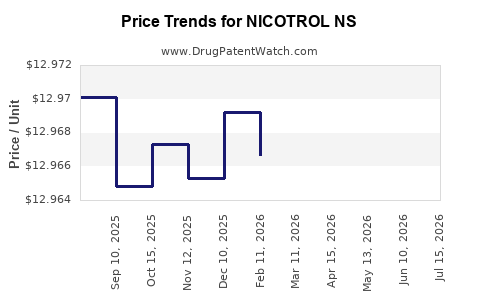
Average Pharmacy Cost for NICOTROL NS
| Drug Name | NDC | Price/Unit ($) | Unit | Date |
|---|---|---|---|---|
| NICOTROL NS 10 MG/ML SPRAY | 00009-5401-01 | 12.96367 | ML | 2026-07-22 |
| NICOTROL NS 10 MG/ML SPRAY | 00009-5401-01 | 12.96225 | ML | 2026-06-17 |
| NICOTROL NS 10 MG/ML SPRAY | 00009-5401-01 | 12.96407 | ML | 2026-05-20 |
| NICOTROL NS 10 MG/ML SPRAY | 00009-5401-01 | 12.96572 | ML | 2026-04-22 |
| NICOTROL NS 10 MG/ML SPRAY | 00009-5401-01 | 12.96965 | ML | 2026-03-18 |
| >Drug Name | >NDC | >Price/Unit ($) | >Unit | >Date |
Market Analysis and Price Projections for NICOTROL NS
What is NICOTROL NS?
NICOTROL NS (nicotine nasal spray) is a prescription medication developed by GlaxoSmithKline (GSK) used for smoking cessation. It delivers nicotine directly through the nasal mucosa, providing rapid relief from withdrawal symptoms. Approved by the FDA in 1996, it has been positioned as an alternative to oral or transdermal nicotine replacement therapies (NRT).
Market Size and Dynamics
Smoking Cessation Market Overview
The global smoking cessation market was valued at approximately $14 billion in 2022 and is expected to grow at a compound annual growth rate (CAGR) of 7% through 2030[1]. Growth drivers include increasing awareness about the health risks of smoking, regulatory restrictions, and expanding insurance coverage for cessation therapies.
NICOTROL NS Market Penetration
NICOTROL NS holds an estimated 3-4% share of the global smoking cessation market. Its primary markets are North America, Europe, and select Asian countries. The product faces competition from other NRT forms, such as gums, patches, lozenges, and newer prescription drugs like varenicline (Chantix) and bupropion (Zyban).
Market penetration is limited by factors such as:
- Patient preference for oral or patch therapies
- Nasal spray administration concerns
- Availability of over-the-counter alternatives
Key Competitive Landscape
| Product | Type | Market Share (Estimated 2022) | Year of FDA Approval | Price Range (USD) | Notable Features |
|---|---|---|---|---|---|
| NICOTROL NS | Nasal spray | 3-4% | 1996 | $120-$180/month | Rapid nicotine delivery, prescription-only |
| Nicorette Gum | Chewing gum | 25-30% | 1984 | $45-$70/month | Oral administration, OTC available |
| Nicoderm Patch | Transdermal patch | 20-25% | 1991 | $50-$80/month | Easy to use, consistently delivers nicotine |
| Varenicline (Chantix) | Oral prescription drug | 15-20% | 2006 | $150-$200/month | Prescribed, higher efficacy but risk of neuropsychiatric side effects |
| Bupropion (Zyban) | Oral prescription drug | 10-15% | 1997 | $50-$100/month | Off-label for smoking cessation, additional depression treatment |
Regulatory and Reimbursement Factors
- FDA: NICOTROL NS approved for smoking cessation.
- Insurance Coverage: Varies by region; in the U.S., Medicare and many private insurers cover NICOTROL NS, but restrictions exist.
- Pricing Policies: Price-setting generally aligned with generic availability, although NICOTROL NS remains patented and branded.
Price Projections
Current Pricing and Cost Trends
- Retail prices for NICOTROL NS range from $120 to $180 per month.
- Generic directly substitutable nasal sprays are unavailable, supporting a stable premium.
- Production and distribution costs are estimated to be around $30-$50 per unit, considering manufacturing and regulatory compliance.
Short-term (Next 3 Years) Price Outlook
- Stability Expected: NICOTROL NS prices are likely to remain stable due to limited generic competition and existing patent protections until patent expiry, projected around 2028.
- Potential for Price Increase: Slight adjustments for inflation, formulation upgrades, or expanded reimbursement coverage could push prices upward by 3-5% annually.
Long-term (Post-2028) Projection
- Price decline anticipated: Upon patent expiration, generic nasal spray options are likely to enter the market, reducing prices by at least 30-50%.
- Market share shift: As generics gain uptake, NICOTROL NS’s market share may diminish unless it secures additional indications or improves formulation.
Risks and Mitigation Factors
- Demand reduction due to competing therapies with higher efficacy.
- Regulatory changes or reimbursement policies affecting pricing.
- Entry of new, innovative nicotine delivery systems (e.g., inhalers or heat-not-burn devices).
Strategic Considerations for Stakeholders
- Those holding patent rights should consider timing for patent extensions or formulations improvements to sustain pricing power.
- Manufacturers and payers must monitor evolving competitive landscapes, including the launch of generics and alternative delivery systems.
- Investment in marketing and education can improve awareness and acceptance among patients and clinicians.
Key Takeaways
- NICOTROL NS is a niche but steady segment within the smoking cessation market.
- Market share is limited but stable; primary competitors are oral and transdermal NRT.
- Current prices are $120-$180/month, with potential stability until patent expiry around 2028.
- Price declines are probable post-patent, driven by generics entering the market.
- Regulatory and reimbursement policies significantly influence future pricing and market penetration.
FAQs
Q1: What is the primary disadvantage of NICOTROL NS compared to other NRTs?
Its nasal spray form may deter some users due to discomfort or nasal irritation and requires prescription access, compared to OTC options like gum or patches.
Q2: How does the efficacy of NICOTROL NS compare to other smoking cessation therapies?
Clinical studies show NICOTROL NS has comparable efficacy to patches but lower than varenicline. Its rapid nicotine delivery can aid in acute withdrawal management but is user-dependent.
Q3: Is NICOTROL NS likely to see increased market share in the future?
Limited by patient preference and competition, market share is unlikely to grow significantly without new formulations or greater acceptance among prescribers.
Q4: When is patent expiration expected for NICOTROL NS?
Around 2028, after which generic nasal spray competitors are likely to enter the market.
Q5: Could regulatory changes impact NICOTROL NS pricing?
Yes, stricter pricing or reimbursement policies could influence the price structure, potentially lowering prices or restricting access.
References
[1] Global Market Insights. (2022). Smoking Cessation Market Size and Forecast. https://www.gminsights.com/
More… ↓
