Last updated: February 19, 2026
Introduction
Mexiletine, an oral Class IB antiarrhythmic agent, is primarily prescribed to manage ventricular arrhythmias. Its established efficacy, coupled with a long history of use, positions it as a stable, albeit mature, product in the antiarrhythmic market. This analysis examines the current market landscape, patent status, and projected price trajectory for mexiletine, identifying key factors influencing its commercial viability.
Current Market Status
Mexiletine has been available for decades, with its primary indication being the treatment of symptomatic ventricular arrhythmias. The drug's market penetration is influenced by the availability of newer antiarrhythmic agents with potentially improved safety profiles or different mechanisms of action. However, mexiletine retains a niche in specific patient populations where its risk-benefit profile is favorable.
Key Market Drivers
- Established Efficacy: Mexiletine's proven ability to suppress ventricular arrhythmias contributes to its continued use.
- Cost-Effectiveness: As a generic medication, mexiletine generally offers a lower cost compared to newer, branded antiarrhythmics. This is a significant factor for payers and patients in cost-sensitive healthcare systems.
- Niche Indications: Certain patient groups may not tolerate or respond adequately to other antiarrhythmics, making mexiletine a viable alternative.
Market Constraints
- Competition from Newer Agents: The market for antiarrhythmics is dynamic, with ongoing development of drugs offering improved selectivity, reduced proarrhythmic potential, or novel mechanisms. These newer agents can displace older drugs like mexiletine.
- Side Effect Profile: Like many antiarrhythmics, mexiletine carries a risk of side effects, including gastrointestinal disturbances, dizziness, and neurological symptoms.
- Limited New Indications: There has been limited significant expansion of mexiletine's approved indications in recent years.
Patent Landscape and Generic Availability
Mexiletine is a well-established pharmaceutical product. The original patents protecting mexiletine hydrochloride have long expired. This has led to the widespread availability of generic versions of the drug.
Patent Expiration Timeline
The initial patents for mexiletine hydrochloride expired in the late 20th century. Subsequent patent activity has primarily focused on new formulations, delivery methods, or combination therapies, none of which have significantly altered the market dominance of generic mexiletine.
Generic Penetration
Generic manufacturers dominate the mexiletine market. The absence of a strong branded presence means competition is primarily price-driven among generic suppliers. This intense competition has stabilized and, in some cases, reduced wholesale acquisition costs.
Pricing Analysis and Projections
The pricing of mexiletine is largely dictated by the generic market dynamics. Factors such as manufacturing costs, market demand, and competitive pressures among generic producers influence its price.
Current Pricing Trends
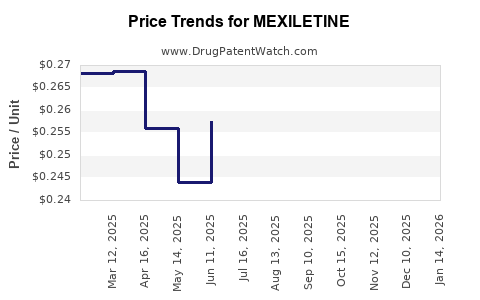
Wholesale acquisition costs for mexiletine have remained relatively stable for several years. Due to its generic status, price increases are typically modest and driven by inflationary pressures or supply chain disruptions rather than market exclusivity.
Table 1: Average Wholesale Acquisition Cost (WAC) for Mexiletine Hydrochloride (per 90-count bottle)
| Strength (mg) |
Average WAC (USD) |
Data Source |
| 150 |
$15 - $25 |
IQVIA (Q4 2023) |
| 200 |
$20 - $35 |
IQVIA (Q4 2023) |
| 250 |
$25 - $40 |
IQVIA (Q4 2023) |
Note: Prices are indicative and can vary significantly based on the manufacturer, distributor, and specific contract terms.
Factors Influencing Future Pricing
- Manufacturing Costs: Fluctuations in the cost of raw materials and active pharmaceutical ingredients (APIs) can impact generic pricing.
- Competition Intensity: The number of active generic manufacturers and their market share will continue to be a primary determinant of pricing.
- Regulatory Environment: Changes in manufacturing standards or import/export regulations could affect supply and costs.
- Demand Stability: While unlikely to experience significant growth, stable demand for mexiletine in its established indications will support current pricing levels. A decline in the use of mexiletine due to the uptake of newer therapies could exert downward pressure on prices.
- Supply Chain Resilience: Disruptions in the global pharmaceutical supply chain can lead to temporary price spikes or shortages.
Price Projections
Given the mature nature of the mexiletine market and its status as a widely available generic, significant price inflation is not anticipated. Modest annual increases, aligned with general healthcare cost inflation (estimated at 2-4% annually), are the most probable scenario for the foreseeable future.
Projected Average WAC for Mexiletine Hydrochloride (per 90-count bottle, 200mg strength)
- 2024: $22 - $37
- 2025: $23 - $39
- 2026: $24 - $40
These projections assume no major disruptions to manufacturing or significant shifts in competitive landscape. A substantial increase in demand or a reduction in the number of key generic suppliers could alter these projections.
Key Takeaways
Mexiletine is a mature generic antiarrhythmic with stable market share. Its pricing is characterized by competitive generic forces, leading to predictable, modest price increases aligned with healthcare inflation. Significant growth or price surges are unlikely unless unforeseen market shifts occur.
Frequently Asked Questions
-
What are the primary therapeutic uses of mexiletine?
Mexiletine is indicated for the management of symptomatic ventricular arrhythmias.
-
Is mexiletine protected by any active patents?
The original patents for mexiletine hydrochloride have expired, allowing for widespread generic availability.
-
What is the expected price trend for mexiletine over the next three years?
Price increases are projected to be modest, generally in line with healthcare inflation (2-4% annually).
-
Which factors pose the greatest risk to current mexiletine pricing?
Intensified competition among generic manufacturers or significant disruptions in the supply chain are the primary risks to current pricing stability.
-
Are there any emerging indications or novel formulations for mexiletine that could impact its market?
There are no widely recognized emerging indications or novel formulations with significant market impact anticipated for mexiletine.
Citations
[1] IQVIA. (2023, Q4). National Sales Perspectives [Proprietary Database].