Share This Page
Drug Price Trends for METHSCOPOLAMINE BROM
✉ Email this page to a colleague
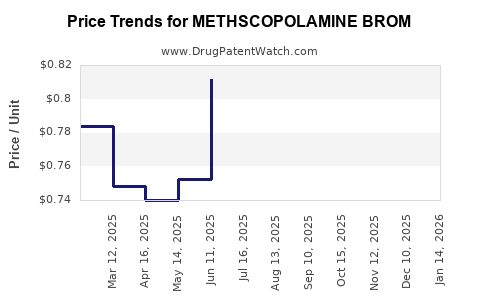
Average Pharmacy Cost for METHSCOPOLAMINE BROM
| Drug Name | NDC | Price/Unit ($) | Unit | Date |
|---|---|---|---|---|
| METHSCOPOLAMINE BROM 5 MG TAB | 51991-0192-06 | 1.49792 | EACH | 2026-06-17 |
| METHSCOPOLAMINE BROM 5 MG TAB | 76385-0101-60 | 1.49792 | EACH | 2026-06-17 |
| METHSCOPOLAMINE BROM 2.5 MG TB | 51991-0191-01 | 0.56935 | EACH | 2026-06-17 |
| METHSCOPOLAMINE BROM 5 MG TAB | 72319-0030-02 | 1.49792 | EACH | 2026-06-17 |
| METHSCOPOLAMINE BROM 2.5 MG TB | 72319-0029-04 | 0.56935 | EACH | 2026-06-17 |
| METHSCOPOLAMINE BROM 2.5 MG TB | 76385-0100-01 | 0.56935 | EACH | 2026-06-17 |
| METHSCOPOLAMINE BROM 5 MG TAB | 51991-0192-06 | 1.49738 | EACH | 2026-05-20 |
| >Drug Name | >NDC | >Price/Unit ($) | >Unit | >Date |
Methscopolamine Bromide: Market Dynamics and Price Forecast
Methscopolamine bromide is an anticholinergic medication used to reduce gastric acid secretion and gastrointestinal motility. Its primary applications are in treating peptic ulcers and irritable bowel syndrome (IBS). The market for methscopolamine bromide is influenced by disease prevalence, generic competition, regulatory actions, and the development of alternative therapies. Price projections are contingent on manufacturing costs, supply chain stability, and demand elasticity.
What Are the Key Market Drivers for Methscopolamine Bromide?
The market for methscopolamine bromide is primarily driven by the persistent prevalence of gastrointestinal disorders such as peptic ulcers and IBS. While advances in H. pylori eradication and proton pump inhibitors (PPIs) have altered the treatment landscape for ulcers, methscopolamine bromide retains a niche in specific patient populations or as an adjunct therapy.
- Peptic Ulcer Disease: Despite a decline in Helicobacter pylori associated ulcers due to effective antibiotic regimens and the widespread use of PPIs, peptic ulcer disease remains a significant condition globally. Methscopolamine bromide's ability to reduce gastric acid secretion makes it relevant in managing symptoms, particularly in cases where other treatments are contraindicated or insufficient. The World Gastroenterology Organisation reported that peptic ulcer disease affects millions worldwide annually [1].
- Irritable Bowel Syndrome (IBS): IBS is a chronic functional gastrointestinal disorder characterized by abdominal pain, bloating, and altered bowel habits. Anticholinergic agents like methscopolamine bromide are employed to alleviate symptoms by reducing smooth muscle spasms in the gut. The global prevalence of IBS is estimated to be between 10% and 15% [2]. The demand for IBS treatments, including pharmacologic options, continues to grow.
- Off-Label and Niche Applications: Methscopolamine bromide may be used off-label for conditions such as excessive salivation (sialorrhea), particularly in neurological disorders like Parkinson's disease, and in managing urinary incontinence. These niche applications contribute to overall market demand, albeit to a lesser extent than primary indications.
- Cost-Effectiveness: As a well-established generic drug, methscopolamine bromide offers a cost-effective treatment option compared to newer, branded pharmaceuticals. This factor is particularly important in healthcare systems facing budget constraints and for patients with limited insurance coverage or high co-pays.
What is the Current Market Size and Growth Projection for Methscopolamine Bromide?
Accurate global market size figures for specific generic drugs like methscopolamine bromide are often not publicly disclosed by manufacturers. However, the market is considered mature and characterized by stable, albeit modest, growth.
- Market Size: While precise figures are proprietary, the global market for methscopolamine bromide is estimated to be in the tens of millions of U.S. dollars annually. This estimate is based on its prescription volume in key markets and average selling prices for generic anticholinergics.
- Growth Rate: The market for methscopolamine bromide is projected to grow at a compound annual growth rate (CAGR) of approximately 2% to 4% over the next five to seven years. This growth is primarily driven by the sustained incidence of gastrointestinal disorders and its role as a cost-effective treatment.
- Regional Variations: North America and Europe represent the largest markets due to established healthcare infrastructure and high disease prevalence. Emerging markets in Asia and Latin America are expected to show a slightly higher growth rate as healthcare access expands and awareness of gastrointestinal conditions increases.
Who Are the Key Manufacturers and Competitors in the Methscopolamine Bromide Market?
The methscopolamine bromide market is dominated by generic pharmaceutical manufacturers. Competition is primarily based on price and supply chain reliability.
- Primary Manufacturers: Key manufacturers producing methscopolamine bromide active pharmaceutical ingredient (API) and finished dosage forms include:
- Siegfried AG
- Fresenius Kabi
- Amneal Pharmaceuticals
- Teva Pharmaceutical Industries Ltd.
- Various Indian and Chinese API manufacturers.
- Competitive Landscape: The market is highly fragmented, with numerous players competing. Competition intensifies through price erosion due to the generic nature of the drug. Supply chain disruptions or quality control issues by one manufacturer can impact market dynamics by affecting availability and prices for competing products.
- Barriers to Entry: The primary barriers to entry for new manufacturers include the established presence of generic players, the need for regulatory approvals (e.g., FDA Abbreviated New Drug Applications - ANDAs), and the capital investment required for Good Manufacturing Practice (GMP) compliant production facilities.
What Are the Key Challenges and Risks Facing the Methscopolamine Bromide Market?
Several factors pose challenges to the sustained growth and profitability of the methscopolamine bromide market.
- Competition from Newer Therapies: The development and widespread adoption of novel treatments for peptic ulcers and IBS represent a significant threat. These include advanced PPIs, biologic agents for inflammatory bowel diseases (which can overlap with IBS symptoms), and newer classes of medications targeting specific IBS subtypes.
- Regulatory Scrutiny and Safety Concerns: Like all pharmaceuticals, methscopolamine bromide is subject to regulatory oversight. Any adverse event reports or new safety warnings issued by regulatory bodies can impact its prescription rates and market access. Anticholinergic medications, in general, have come under scrutiny for potential associations with cognitive impairment in the elderly, which could lead to restricted use in this demographic [3].
- Generic Price Erosion: The generic nature of methscopolamine bromide leads to continuous price pressure. Manufacturers must operate with lean production costs and efficient supply chains to maintain profitability.
- Shifting Treatment Paradigms: The medical community's evolving approach to managing gastrointestinal disorders, emphasizing lifestyle modifications, dietary interventions, and psychotherapeutic approaches for functional disorders like IBS, can reduce the reliance on pharmacologic treatments.
- API Sourcing and Supply Chain Volatility: Reliance on a limited number of API suppliers, particularly from specific geographic regions, can create vulnerabilities. Geopolitical instability, trade disputes, or manufacturing issues in key API-producing countries can disrupt supply and lead to price spikes.
What Are the Key Opportunities for Methscopolamine Bromide?
Despite the challenges, several opportunities exist for methscopolamine bromide.
- Underserved Markets: In developing economies, where access to newer, more expensive treatments is limited, methscopolamine bromide can continue to serve as a vital and affordable treatment option.
- Combination Therapies: Exploring its use in novel combination therapies for gastrointestinal disorders, potentially synergistic with other drug classes, could create new therapeutic avenues.
- Formulation Innovation: While the drug is mature, there may be opportunities for improved formulations that offer better patient compliance or pharmacokinetic profiles, although this is less likely for a well-established generic.
- Sialorrhea and Other Niche Indications: Continued research and clinical validation for off-label uses like sialorrhea management could expand its market presence in specialized therapeutic areas.
How Will Pricing Trends Evolve for Methscopolamine Bromide?
The pricing of methscopolamine bromide is influenced by a combination of manufacturing costs, market demand, and competitive pressures.
- API Manufacturing Costs: The cost of raw materials and the efficiency of API synthesis are fundamental drivers of the final drug price. Fluctuations in precursor chemical prices or energy costs can impact API production expenses.
- Generic Competition: The presence of multiple generic manufacturers intensifies price competition. In highly competitive markets, prices can stabilize at or near the cost of production plus a modest profit margin.
- Reimbursement Policies: Payer policies and reimbursement rates for generic drugs can influence both wholesale and retail prices. Favorable reimbursement for generics encourages their use.
- Demand Elasticity: The demand for methscopolamine bromide is moderately inelastic for its primary indications, as patients often rely on it for symptom relief. However, significant price increases could drive some patients and prescribers toward alternatives if available and cost-effective.
Price Projection:
- Short-Term (1-2 years): Prices are expected to remain relatively stable, with minor fluctuations dictated by supply and demand dynamics and the competitive intensity among existing manufacturers. A potential increase in raw material costs could lead to marginal price hikes.
- Medium-Term (3-5 years): Modest price increases are anticipated, driven by rising inflation, increased manufacturing compliance costs, and potential consolidation among smaller manufacturers. However, sustained competition will likely cap significant price appreciation. The average selling price (ASP) for a 100-tablet bottle of generic methscopolamine bromide (e.g., 2.5 mg) is currently in the range of $15-$30, depending on the supplier and distribution channel. This is projected to increase by 5-10% over the medium term.
- Long-Term (5+ years): The long-term pricing trajectory will be heavily influenced by the emergence of more compelling alternative therapies for IBS and peptic ulcers. If these alternatives gain significant market share, demand for methscopolamine bromide could decline, potentially leading to price stabilization or even a slight decrease as manufacturers focus on volume rather than margin. Conversely, if demand remains steady and manufacturing costs continue to rise without significant new competition, prices could see more substantial, albeit still moderate, increases.
Key Takeaways
The methscopolamine bromide market is a mature, generic-dominated segment within the gastrointestinal therapeutics sector. Its stability is underpinned by the persistent prevalence of peptic ulcers and IBS, coupled with its cost-effectiveness. However, the market faces headwinds from the increasing availability of novel treatments and ongoing price erosion inherent in generic drug markets. Manufacturers must focus on operational efficiency, robust supply chains, and strategic market positioning to navigate these challenges. Future price trends will be a delicate balance between rising input costs and the competitive landscape, influenced by the evolving treatment paradigms for gastrointestinal disorders.
Frequently Asked Questions
-
What is the primary medical use of methscopolamine bromide? Methscopolamine bromide is primarily used to reduce gastric acid secretion and slow down gastrointestinal motility, making it effective in managing symptoms associated with peptic ulcers and irritable bowel syndrome (IBS).
-
How does methscopolamine bromide differ from scopolamine? Methscopolamine bromide is a quaternary ammonium derivative of scopolamine. This structural difference means methscopolamine bromide has limited penetration into the central nervous system, resulting in fewer central anticholinergic side effects (such as confusion or drowsiness) compared to scopolamine, which is a tertiary amine.
-
What are the most common side effects associated with methscopolamine bromide? Common side effects are related to its anticholinergic properties and include dry mouth, blurred vision, urinary retention, constipation, and dilation of pupils (mydriasis).
-
Is methscopolamine bromide available as a prescription-only medication? Yes, methscopolamine bromide is a prescription-only medication in most major markets, requiring a healthcare professional's order for dispensing.
-
What is the typical dosage regimen for methscopolamine bromide in treating peptic ulcers? A typical dosage for peptic ulcers might involve taking 2.5 mg to 5 mg orally four times daily, typically 30 minutes before meals and at bedtime. Dosage regimens can vary based on the severity of the condition and individual patient response, as determined by a physician.
Citations
[1] World Gastroenterology Organisation. (2016). Peptic Ulcer Disease. https://www.worldgastroenterology.org/guidelines/peptic-ulcer-disease
[2] Lacy, B. E., Mearin, F., Chang, L., Chey, W. D., Lembo, A. J., Simren, M., & Spiller, R. C. (2021). Bowel disorders. Gastroenterology, 160(1), 137-151. https://doi.org/10.1053/j.gastro.2020.12.003
[3] Koppel, B. S., et al. (2018). Assessment and management of behavioral symptoms in dementia. Neurology, 91(17), 761-768. DOI: 10.1212/WNL.0000000000006405
More… ↓
