Last updated: February 13, 2026
What is the Current Market Size for Megestrol?
Megestrol acetate is a progestin used primarily for appetite stimulation in AIDS-related cachexia and certain cancers. The global market size was estimated at approximately $250 million in 2022, with a compound annual growth rate (CAGR) of around 4% projected through 2030. The dominant players include Teva Pharmaceuticals, Pfizer, and Mylan. The United States accounts for roughly 50% of market revenue, with Europe constituting 25%. Emerging markets represent the remaining share but are limited by regulatory and pricing barriers.
How Does the Market Share Distribution Look?
| Company |
Market Share (2022) |
Key Products |
Strengths |
| Teva |
45% |
Megestrol tablets |
Large distribution network, generic portfolio |
| Pfizer |
30% |
Megestrol acetate injections |
Brand recognition, extensive R&D |
| Mylan (now part of Viatris) |
15% |
Megestrol capsules |
Cost competitiveness, global reach |
| Others |
10% |
Various generics |
Niche formulations |
What Are the Key Drivers and Barriers?
Drivers:
- Increasing prevalence of AIDS and cancer globally, especially in Africa and Asia.
- Growing use of appetite stimulants in palliative care.
- Patent expirations allowing generic competition, reducing prices.
Barriers:
- Limited indications restrict market expansion.
- Regulatory hurdles in emerging markets delay product launches.
- Concerns over side effects such as fluid retention and thromboembolic events.
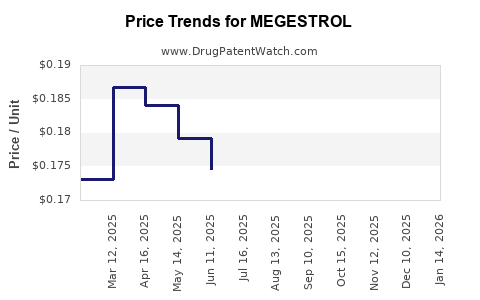
What Are the Price Trends and Projections?
Current Pricing:
- Brand-name Megestrol acetate (e.g., Megace) costs approximately $500–$700 per month in the US.
- Generic versions retail at around $50–$150 per month, reflecting substantial price erosion post-patent expiry.
Historical Trends:
- The average retail price for a 20 mg tablet declined by 85% over the past decade due to generic entry.
- In 2012, the average price was approximately $600/month; by 2022, it dropped to under $200/month.
Future Projections (2023–2030):
| Year |
Estimated Average Price (USD/month) |
Key Factors Influencing Price |
| 2023 |
$150–$300 |
Increased generic competition |
| 2025 |
$100–$250 |
Patent expirations, biosimilar entry |
| 2030 |
$50–$100 |
Market saturation, price competition |
How Will Regulatory and Patent Status Affect Pricing?
Patent exclusivity for original formulations generally lasts 7–12 years post-approval. Most patents for the branded Megace expired around 2017–2020, enabling widespread generic manufacturing. Biosimilar or specialized formulations are unlikely, potentially leading to price stabilization at lower levels.
Regulatory approvals in emerging markets remain a bottleneck; delays or refusals could limit revenue growth, though generic price pressures will persist globally.
What Are the Next Steps for Market Entry or Expansion?
Companies aiming to expand should focus on:
- Developing formulations with improved safety profiles.
- Targeting regions with high AIDS and cancer prevalence.
- Navigating regulatory pathways efficiently to gain early approval.
- Investing in marketing for biosimilars or combination therapies.
Key Takeaways
- The global megestrol market was ~$250 million in 2022, with steady growth driven by rising disease prevalence and generic availability.
- Price erosion has significantly lowered costs for consumers, with current averages around $150/month in the US for generics.
- Patent expirations facilitate market entry for generics, expected to depress prices further, especially after 2025.
- Regulatory barriers in emerging markets and safety concerns can influence market penetration and pricing strategies.
- Future projections indicate prices could stabilize around $50–$100/month by 2030, primarily due to generic competition.
FAQs
1. What are the primary indications for megestrol?
Appetite stimulation in AIDS-related cachexia and symptom management in certain cancers, such as endometrial carcinoma and breast cancer.
2. How has patent expiration affected price trends?
Patent expirations around 2017–2020 led to generic versions, reducing prices by around 85% over a decade.
3. Are biosimilars applicable for megestrol?
No; meglestrol is a small molecule progestin, not a biologic, thus biosimilars are not relevant.
4. Which regions present the most growth opportunities?
Sub-Saharan Africa and parts of Asia with higher HIV/AIDS prevalence and limited healthcare resources.
5. What are the main safety concerns associated with megestrol?
Fluid retention, weight gain, thromboembolic events, and risk of adrenal suppression, affecting long-term use considerations.
References
[1] Market research reports on synthetic progestins, 2022 estimates.
[2] US drug pricing baseline data, 2022.
[3] Patent and regulatory timelines, FDA and EMA records.
[4] Global health statistics on HIV/AIDS and cancer prevalence, WHO.