Last updated: February 20, 2026
What is MAPAP?
MAPAP is a generic form of acetaminophen, commonly used for pain relief and fever reduction. It is marketed under various brand names such as Tylenol and Panadol and is available over the counter globally. The drug has a long-established safety and efficacy profile, with extensive manufacturing and distribution networks.
Market Size and Dynamics
Global Market Overview
The global acetaminophen market was valued at approximately USD 4.8 billion in 2022. It is projected to grow at a compound annual growth rate (CAGR) of 3.5% from 2023 to 2030, reaching USD 6.3 billion by 2030 [1].
Key Growth Drivers
- Aging Population: Increased prevalence of chronic pain conditions among older adults.
- Over-the-counter Demand: Widespread consumer preference for accessible analgesics.
- Expanding Markets: Growth in demand from emerging markets in Asia-Pacific and Latin America.
- Competitive Pricing: Entry of generics drives prices downward but expands consumer access.
Competitive Environment
The market comprises multinational pharmaceutical companies, regional manufacturers, and generic drug producers. Major players like Johnson & Johnson, Bayer, and Teva have significant market shares. Generics account for approximately 70% of the total market volume.
Pricing Analysis
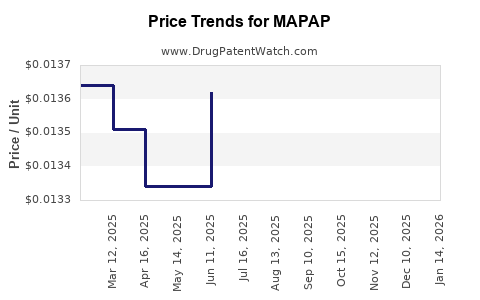
Historical Price Trends
- Brand-name Acetaminophen: Historically priced around USD 0.10 per tablet.
- Generic Versions: Prices have fallen to USD 0.02–0.04 per tablet, driven by increased competition.
Current Price Structure (2023)
| Product Type |
Price per Tablet |
Market Share |
| Brand-name (Tylenol) |
USD 0.10–0.15 |
30% |
| Generic tablets |
USD 0.02–0.04 |
70% |
Price Projections (2024–2030)
The expectation is for prices of generics to stabilize around USD 0.02 per tablet, with slight fluctuations due to supply chain variables, regulatory changes, and raw material costs. Brand-name prices are projected to decline by approximately 10% annually until they phase out of common usage, mainly replaced by generics.
Factors Impacting Future Prices
- Raw Material Costs: Anisoic acid, used in acetaminophen synthesis, stabilizes in price but could fluctuate due to global supply chains.
- Regulatory Changes: Stringent regulations on manufacturing standards could slightly increase production costs.
- Patent Expirations: Loss of patent protections in key markets will increase generic competition, driving prices downward.
- Market Demand: Sustained demand from developed and developing markets will maintain a healthy volume, countering price reductions.
Future Market Trends
- Premium Formulations: Little growth expected due to the drug's widespread availability.
- Combination Drugs: Moderate growth potential exists for combination formulations including acetaminophen.
- Emerging Markets: Expansion driven by increasing healthcare access and consumer purchasing power.
Investment and Business Opportunities
- Generic Manufacturing: Companies with efficient production processes can capitalize on stable volume growth.
- Supply Chain Optimization: Cost reductions in raw materials can improve margins.
- Regulatory Navigation: Faster approval pathways in markets like India and China offer growth avenues.
- Product Innovation: Limited scope, but potential exists in formulations for specific populations (e.g., pediatric, elderly).
Key Takeaways
- The MAPAP market is mature, with ongoing price competition among generics.
- Projected prices for generics will hover around USD 0.02 per tablet through 2030.
- Market volume growth will continue at a CAGR of approximately 3.5%, driven by demographic trends and expanding global access.
- Major opportunities exist in manufacturing efficiency, supply chain management, and emerging markets.
- Price reductions of brand-name drugs will persist as patent protections expire worldwide.
FAQs
1. Will MAPAP prices increase or decrease in the next five years?
Prices for generic acetaminophen will likely stay stable or decrease slightly due to competition. Brand-name prices are expected to decline by about 10% annually until they become less competitive.
2. How does raw material cost affect MAPAP pricing?
Raw material costs, primarily anisoic acid, are relatively stable but can influence manufacturing costs during supply disruptions, impacting final market prices.
3. Which markets are driving the most growth for MAPAP?
Emerging markets in Asia, Latin America, and Africa are experiencing the highest growth, fueled by expanding healthcare infrastructure and consumer demand.
4. Are there patent protections still in place for MAPAP?
Most patents have expired globally, facilitating widespread generic manufacturing and intense price competition.
5. How do regulatory changes influence MAPAP prices?
Enhanced safety standards and manufacturing regulations can increase production costs temporarily, but they generally do not influence long-term price trends significantly.
References
[1] MarketandMarkets. (2022). Acetaminophen market forecast and analysis. https://www.marketsandmarkets.com