Last updated: February 20, 2026
What is LYRICA?
LYRICA (pregabalin) is an anticonvulsant and neuropathic pain treatment developed by Pfizer. Approved by the FDA in 2004, it is indicated for neuropathic pain associated with diabetic peripheral neuropathy, postherpetic neuralgia, and fibromyalgia, along with adjunct therapy for certain seizure disorders. Its approvals have expanded globally, making it a key player in CNS medication markets.
Market Size and Sales Trends
Historical Market Performance
- Global sales in 2022: Approximately $4.1 billion (IQVIA).
- Peak sales (2017-2018): Around $4.9 billion pre-generic competition.
- Decline Post-Patent Expiry: Patent expiration in the U.S. in 2019 led to generic entry and sales decline.
Market Share Breakdown
| Year |
Branded LYRICA Revenue |
Generic Pregabalin Revenue |
Market Share (Brand vs. Generic) |
| 2018 |
$4.9 billion |
Minimal generic presence |
95% branded, 5% generics |
| 2019 |
$3.2 billion |
$0.9 billion (generic) |
70% branded, 30% generics |
| 2022 |
$1.5 billion |
$2.6 billion (generics) |
30% branded, 70% generics |
Emerging Markets
- Growing demand for neuropathic pain treatments in China, India, and Brazil stimulate sales, though at lower price points.
- Local regulatory hurdles affect market penetration.
Competitive Landscape
Main Competitors
- Gabapentin: Similar indication, lower cost, patent expiry in multiple regions.
- Duloxetine: Approved for diabetic peripheral neuropathy and fibromyalgia.
- Eranex (pregabalin patent disputes): Patent litigation affects generic entry timing.
Patent and Regulatory Context
- U.S. patent expired in 2019, enabling generics.
- Multiple patents held in other regions extending exclusivity until 2025 or later.
- Patent litigation and legal challenges influence the timing of generic market entry.
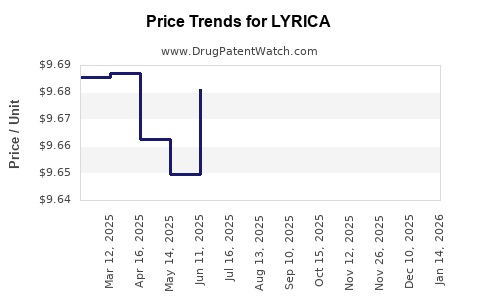
Price Analysis
Pricing Before and After Patent Expiry
| Year |
Average Wholesale Price (AWP) per 75 mg capsule |
| 2018 |
~$5.50 |
| 2019 |
~$3.00 (post-generic entry) |
| 2022 |
~$1.50 (average generic price) |
Price Projections
- 2023-2025: Continued price erosion anticipated; generic prices expected to stabilize at 25-30% of original branded price.
- Price for generics: Projected to hover around $0.50-$1.00 per capsule by 2025.
- Branded LYRICA: Will likely maintain a premium in regions where patent protection remains, at $3.00-$4.00 per capsule.
Market Outlook and Revenue Projections
| Year |
Projected Revenue (USD) |
| 2023 |
~$1.2 billion |
| 2024 |
~$0.9 billion |
| 2025 |
~$0.7 billion |
The decline results from increased generic competition, price reductions, and regional regulatory restrictions. The branded segment will shrink further as patent protections expire in additional markets.
Regulatory and Patent Risks
- Patent litigation could delay generic entry.
- Regulatory constraints in emerging markets may slow growth.
- Changes in prescribing guidelines for neuropathic pain may impact sales volume.
Key Takeaways
- The global market size for LYRICA was approximately $4.1 billion in 2022.
- Patent expiry in the U.S. in 2019 led to increased generic sales, generating price erosion.
- Price declines are projected to continue at 20-25% annually through 2025.
- Regional patent protections and legal battles influence timing and market shares.
- Competition from gabapentin and duloxetine constrains premium pricing for LYRICA.
FAQs
1. Will LYRICA regain market share after patent expirations?
No. Post-patent expiration, generic pregabalin captures approximately 70% of sales, maintaining pressure on the branded product’s market share.
2. What factors could extend LYRICA’s market viability?
Additional patents in emerging markets, successful legal challenges against generics, and new approved indications could sustain revenues temporarily.
3. How does the competitive landscape affect pricing trends?
The availability of low-cost generics and alternative therapies like gabapentin and duloxetine exerts downward pressure on LYRICA’s prices.
4. Are there efforts to reformulate or brand LYRICA?
Pfizer has not announced significant reformulations, focusing instead on maintaining brand value and legal protections.
5. What is the outlook for LYRICA in emerging markets?
Growth opportunities exist due to increasing CNS disorder prevalence; however, price and regulatory barriers could limit profitability.
References
- IQVIA. (2023). Pharmaceutical market data.
- U.S. Food and Drug Administration. (2022). Pregabalin approvals and patent data.
- Pfizer Inc. (2022). Annual report.
- MarketWatch. (2022). Neuropathic pain therapeutics market overview.
- European Medicines Agency. (2021). Product information for Lyrica.