Last updated: February 27, 2026
What is the current market size for eye lubricants?
The global eye lubricant market was valued at approximately USD 860 million in 2022. It is projected to grow at a compound annual growth rate (CAGR) of 6.2% from 2023 to 2030. The increase relates to rising prevalence of dry eye syndrome, aging populations, and increased awareness about eye health.
How is the market segmented?
The market divides primarily into types and distribution channels.
-
Type Segmentation:
- Artificial tears (accounting for 72% of sales in 2022)
- Gel ophthalmic lubricants
- Ointments
-
Distribution Channels:
- Hospital pharmacies (45%)
- Retail pharmacies (35%)
- Online stores (20%)
What are the primary drivers of growth?
- Rising incidence of dry eye disease (DED), affecting an estimated 5-50% of the population, especially older adults.
- Increased screen time due to digital device use.
- Growing awareness about eye health and preventive care.
- Expansion into emerging markets, where demand is increasing due to urbanization and lifestyle changes.
Who are the key players?
Major companies include:
- Allergan (AbbVie)
- Bausch + Lomb
- Johnson & Johnson
- Novartis
- Santen Pharmaceutical
These companies control roughly 70% of the global market, investing heavily in product development and marketing.
What are the regulatory considerations?
The U.S. Food and Drug Administration (FDA) classifies eye lubricants as over-the-counter (OTC) drugs, with specific labeling requirements. Similar standards exist in Europe (EMA) and Asia (PMDA). Patent protections typically last 10-15 years, encouraging innovation but limiting generic competition initially.
What are the key patents influencing future product development?
- Patents covering preservative-free preservative delivery systems.
- Formulation patents for long-lasting or multi-dose products.
- Patents on combined formulations with active ingredients, such as anti-inflammatory agents.
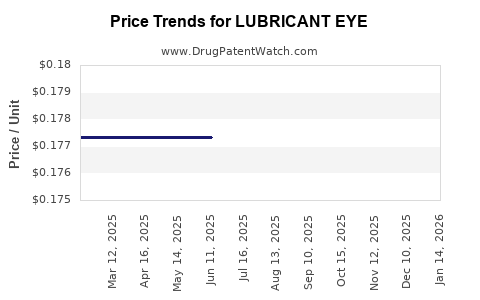
Price projections for eye lubricants
Current retail prices range from USD 5 to USD 20 per 15 mL bottle for branded artificial tears. Generics are priced between USD 3 and USD 7.
- 2023: Average price per bottle is USD 8.
- 2028: Price likely to increase to USD 10 for branded products due to R&D costs and inflation.
- 2030: Price may further rise to USD 12, driven by premium formulations and packaging innovations.
Generic products are expected to remain steady at USD 3-7 per bottle, with minimal change due to market saturation and price competition.
Factors impacting future pricing
- Development of preservative-free formulations with better safety profiles may command higher prices.
- Consolidation among manufacturers can influence pricing power.
- Regulatory changes favoring innovation can increase R&D costs, pushing prices upward.
- Market entry of low-cost generics in emerging regions could suppress prices.
Competitive landscape and market entry considerations
Innovation in preservative-free designs and delivery mechanisms remains the primary differentiator. Entry barriers include regulatory hurdles, patent protections, and establishing distribution channels. Cost advantages from manufacturing in emerging markets influence pricing strategies.
Potential for new product launches
Pipeline products include hyaluronic acid-enhanced formulations, anti-inflammatory combination drops, and sustained-release devices. These innovations typically command premium pricing and can shift the market dynamics when introduced.
Summary: Market outlook
The eye lubricant market will expand driven by unmet needs in dry eye management and aging demographics. Price increases will be moderate, influenced by innovation, regulation, and competition. Major players continue investing in formulation improvements, with premium products gaining market share.
Key Takeaways
- The global market was USD 860 million in 2022, with a CAGR of 6.2% expected through 2030.
- Branded products retail at USD 8 on average in 2023, projected to rise to USD 10 by 2028.
- Generic prices remain stable at USD 3-7 per bottle, with limited fluctuation.
- Innovation, regulatory environments, and market consolidation shape pricing and competitive strategies.
- Entry barriers include patent protections and distribution challenges, favoring incumbents.
FAQs
1. What factors most influence prices for eye lubricants?
Innovation costs, regulatory approval processes, packaging technology, and competitive pressures directly impact retail pricing.
2. How does patent protection affect market entry?
Patents last roughly 10-15 years, preventing generic competitors and allowing higher prices for branded products during that period.
3. Will premium eye lubricants significantly outperform lower-cost options?
Premium formulations with added features like preservative-free designs and longer-lasting effects can command higher prices due to perceived added value.
4. What role will emerging markets play in future growth?
Emerging markets represent increased demand due to urbanization, increased screen time, and growing awareness, potentially causing price stabilization or reductions in those regions.
5. What are the biggest risks to price stability?
Patent expirations, regulatory changes, market entry of low-cost generics, and technological obsolescence can suppress prices or shift market share.
References
[1] Zion Market Research. (2022). Eye Lubricant Market by Type. Global Industry Report.
[2] MarketsandMarkets. (2023). Dry Eye Disease Market, Forecast 2023-2030.
[3] FDA. (2022). Over-the-Counter Ophthalmic Drug Products. Guidance Document.
[4] IBISWorld. (2022). Ophthalmic Drugs Industry.
[5] Grand View Research. (2023). Artificial Tears Market Analysis and Forecast.