Last updated: July 27, 2025
Introduction
Losartan potassium, marketed globally under the brand name Cozaar among others, is a widely prescribed antihypertensive medication belonging to the class of angiotensin II receptor antagonists. First approved by the U.S. Food and Drug Administration (FDA) in 1995, it has established a significant footprint in the management of hypertension, diabetic nephropathy, and cardiovascular risk reduction. This analysis provides an in-depth overview of the current market landscape for losartan potassium, explores key factors influencing its pricing, and offers future price projections grounded in industry trends.
Market Overview
Global Market Size and Growth Trends
The global antihypertensive drugs market, which includes losartan potassium, was valued at approximately USD 19.7 billion in 2022 and is projected to reach around USD 26.8 billion by 2028, expanding at a compound annual growth rate (CAGR) of 5.3% (2023–2028)[1]. Losartan remains a significant contributor within this segment, particularly benefiting from its established safety profile, patent expirations, and entry in emerging markets.
Key Market Drivers
- Prevalence of Hypertension: An estimated 1.3 billion people worldwide suffer from hypertension, with prevalence expected to rise due to aging populations and lifestyle factors (WHO, 2021)[2]. This fuels sustained demand for affordable antihypertensive agents like losartan.
- Chronic Kidney Disease (CKD) and Diabetic Nephropathy: Losartan's renal-protective effects drive its use in CKD, especially among diabetic patients.
- Patent Expiry and Generic Competition: Losartan's patent expired in numerous regions in the late 2000s, leading to an influx of generics that drastically reduced prices and increased access.
- Healthcare Spending Growth in Emerging Markets: As healthcare infrastructure improves in Asia-Pacific and Latin America, demand for cost-effective treatments rises.
Market Players and Competition
Post-patent expiration, the market saw increased generic penetration with major pharmaceutical companies, including Teva, Mylan, Sandoz, and Hikma, dominating the low-cost segment. Branded formulations like Cozaar have maintained niche markets via differentiated formulations and specialized indications. Patent challenges and the introduction of combination therapies also influence market dynamics.
Pricing Landscape
Drug Pricing Overview
- Brand-Name Losartan (Cozaar): Historically, branded losartan retailed at prices significantly higher than generics. For example, a typical 30-day supply in the United States could cost over USD 600 without insurance.
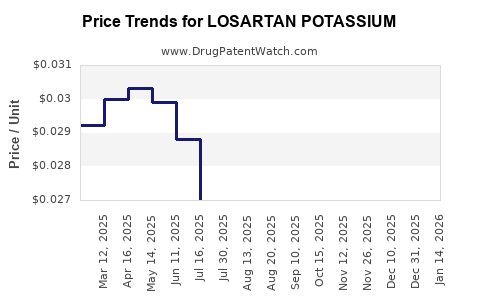
- Generic Losartan: Post-patent expiry, prices for generic losartan in the U.S. fell substantially, averaging around USD 4–USD 15 for a 30-day supply (depending on dosage and pharmacy discounts) [3].
Regional Price Variability
- United States: Higher prices driven by insurance structures, patent protections, and brand premiums. Generic prices have seen significant declines, with some discounts available through pharmacy benefit managers (PBMs).
- Europe: With more centralized pricing controls and reimbursement policies, prices for losartan vary by country—ranging from USD 1–USD 3 per tablet in countries with government-negotiated prices.
- Emerging Markets: Prices remain highly variable, often significantly lower due to local manufacturing, government subsidies, and reduced purchasing power.
Impact of Biosimilars and Formulation Innovations
Currently, no biosimilars of losartan exist, but innovative formulations such as fixed-dose combinations with other antihypertensives are emerging, potentially influencing pharmacoeconomic considerations.
Future Price Projections
Factors Influencing Price Trends
- Patent Status and Generic Domination: Continued patent expirations for losartan global markets are expected to sustain low generic prices.
- Market Accessibility Programs: Governments and NGOs aim to reduce costs further via bulk procurement and subsidy programs.
- Demand in Developing Countries: Growing prevalence of hypertension coupled with infrastructure investments suggests increasing volume sales, which may drive costs lower.
- Regulatory Environment: Price caps and reimbursement policies in markets like Europe and North America could cap price increases.
- Formulation and Indication Expansion: Broadening of therapeutic indications or novel delivery systems might enable premium pricing.
Projected Price Range (2023–2030)
- United States: The retail price for generic losartan is expected to stabilize around USD 3–USD 7 per 30-day supply, reflecting ongoing competition and discounts.
- Europe: Prices are projected to hover around USD 1–USD 3 per tablet, with marginal fluctuations due to regulatory adjustments.
- Emerging Markets: Price points are anticipated to remain low, approximately USD 0.50–USD 2 per tablet, supported by local manufacturing and government interventions.
In essence, prices for losartan potassium are expected to decline or stabilize over the next decade, driven predominantly by patent expirations, generic competition, and market access initiatives.
Market Challenges and Opportunities
Challenges
- Market Saturation: The widespread availability of low-cost generics limits profit margins for branded formulations.
- Regulatory Hurdles: Stringent pricing and reimbursement policies in certain regions could restrict price increases or product launch strategies.
- Competitive Therapeutics: Emerging antihypertensives, including direct renin inhibitors or novel agents, might affect losartan's market share.
Opportunities
- Fixed-Dose Combinations (FDCs): Developing combination pills with other antihypertensives (e.g., amlodipine) offers value-added options.
- Personalized Medicine: Genetic screening and targeted therapies could create niche markets for specific patient groups.
- Expanding in New Markets: Strategic investments in emerging markets can increase volume sales and offset low per-unit prices.
Key Takeaways
- The global losartan potassium market is mature, with large volumes driven by hypertension prevalence and expanded access following patent expiries.
- Prices have declined sharply post-generic entry, with stable or minimal fluctuations expected in the foreseeable future.
- US generic prices are projected to range around USD 3–USD 7 per month, with European and emerging markets exhibiting lower prices.
- Industry trends suggest a shift towards combination therapies and personalized approaches may create niche growth opportunities.
- Policy and regulation will remain critical drivers influencing future pricing and market penetration.
FAQs
1. How does patent expiration influence losartan prices globally?
Patent expiration typically leads to increased generic competition, resulting in significant price reductions and increased accessibility in both developed and developing markets.
2. Are there any biosimilars or advanced formulations of losartan in development?
Currently, no biosimilars exist for losartan, but fixed-dose combination (FDC) formulations with other antihypertensives are being developed, which may influence future pricing and market strategies.
3. What are the primary factors affecting losartan's price in the United States?
Insurance coverage, pharmacy discounts, patent status, and manufacturer pricing strategies primarily influence retail prices in the U.S. market.
4. Can losartan prices decrease further in emerging markets?
Yes, due to local manufacturing, government subsidies, and increased competition, prices in emerging markets are likely to remain low or decline further.
5. What emerging trends could impact losartan's future market share?
Introduction of novel antihypertensive classes, combination therapies, and personalized medicine approaches could affect losartan's market dominance over time.
References
[1] Grand View Research, "Antihypertensive Drugs Market Size & Trends," 2023.
[2] World Health Organization, "Hypertension," 2021.
[3] GoodRx, "Losartan prices and discounts," 2023.