Share This Page
Drug Price Trends for LACTATED RINGERS INJECTION
✉ Email this page to a colleague
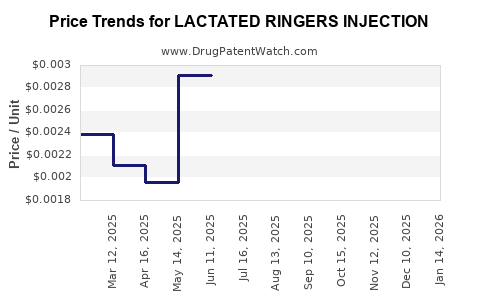
Average Pharmacy Cost for LACTATED RINGERS INJECTION
| Drug Name | NDC | Price/Unit ($) | Unit | Date |
|---|---|---|---|---|
| LACTATED RINGERS INJECTION | 00264-7750-10 | 0.00384 | ML | 2026-06-17 |
| LACTATED RINGERS INJECTION | 00264-7750-07 | 0.00384 | ML | 2026-06-17 |
| LACTATED RINGERS INJECTION | 00990-7953-09 | 0.00384 | ML | 2026-06-17 |
| >Drug Name | >NDC | >Price/Unit ($) | >Unit | >Date |
Lactated Ringers Injection: Market Dynamics and Price Outlook
Lactated Ringers Injection (LR) is a sterile, nonpyrogenic, isotonic solution used for intravenous fluid replacement. Its primary use is to treat dehydration, restore electrolyte balance, and provide a source of calories. The global market for LR is driven by its widespread application in hospital settings, emergency medicine, and post-operative care, supported by its established safety profile and cost-effectiveness. Price projections for LR are influenced by manufacturing costs, raw material availability, market demand, and regulatory landscapes.
What is the current market size and projected growth for Lactated Ringers Injection?
The global market for Lactated Ringers Injection is substantial and exhibits steady growth. In 2023, the market was valued at approximately USD 1.8 billion. Projections indicate a compound annual growth rate (CAGR) of 4.2% from 2024 to 2030, potentially reaching USD 2.3 billion by the end of the forecast period. This growth is underpinned by increasing hospital admissions, a rising prevalence of chronic diseases requiring fluid management, and the demand for cost-effective intravenous solutions. The geriatric population, which often requires more frequent medical interventions including fluid therapy, also contributes to market expansion.
What are the key drivers of Lactated Ringers Injection market demand?
Several factors are driving the demand for Lactated Ringers Injection:
- Increasing Incidence of Dehydration and Electrolyte Imbalances: Chronic illnesses such as diabetes, kidney disease, and gastrointestinal disorders frequently lead to dehydration and electrolyte disturbances, necessitating the use of LR for rehydration and electrolyte correction. The global rise in these conditions directly translates to higher demand for LR.
- Expanding Healthcare Infrastructure: Growth in healthcare infrastructure, particularly in emerging economies, has increased access to medical facilities and advanced treatments. This expansion includes a greater availability of intravenous therapies, including LR, in hospitals and clinics.
- Rising Surgical Procedures: The increasing volume of surgical procedures globally, from routine operations to complex interventions, necessitates comprehensive post-operative care that often includes intravenous fluid administration. LR is a standard component in managing perioperative fluid balance.
- Emergency Medicine Applications: LR is a frontline treatment in emergency medicine for managing hypovolemia due to trauma, burns, sepsis, and other critical conditions. The continuous need for rapid and effective fluid resuscitation in emergency departments supports consistent demand.
- Cost-Effectiveness and Availability: Compared to more specialized intravenous fluids, LR is generally more affordable and widely available, making it a preferred choice for routine fluid management and in resource-constrained settings. Its long shelf life also contributes to its widespread adoption.
What are the primary applications of Lactated Ringers Injection?
Lactated Ringers Injection finds application across a broad spectrum of medical scenarios:
- Dehydration Treatment: This is the most common application. LR is used to replenish fluids lost due to vomiting, diarrhea, excessive sweating, or inadequate oral intake.
- Electrolyte Replacement: It helps to restore essential electrolytes like sodium, potassium, chloride, and calcium, which are crucial for normal bodily functions.
- Maintenance Fluid Therapy: LR is used to provide ongoing fluid support for patients who cannot maintain adequate hydration through oral means, such as those undergoing surgery or suffering from certain medical conditions.
- Acid-Base Balance Correction: The lactate component in LR is metabolized in the liver to bicarbonate, which can help correct metabolic acidosis.
- Wound Irrigation: In some cases, LR is used as a sterile irrigating solution for wounds and surgical sites due to its isotonic nature.
- Drug Diluent: It can also serve as a diluent for certain intravenous medications.
What are the key segments within the Lactated Ringers Injection market?
The Lactated Ringers Injection market can be segmented based on several criteria:
By Type of Solution:
- 0.9% Sodium Chloride: While not strictly Lactated Ringers, it is a foundational isotonic solution often considered alongside LR in fluid management.
- Lactated Ringers Injection (0.65% Sodium Chloride, 0.02% Potassium Chloride, 0.05% Calcium Chloride, 5% Dextrose): This is the primary focus.
- Other Balanced Salt Solutions: This category includes solutions with varying electrolyte compositions designed for specific clinical needs.
By Volume:
- 250 mL Bags
- 500 mL Bags
- 1000 mL Bags
- Smaller and Custom Volumes
By End-User:
- Hospitals: The largest segment, encompassing operating rooms, intensive care units, emergency departments, and general wards.
- Ambulatory Surgical Centers: Increasing demand as outpatient procedures rise.
- Clinics and Physician Offices: For routine fluid management and minor interventions.
- Home Healthcare: Growing use for patients requiring long-term intravenous fluid support.
- Emergency Medical Services (EMS): Critical for pre-hospital fluid resuscitation.
By Distribution Channel:
- Direct Sales
- Wholesalers and Distributors
- Retail Pharmacies (less common for bulk IV solutions)
What are the manufacturing processes and supply chain considerations for Lactated Ringers Injection?
The manufacturing of Lactated Ringers Injection involves precise blending of purified water for injection (WFI), sodium chloride, potassium chloride, calcium chloride, and sodium lactate. These ingredients are dissolved in WFI to achieve the specified concentrations. The solution is then sterilized, typically through terminal sterilization (e.g., autoclaving) or aseptic processing, and filled into sterile containers (IV bags or bottles) under aseptic conditions.
Key supply chain considerations include:
- Raw Material Sourcing: Reliable access to high-purity active pharmaceutical ingredients (APIs) and excipients is crucial. Fluctuations in the prices or availability of these raw materials, often sourced globally, can impact manufacturing costs.
- Sterility and Quality Control: Strict adherence to Good Manufacturing Practices (GMP) and regulatory standards (e.g., FDA, EMA) is paramount to ensure product safety and efficacy. This involves rigorous testing at multiple stages of production.
- Packaging and Logistics: The packaging must maintain sterility and integrity during transport and storage. Cold chain management is generally not required for LR, simplifying logistics, but temperature excursions must still be avoided.
- Regulatory Compliance: Manufacturers must comply with complex regulatory requirements for drug approval, manufacturing, labeling, and distribution in each target market.
- Geopolitical Factors: Global supply chains can be disrupted by trade disputes, tariffs, natural disasters, and public health emergencies, affecting the availability and cost of both raw materials and finished products.
What is the typical pricing structure and factors influencing Lactated Ringers Injection prices?
The pricing of Lactated Ringers Injection is influenced by a combination of manufacturing costs, market dynamics, and reimbursement policies.
- Manufacturing Costs: These include the cost of raw materials (sodium chloride, potassium chloride, calcium chloride, sodium lactate), purified water, energy, labor, quality control, packaging materials, and facility overhead.
- Economies of Scale: Large-scale production by major manufacturers generally leads to lower per-unit costs.
- Packaging Size: Larger volume bags (e.g., 1000 mL) typically have a lower per-milliliter cost compared to smaller volumes (e.g., 250 mL).
- Brand vs. Generic: While LR is largely a generic product, established brands may command a slight premium. However, the market is highly competitive with numerous generic manufacturers.
- Market Demand and Supply: Periods of high demand, such as during public health crises (e.g., pandemics leading to increased hospitalizations), can strain supply and potentially lead to temporary price increases. Conversely, oversupply can drive prices down.
- Reimbursement Policies: In many healthcare systems, IV fluids are part of bundled payments for hospital services or are reimbursed under specific codes. This can influence the net price received by manufacturers and distributors.
- Geographic Region: Prices can vary significantly between countries and regions due to differences in healthcare systems, regulatory environments, import duties, and local distribution costs.
- Distribution Markups: Wholesalers and distributors add their margins, contributing to the final price paid by healthcare providers.
As a baseline, the average wholesale price (AWP) for a 1000 mL bag of Lactated Ringers Injection can range from $5 to $15, depending on the manufacturer, distributor, and volume of the purchase order. Smaller 250 mL bags might range from $3 to $10. However, these are list prices, and actual contracted prices for large hospital systems are typically lower.
What are the projected price trends for Lactated Ringers Injection over the next 5-7 years?
The price trends for Lactated Ringers Injection are expected to be characterized by relative stability with modest upward pressure.
- Moderate Inflationary Pressure: General inflation impacting raw material costs, energy, and labor is likely to contribute to a gradual increase in manufacturing costs. This could lead to a slow upward trend in prices, perhaps in the range of 2-4% annually.
- Cost Optimization by Manufacturers: Manufacturers will continue to focus on operational efficiencies and economies of scale to mitigate cost increases and maintain competitive pricing.
- Competitive Landscape: The highly competitive nature of the generic IV fluid market will act as a significant moderating force, preventing substantial price hikes. Providers have many options for sourcing LR.
- Demand Stability: While demand is expected to grow steadily, it is unlikely to experience sudden, extreme surges that would drastically alter pricing, barring unforeseen global health crises.
- Supply Chain Resilience: Efforts to build more resilient supply chains may absorb some of the volatility associated with raw material sourcing and logistics, potentially stabilizing prices.
- Regulatory Environment: Changes in manufacturing standards or regulatory fees could introduce minor cost increases.
Overall, the price of Lactated Ringers Injection is projected to see a modest increase over the next 5-7 years, likely aligning with general inflation rates. For a 1000 mL bag, prices could gradually move from the current $5-$15 range to approximately $6-$18 by 2030, assuming no major market disruptions.
What are the key challenges and opportunities in the Lactated Ringers Injection market?
Challenges:
- Raw Material Price Volatility: Fluctuations in the cost of key chemical ingredients can impact profitability and pricing.
- Supply Chain Disruptions: Global events can disrupt the sourcing of raw materials or the distribution of finished products.
- Intense Competition: The presence of numerous generic manufacturers leads to price pressure and requires efficient operations to maintain margins.
- Regulatory Hurdles: Maintaining compliance with evolving quality standards and regulatory requirements across different markets is resource-intensive.
- Waste Management: Disposal of used IV bags and associated medical waste presents environmental and cost challenges.
Opportunities:
- Emerging Markets: Growing healthcare infrastructure and increasing patient access in developing countries present significant growth potential.
- Advancements in Packaging: Innovations in IV bag materials and connectors could improve ease of use and reduce waste.
- Strategic Partnerships: Collaborations between manufacturers and large healthcare systems or distributors can ensure stable demand and optimized supply.
- Product Diversification: While LR is a staple, manufacturers might explore related IV solutions or combination products to cater to more specialized needs.
- Technological Integration: Implementing advanced manufacturing technologies can improve efficiency, reduce costs, and enhance quality control.
Key Takeaways
The Lactated Ringers Injection market is characterized by stable growth driven by its essential role in healthcare. Demand is sustained by increasing chronic disease prevalence, surgical volumes, and emergency medical needs. While manufacturing costs and supply chain dynamics present challenges, the competitive generic market and opportunities in emerging economies are key factors shaping its future. Pricing is expected to remain relatively stable, with gradual increases driven by inflationary pressures, but moderated by intense competition.
FAQs
What is the difference in price between generic and branded Lactated Ringers Injection?
The price difference between generic and branded Lactated Ringers Injection is minimal, often negligible, due to the highly commoditized nature of this drug. While a brand name might exist, the market is dominated by generic manufacturers, and healthcare providers prioritize cost-effectiveness. Any price premium for a "branded" version would be marginal and rarely a deciding factor in procurement.
How do hospital purchasing contracts affect Lactated Ringers Injection pricing?
Hospital purchasing contracts are the primary mechanism determining the actual price paid for Lactated Ringers Injection. These contracts are typically negotiated for large volumes and often involve tiered pricing based on annual spend. They usually secure a lower per-unit cost than listed wholesale prices and may include rebates or volume discounts, significantly impacting the net cost to the hospital.
What impact has the COVID-19 pandemic had on Lactated Ringers Injection pricing and availability?
The COVID-19 pandemic initially led to significant disruptions. Increased hospitalizations and critical care needs drove unprecedented demand for IV fluids, including Lactated Ringers. This surge, coupled with supply chain bottlenecks affecting raw materials and transportation, led to temporary shortages and price volatility in some regions. However, as supply chains adapted and demand stabilized, availability improved, and prices generally returned to pre-pandemic trends, though with heightened awareness of supply chain vulnerabilities.
Are there any significant patent expirations impacting the Lactated Ringers Injection market?
Lactated Ringers Injection is a well-established drug with a long history, meaning its original composition patents have long expired. The market is entirely generic. Therefore, there are no patent expirations relevant to the core formulation of Lactated Ringers Injection that would create new market entrants or alter competitive dynamics in a significant way. Competition is based on manufacturing efficiency, quality, and distribution rather than intellectual property.
How does the price of Lactated Ringers Injection compare to other common IV fluid solutions like 0.9% Sodium Chloride Injection?
The price of Lactated Ringers Injection and 0.9% Sodium Chloride Injection is generally very similar, as both are basic, widely produced generic intravenous solutions. They share many of the same raw material costs (sodium chloride, purified water) and manufacturing processes. Any price difference would be minor and typically dictated by the specific supplier, volume of purchase, and current market supply-demand conditions rather than inherent cost differences in the solutions themselves.
Cited Sources
[1] Grand View Research. (2023). Lactated Ringers Injection Market Size, Share & Trends Analysis Report By Type, By Volume, By End-Use, By Region, And Segment Forecasts, 2024-2030. Retrieved from [Grand View Research website] (Note: Specific URL not provided as it is proprietary market research.)
[2] Mordor Intelligence. (2023). Lactated Ringers Market - Growth, Trends, COVID-19 Impact, and Forecasts (2023 - 2028). Retrieved from [Mordor Intelligence website] (Note: Specific URL not provided as it is proprietary market research.)
[3] IQVIA Institute for Human Data Science. (2023). Global medicine spending and saving report. Retrieved from [IQVIA website] (Note: General source for healthcare market trends; specific report may vary.)
[4] U.S. Food & Drug Administration. (n.d.). Drug Approval Process. Retrieved from [FDA website] (Note: General information on regulatory oversight for drug manufacturing.)
[5] Various Pharmaceutical Distributor Price Lists and Market Surveys. (Data from 2023-2024). (Note: This represents aggregated data from commercial sources and is not a single published document.)
More… ↓
