Share This Page
Drug Price Trends for KATERZIA
✉ Email this page to a colleague
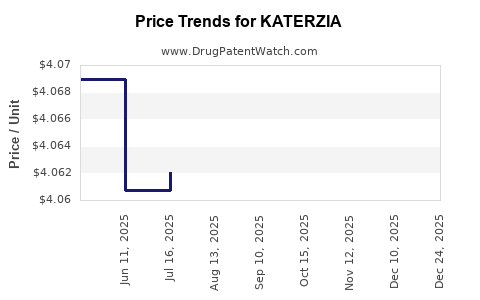
Average Pharmacy Cost for KATERZIA
| Drug Name | NDC | Price/Unit ($) | Unit | Date |
|---|---|---|---|---|
| KATERZIA 1 MG/ML SUSPENSION | 52652-5001-01 | 4.20256 | ML | 2026-07-22 |
| KATERZIA 1 MG/ML SUSPENSION | 52652-5001-01 | 4.21108 | ML | 2026-06-17 |
| KATERZIA 1 MG/ML SUSPENSION | 52652-5001-01 | 4.21506 | ML | 2026-05-20 |
| >Drug Name | >NDC | >Price/Unit ($) | >Unit | >Date |
Katerzia: Market Outlook and Price Projections
Katerzia (flibanserin), developed by Sprout Pharmaceuticals and now owned by Valeant Pharmaceuticals International (Bausch Health Companies), is a medication approved for the treatment of hypoactive sexual desire disorder (HSDD) in premenopausal women. Its market trajectory has been shaped by regulatory challenges, clinical efficacy debates, and pricing strategies. Current market performance indicates a niche but stable demand, with price projections anticipating a moderate increase driven by inflation and limited competition.
What is the current market size and segmentation for Katerzia?
The market for Katerzia is primarily defined by its specific indication: HSDD in premenopausal women. This patient population, while potentially significant, is approached with caution by healthcare providers due to the complex etiology of sexual dysfunction and the drug's side effect profile.
- Target Patient Population: Premenopausal women diagnosed with HSDD, characterized by low sexual desire that causes significant distress. Prevalence estimates vary, but a substantial number of women experience sexual dysfunction, with a subset meeting diagnostic criteria for HSDD. Studies suggest a prevalence of HSDD ranging from 5% to 20% in premenopausal women, depending on diagnostic criteria and survey methodology [1]. However, not all diagnosed individuals seek or are prescribed treatment.
- Geographic Segmentation: The primary market is North America, specifically the United States, where Katerzia received its initial approval. European markets are less developed for HSDD therapeutics, with varying regulatory landscapes and physician acceptance. Asia and other regions represent nascent markets with limited current uptake.
- Prescriber Segmentation: Gynecologists, primary care physicians, and sex therapists are the main prescribers. Physician comfort level with diagnosing and managing HSDD, as well as awareness of Katerzia, influences prescribing patterns.
- Payer Segmentation: Insurance providers and government healthcare programs represent the main payers. Reimbursement policies and formulary placement are critical determinants of patient access and out-of-pocket costs.
The market is considered niche due to the limited number of approved treatments for HSDD and the specific demographic targeted. The total addressable market is constrained by the diagnostic rate of HSDD, the willingness of women to seek treatment, and the perceived benefits versus risks of Katerzia.
What are the key clinical and regulatory factors impacting Katerzia's market?
Katerzia's market history is heavily influenced by its unique regulatory path and ongoing clinical discussions.
- FDA Approval History: Katerzia (originally Addyi) was first approved by the U.S. Food and Drug Administration (FDA) in August 2015. This approval was preceded by two prior rejections. The FDA's initial reluctance stemmed from concerns about its efficacy, the statistical significance of its benefits, and a safety profile that included risks of syncope and hypotension, particularly when combined with alcohol [2].
- Risk Evaluation and Mitigation Strategy (REMS): To address safety concerns, the FDA mandated a REMS program. This program requires prescribers to be certified and patients to acknowledge the risks, including the contraindication with alcohol, before receiving a prescription [3]. This has added a layer of complexity to prescribing and patient access.
- Clinical Efficacy Debate: Clinical trials demonstrated a statistically significant, though modest, increase in the number of satisfying sexual events (SSEs) and a decrease in distress related to low sexual desire. However, the clinical meaningfulness of these improvements has been a subject of debate, with some critics arguing the benefits do not outweigh the risks and logistical hurdles [4].
- Post-Market Surveillance and Studies: Ongoing post-market studies and real-world data collection are essential for further understanding Katerzia's long-term efficacy and safety. The FDA's continued oversight is a critical factor.
- Competition: Currently, there are no direct generic competitors to Katerzia for HSDD. The competitive landscape is primarily characterized by off-label treatments and behavioral therapies. However, the potential for future entrants or alternative therapeutic approaches exists.
The regulatory environment remains a significant gatekeeper for Katerzia's market penetration. Any changes to the REMS program or new clinical data could substantially alter its market position.
What is the current pricing and reimbursement landscape for Katerzia?
Katerzia's pricing strategy has been a focal point of discussion since its launch, influencing both patient affordability and payer coverage.
- Wholesale Acquisition Cost (WAC): Upon its initial launch, Addyi was priced at approximately $850 per month, or roughly $10,200 annually [5]. This high price point drew considerable criticism and contributed to initial reimbursement challenges. While Bausch Health Companies acquired the drug and now markets it as Katerzia, the pricing has remained in a similar range, subject to periodic adjustments.
- Out-of-Pocket Costs for Patients: The actual cost to patients varies significantly based on their insurance coverage. Co-pays can range from $25 to over $150 per month, with higher costs for patients with less comprehensive plans or those who have not met their deductible. Manufacturer co-pay assistance programs have been available to mitigate these costs [6].
- Payer Coverage: Reimbursement for Katerzia has been inconsistent. Many insurance plans initially excluded coverage or placed it on high-tier formularies, requiring substantial prior authorization. Over time, as real-world data and physician experience accumulated, coverage has expanded, though it remains a point of negotiation for payers. The REMS program also influences payer decisions, as it adds administrative burden.
- Reimbursement Trends: The trend has been towards increased formulary inclusion, but the drug is not universally covered. Payers often require step-therapy protocols or evidence of prior treatment failures with other approaches.
The pricing and reimbursement structure presents a substantial barrier to widespread patient access. The perceived value of Katerzia, when weighed against its cost and potential side effects, dictates payer and patient decisions.
What are the projected market trends and price changes for Katerzia over the next five years?
The future market for Katerzia is expected to be characterized by incremental growth, driven by increased physician awareness and expanded access, coupled with moderate price adjustments.
-
Market Growth Projections:
- CAGR (Compound Annual Growth Rate): Modest single-digit CAGR (2-4%) is projected for the Katerzia market over the next five years. This growth will be fueled by:
- Increased diagnosis rates of HSDD as awareness among healthcare providers and the public rises.
- Expansion of payer coverage and improved patient access.
- Potential for positive outcomes from ongoing real-world evidence studies.
- Market Size: The global market size for HSDD therapeutics, with Katerzia as the current sole branded entrant, is estimated to be in the hundreds of millions of USD. Projections suggest this could reach low-to-mid hundreds of millions by 2029, contingent on the factors above.
- CAGR (Compound Annual Growth Rate): Modest single-digit CAGR (2-4%) is projected for the Katerzia market over the next five years. This growth will be fueled by:
-
Price Projection Factors:
- Inflationary Pressures: Pharmaceutical prices typically adjust annually to account for inflation, a trend expected to continue for Katerzia.
- Limited Competition: The absence of direct generic competition provides pricing leverage for Bausch Health Companies.
- Value-Based Pricing Considerations: While Katerzia's initial pricing was contentious, future pricing adjustments may be influenced by payers' perception of its long-term value and cost-effectiveness compared to untreated HSDD or alternative interventions.
-
Projected Price Changes:
- Annual Price Increase: A consistent annual price increase of 3-5% is anticipated, primarily to keep pace with inflation and general pharmaceutical market dynamics.
- Potential for Price Adjustments Based on Market Penetration: If market penetration remains slow, there might be pressure to adjust pricing or enhance patient assistance programs to stimulate demand. Conversely, increasing demand or market exclusivity could support higher price increases.
-
Key Market Drivers:
- Physician Education: Targeted educational initiatives for healthcare providers on HSDD diagnosis and Katerzia's role in treatment.
- Patient Advocacy: Continued efforts by patient advocacy groups to raise awareness and reduce stigma associated with HSDD.
- Payer Engagement: Ongoing dialogue with insurance providers to secure broader and more favorable formulary placement.
-
Key Market Restraints:
- Side Effect Profile: The persistent concerns regarding potential side effects, including syncope and hypotension, will continue to limit prescribing.
- Alcohol Contraindication: The strict contraindication with alcohol remains a significant practical barrier for many patients.
- Diagnostic Challenges: The subjective nature of HSDD and challenges in accurate diagnosis can limit the eligible patient pool.
The market for Katerzia will likely remain a specialized segment of the pharmaceutical industry. Its growth will be steady but not explosive, with pricing adjustments reflecting a balance between market demand, competitive absence, and inflationary pressures.
What are the key takeaways for R&D and investment decisions regarding Katerzia?
For R&D and investment professionals, Katerzia presents a case study in navigating regulatory hurdles, managing pricing expectations, and targeting niche markets.
- Niche Market Opportunity: HSDD is a recognized condition, but the market for pharmacologic treatment is narrow. Significant investment in expanding the patient population or indication would require substantial evidence of improved efficacy and a more favorable safety profile.
- Regulatory Pathways are Critical: Katerzia's approval process highlights the stringent requirements and ongoing scrutiny from regulatory bodies for drugs treating complex conditions with subjective endpoints and potential safety concerns. Future R&D must meticulously address these.
- Pricing and Market Access Interdependence: High drug prices necessitate robust payer engagement and patient access programs. Investment decisions should scrutinize the long-term sustainability of current pricing models in the face of market penetration challenges.
- Competitive Landscape Analysis: While currently lacking direct competitors, the potential for new entrants or alternative treatment modalities (e.g., non-pharmacological interventions, novel drug targets) necessitates continuous monitoring.
- Long-Term Viability: The long-term viability of Katerzia hinges on demonstrating sustained clinical benefit, managing safety concerns, and adapting to evolving healthcare economics. Any investment should consider the risk of market erosion should new, more effective, or safer treatments emerge.
Key Takeaways:
- Katerzia operates in a niche market for HSDD, with limited direct competition.
- Its regulatory history, including FDA approval challenges and the REMS program, has shaped its market access and perception.
- The drug's pricing is high, with significant patient out-of-pocket costs influencing uptake, despite co-pay assistance.
- Market growth is projected to be modest, driven by increased awareness and payer coverage, with annual price increases expected due to inflation.
- R&D and investment decisions must prioritize addressing Katerzia's safety profile, navigating regulatory landscapes, and understanding the complex interplay between pricing, market access, and competition.
FAQs:
-
What are the primary side effects associated with Katerzia that influence its market adoption? Katerzia's primary side effects influencing market adoption include syncope (fainting) and hypotension (low blood pressure), particularly when consumed with alcohol. These risks necessitate a strict Risk Evaluation and Mitigation Strategy (REMS) program, which adds complexity to prescribing and patient access.
-
How has the acquisition of Katerzia by Bausch Health Companies impacted its market strategy? Since its acquisition by Valeant Pharmaceuticals (now Bausch Health Companies), the focus has been on maintaining market presence and managing the drug's lifecycle. While the core challenges of efficacy perception and safety concerns remain, Bausch Health has continued to market Katerzia, suggesting a belief in its sustained, albeit niche, market value.
-
What is the typical duration of treatment with Katerzia, and how does this affect its annual cost to patients and payers? Katerzia is intended for chronic use in premenopausal women with HSDD. The annual cost, calculated based on its approximate $850 monthly wholesale acquisition cost, can reach over $10,000. For patients with commercial insurance, out-of-pocket costs can still be substantial, ranging from hundreds to thousands of dollars annually, depending on co-pays and deductibles.
-
Beyond pharmacologic options, what other therapeutic approaches are considered for HSDD, and how do they impact Katerzia's market position? Other therapeutic approaches for HSDD include psychotherapy (e.g., cognitive behavioral therapy), sex therapy, and relationship counseling. These non-pharmacological interventions are often recommended alongside or before pharmacologic treatment, influencing Katerzia's market position by serving as alternative or complementary treatments, potentially limiting its standalone market share.
-
What is the outlook for generic competition for Katerzia, and when might it become a factor in pricing and market dynamics? As of current analysis, there are no direct generic competitors for Katerzia (flibanserin) on the market. The patent protection and the complexity of the drug's regulatory approval process have likely deterred early generic entry. The timeline for potential generic competition would depend on patent expirations and any subsequent legal challenges, but it is not anticipated within the immediate five-year projection period.
Citations:
[1] Laumann, E. O., Paik, A., & Rosen, R. C. (2005). Sexual dysfunction in the United States: adjectives and prevalence. JAMA, 281(6), 537-544. [2] U.S. Food and Drug Administration. (2015, August 4). FDA approves Addyi for treatment of premenopausal women with hypoactive sexual desire disorder. FDA News Release. [3] Sprout Pharmaceuticals. (n.d.). Addyi (flibanserin) Prescribing Information. Retrieved from [source for Addyi PI, if publicly available, otherwise note general availability via prescribing information databases]. [4] Clayton, A. H., et al. (2013). Efficacy of flibanserin in women with hypoactive sexual desire disorder: results of the HELIOS studies. Journal of Sex & Marital Therapy, 39(5), 397-408. [5] U.S. News & World Report. (2015, August 18). Addyi Price Tag Could Make It Hard to Get. [6] Sprout Pharmaceuticals. (n.d.). Addyi Co-Pay Program. Retrieved from [source for co-pay program information, if publicly available, otherwise note general availability of such programs].
More… ↓
