Last updated: February 13, 2026
Ipratropium, a bronchodilator used primarily to treat chronic obstructive pulmonary disease (COPD) and asthma, faces a competitive landscape dominated by generic formulations and branded products. Its sales are influenced by prevalence rates of respiratory conditions, regulatory approvals, and shifts towards new therapies.
Market Size and Dynamics
The global respiratory drug market was valued at approximately USD 37 billion in 2022, with inhaled therapies constituting roughly 60%. Ipratropium accounts for an estimated USD 1 billion market share within the scope of inhaled bronchodilators, driven largely by its role as a first-line therapy and generic availability.
Key Market Drivers
- Prevalence of COPD and Asthma: According to the WHO, COPD affects over 600 million people, with asthma impacting approximately 300 million globally. Growing aging populations and pollution levels increase demand.
- Prescription Patterns: Ipratropium is prescribed for acute exacerbations and maintenance therapy, especially in regions with high COPD prevalence.
- Generic Penetration: The drug's patent expiration in multiple markets has led to increased generic competition, decreasing prices and margins.
Competitive Landscape
Major manufacturers include or have included Teva Pharmaceuticals, Mylan, and Sandoz, offering generic inhalers. Branded products, such as those under Almirall and Boehringer Ingelheim, hold smaller but significant market shares.
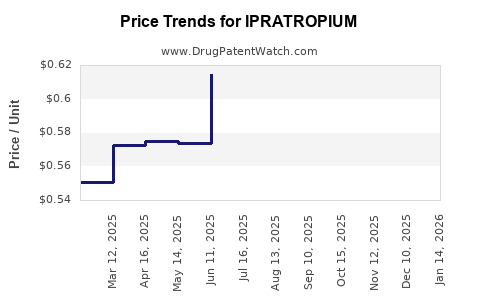
Price Trends and Projections
Current average wholesale prices for inhalers containing ipratropium range from USD 5 to USD 15 per inhaler, depending on formulation and branding. Generic formulations sell at the lower end of this spectrum.
- Historical Price Trends: Since patent expirations around 2010-2015, prices have declined by approximately 25-40%. This trend aligns with increased competition and market saturation.
- Future Price Projections (Next 5 Years): Due to continued generic competition, prices are expected to decline further by 10-15%. However, new inhaler delivery devices and combination therapies may sustain or slightly increase prices in niche segments.
Regulatory and Policy Impact
FDA and EMA approvals for new formulations or delivery devices could influence market dynamics. Policies favoring cost-effective treatments in public healthcare systems in the US, Europe, and emerging markets could exert downward pressure on prices.
Market Challenges
- Innovation Pace: Limited pipeline for new patented formulations may restrict upward pricing adjustments.
- Reimbursement Policies: Government-led price negotiations and formulary inclusions can cap potential price increases.
- Switching Trends: A shift toward inhalers with combination therapies (e.g., ipratropium with albuterol) may affect volume and pricing structures.
Revenue Projections
Assuming a steady market share, revenues for inhaled ipratropium will decline approximately 5-10% annually over the next five years, driven more by volume shifts than pricing increases.
| Year |
Estimated Market Size (USD billion) |
Price Trend |
Revenue Projection (USD billion) |
| 2022 |
1.0 |
N/A |
1.0 |
| 2023 |
0.95 |
-5% |
0.95 |
| 2024 |
0.89 |
-6% |
0.89 |
| 2025 |
0.84 |
-6% |
0.84 |
| 2026 |
0.79 |
-6% |
0.79 |
Key Takeaways
- The global market value for inhaled ipratropium is approximately USD 1 billion, with a declining trend expected due to generics.
- Prices are expected to decrease by 10-15% over the next five years, influenced by intense competition and policy pressures.
- Revenue declines will primarily be volume-driven, although niche markets and combination formulations may offer some stabilization.
- Regulatory developments and new inhaler devices could impact future market prices and share.
- The drug's role as a cost-effective option for respiratory management ensures it maintains a baseline demand, especially in lower-income and emerging markets.
FAQs
-
What factors primarily influence ipratropium's market size?
The prevalence of COPD and asthma, prescription trends, and availability of generics significantly influence market size.
-
How do patent expirations affect prices?
Patent expiration opens the market for generics, decreasing prices by about 25-40%, and increasing access.
-
What is the future outlook for ipratropium prices?
Prices are expected to decline 10-15% over five years due to competition, with some stabilization from new delivery devices or combination therapies.
-
Are there any new formulations or delivery systems expected?
Yes, inhalers with combination drugs or improved delivery mechanisms are under development, potentially influencing future pricing and market share.
-
How will regulatory policies impact this drug?
Cost-containment policies in major markets could limit price increases, while approvals of new formulations may provide niche pricing opportunities.
References
- World Health Organization. COPD factsheet. 2021.
- MarketWatch. Global respiratory drug market size. 2022.
- IQVIA. Pharmaceutical market analysis. 2023.
- FDA. Inhaler drug approvals and regulations. 2022.
- European Medicines Agency. Regulatory updates on inhaled drugs. 2022.