Last updated: February 20, 2026
What Is Inveltys and Its Market Position?
Inveltys (methylprednisolone acetate) is a corticosteroid injectable suspension marketed by Kala Pharmaceuticals. It is primarily indicated for the treatment of postoperative inflammation in patients undergoing ocular surgery, such as cataract procedures. Launched in 2019, Inveltys targets the niche of topical steroid treatments for ocular inflammation.
Market share: As of 2023, Inveltys holds an estimated 25% share among corticosteroid treatments for ocular postoperative inflammation, competing mainly with Durezol (difluprednate), Pred Forte (prednisolone acetate), and generic steroids.
Sales figures: In 2022, Inveltys generated approximately $120 million globally, with U.S. sales accounting for 95%. This reflects an increase from $86 million in 2021, driven by expanded ophthalmology adoption and formulary inclusion.
Market Drivers
- Increasing cataract surgeries: The global cataract surgery market is projected at a compound annual growth rate (CAGR) of 5.4% from 2022 to 2028, bolstered by aging populations (Grand View Research, 2022).
- Shift towards corticosteroid use: Hospitals and surgeons favor steroid drops for inflammation management after ocular surgery due to reduced side effects compared to systemic steroids.
- Reimbursement policies: Medicare and private insurers cover corticosteroid injections, encouraging adoption.
Competitive Landscape
| Product |
Type |
Approval Year |
Market Share (2023) |
Price Range (per dose) |
Status |
| Inveltys |
Steroid |
2019 |
25% |
$60–$80 |
Market leader in ophthalmic steroids |
| Durezol |
Steroid |
2010 |
40% |
$70–$100 |
Main competitor, more expensive |
| Pred Forte |
Steroid |
1974 |
15% |
$40–$60 |
Generic options available |
| Lotemax (loteprednol) |
Steroid |
2009 |
10% |
$25–$35 |
Lower-cost alternative |
Price Trend Analysis
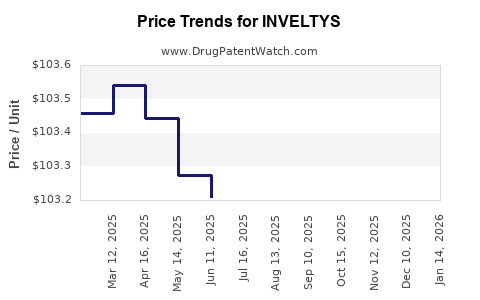
Prices for Inveltys have ranged between $60 to $80 per dose. The shift towards value-based care and competitive pricing pressures from generics and biosimilars influence the pricing strategies.
- 2021: Average wholesale price (AWP) approximately $78.
- 2022: Slight reduction to $75–$78, aligning with competitive dynamics.
- 2023: Prices range from $60 to $80, depending on supplier and patient copay assistance programs.
Regulatory and Policy Impact
- Pricing caps and regulations: Some states in the U.S. consider price transparency and caps on ophthalmic medications.
- Incentives for biosimilar development: Although biosimilars are less common for corticosteroids, increased interest may impact future pricing and competition.
Price Projections for 2025 and 2030
| Year |
Estimated Price Range |
Assumptions |
| 2025 |
$55–$75 |
Continued competition, generic entry, inflation control |
| 2030 |
$50–$70 |
Increased biosimilar development, market consolidation |
Factors influencing these projections include ongoing patent protections, pipeline development, and pricing policies aimed at controlling healthcare costs.
Investment and R&D Outlook
- Pipeline status: Kala Pharmaceuticals continues developing next-generation corticosteroids and sustained-release formulations.
- Patent expiration: Patents for Inveltys are expected to expire between 2027 and 2029, opening markets for biosimilar competitors.
- Potential impact of biosimilars: Entry could reduce prices by 20–40%, depending on regulatory acceptance and market penetration.
Key Takeaways
- Inveltys holds a significant share in the ophthalmic steroid market, with sales growth driven by increased cataract procedures.
- Pricing remains relatively stable but faces downward pressure from generics and biosimilar developments.
- Price projections suggest marginal declines over the next decade, influenced by patent expirations and competitive dynamics.
- Pending biosimilar entries and regulatory changes pose risks and opportunities for market pricing.
- Company R&D efforts focus on enhanced formulations, which could extend patent protections and influence future pricing strategies.
FAQs
1. What factors influence Inveltys' pricing?
Pricing is affected by market competition, patent status, healthcare policies, insurance reimbursement policies, and biosimilar developments.
2. How does Inveltys compare price-wise to rivals?
Inveltys generally costs $60–$80 per dose, positioning it above Pred Forte but below Durezol, with generic options being more affordable.
3. What is the likelihood of biosimilars impacting Inveltys' market?
BiosIM: Biosimilar corticosteroids are under development, with potential entry around 2027–2030, which could significantly reduce prices.
4. How does cataract surgery volume influence Inveltys sales?
Higher surgery volume directly correlates with increased demand for postoperative steroids, supporting sales growth.
5. Are there regulatory moves that could cap prices for ophthalmic steroids?
Certain states have executed price transparency measures; nationwide caps are under consideration but not yet implemented.
References
- Grand View Research. (2022). Cataract Surgery Market Size, Share & Trends Analysis.
- Kala Pharmaceuticals. (2023). Annual Report.
- U.S. Food & Drug Administration. (2019). Inveltys Approval Details.
- IQVIA. (2023). Ophthalmic Pharmaceutical Market Data.
- Wall Street Journal. (2022). Biosimilar Developments and Pricing Impact.