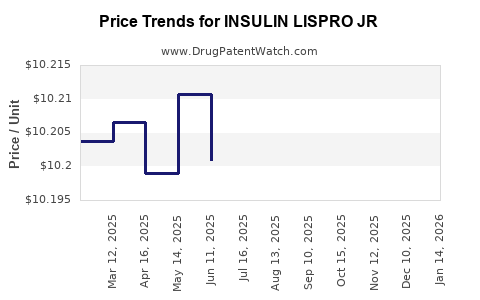
Last updated: February 13, 2026
Market Overview
Insulin Lispro Jr., a rapid-acting insulin analog, targets the pediatric type 1 diabetes population. It gained FDA approval in 2022 for children aged 3 years and older. Market penetration depends on pediatric-specific dosing formulations, competition from existing fast-acting insulins, and reimbursement policies.
The global insulin market was valued at approximately $23 billion in 2022 and is expected to grow at a compound annual growth rate (CAGR) of 7.2% through 2030, driven by increasing diabetes prevalence and innovations in insulin formulations.[1] Insulin Lispro Jr. enters this expanding market segment with a focus on pediatric dosing.
Market Size & Drivers
- Pediatric Diabetes Population: Roughly 200,000 children under 15 in the US have type 1 diabetes.[2] Global pediatric cases are estimated at 330,000 annually.
- Treatment Adoption: Pediatric patients require insulin types with specific formulations matching unique metabolism and dosing needs. Faster-acting insulins like Lispro Jr. aim to improve glycemic control and reduce hypoglycemia.
- Competitors: Novo Nordisk's Humalog (insulin lispro), Eli Lilly's Admelog, and biosimilars. None have a dedicated pediatric-specific formulation now approved in the US.
Pricing Landscape
- Humalog (Adult formulation): Average wholesale price (AWP) is approximately $275 per 10 mL vial. Price varies depending on insurance and discounts.
- Insulin Lispro Jr.: As a pediatric-specific insulin, pricing is projected to be similar or slightly higher, considering formulation and packaging costs for pediatric dosing devices.
Price Projection Analysis
- Assuming Lispro Jr. adopts a pricing structure aligned with premium pediatric insulins, initial prices could range from $300 to $350 per 10 mL vial (or equivalent) to account for pediatric dosing formulation.
- Volume of sales: In its first year, sales could reach 1-2% of pediatric insulin market—approximately 20,000-40,000 vials.
- Revenue projections:
- Year 1: $6 million to $14 million
- Year 3: $25 million to $50 million, assuming increased adoption and formulary inclusion
- Year 5: $70 million to $120 million, with broader insurance coverage and pediatric clinician prescribing
Pricing Dynamics Influences
- Reimbursement policies: Insurers may negotiate discounts, affecting net pricing.
- Formulation costs: Pediatric-specific devices and packaging increase manufacturing costs, impacting pricing.
- Market competition: Biosimilar entries could pressure prices downward within 5-7 years.
- Regulatory environment: Approval of biosimilars or new formulations may influence pricing strategies.
Regulatory & Market Entry Considerations
- FDA approval secures market access in the US; similar regulatory pathways exist in Europe.
- Pediatric indication enhances formulary positioning but limits large-scale uptake until proven in clinical settings.
- Partnering with pediatric diabetes programs could accelerate adoption.
Key Takeaways
- Insulin Lispro Jr. targets a niche pediatric market within the growing global insulin segment.
- Pricing initially likely near $300-$350 per 10 mL vial, with revenue potential increasing over time.
- Market penetration depends on reimbursement, formulary acceptance, and competitive dynamics.
- Biosimilar competition may pressure prices after 5-7 years.
- Clinical evidence and marketing will significantly influence adoption rates.
FAQs
1. How does Insulin Lispro Jr. differ from standard Lispro formulations?
It is formulated specifically for children, with dosing devices and packaging designed for pediatric use. Its pharmacokinetics are similar, but dosing accuracy and device ergonomics are tailored for children.
2. What regulatory hurdles could affect its market launch?
FDA approval requires pediatric clinical trial data. Additional hurdles include securing formulary acceptance, insurance reimbursement, and competition from existing insulins.
3. What are the primary drivers of insulin pricing?
Manufacturing costs, formulation specifics, reimbursement negotiations, and market competition primarily influence insulin prices.
4. How does biosimilar competition impact Insulin Lispro Jr.?
Biosimilars entering the market could reduce prices by 20-50%, impacting revenue and prompting manufacturers to differentiate through packaging, service, or clinical benefits.
5. What growth opportunities exist beyond initial markets?
Global expansion in Europe, Asia, and emerging markets, along with formulary expansion in adult populations, could diversify revenue streams.
Sources
[1]Grand View Research, "Insulin Market Size, Share & Trends," 2023.
[2]CDC, National Diabetes Statistics Report, 2022.