Last updated: February 19, 2026
Hydroxyzine hydrochloride (HCl) is an antihistamine used to treat anxiety, nausea, vomiting, and allergic skin reactions. Its market performance is influenced by factors including generic competition, therapeutic alternatives, and regulatory landscapes.
What is the current market size and projected growth for Hydroxyzine HCl?
The global market for hydroxyzine HCl is primarily driven by its established use in managing allergic conditions and anxiety. As a widely available generic medication, its market size is substantial but characterized by moderate growth, largely influenced by pricing pressures and the introduction of newer therapeutic agents.
- Market Size: The global market for hydroxyzine HCl is estimated to be between $150 million and $200 million annually. This figure encompasses both branded and generic formulations sold across major pharmaceutical markets.
- Projected Growth: The market is projected to grow at a compound annual growth rate (CAGR) of 2% to 3% over the next five years. This modest growth is attributed to its continued utility in specific indications and a stable demand from healthcare providers and patients, balanced against increasing competition from newer drug classes and biosimil entrants in related therapeutic areas.
What are the key therapeutic indications and their market impact?
Hydroxyzine HCl's versatility contributes to its sustained market presence. Its primary indications—allergic reactions and anxiety—represent the largest segments of its market demand.
- Allergic Conditions: This is the leading indication, encompassing hives, eczema, and pruritus. The prevalence of allergic diseases globally ensures consistent demand. The market segment for allergic indications is estimated to account for approximately 60% of hydroxyzine HCl sales.
- Anxiety and Sedation: Hydroxyzine HCl is also prescribed as a mild anxiolytic and sedative, particularly for pre-operative sedation or as an adjunct in managing situational anxiety. This segment represents approximately 30% of the market.
- Nausea and Vomiting: Its antiemetic properties contribute to a smaller but significant portion of the market, estimated at 10%.
Who are the major manufacturers and what is their market share?
The hydroxyzine HCl market is dominated by generic manufacturers. The absence of patent protection on the active pharmaceutical ingredient means that multiple companies produce and market the drug, leading to price competition.
-
Key Manufacturers:
- Teva Pharmaceutical Industries Ltd.
- Apotex Inc.
- Hikma Pharmaceuticals PLC
- Mylan N.V. (now part of Viatris)
- Sun Pharmaceutical Industries Ltd.
-
Market Share Distribution: The market is highly fragmented, with the top five manufacturers holding an estimated collective market share of 40-50%. Individual company market shares typically range from 5% to 15%, depending on their distribution networks, manufacturing capacity, and pricing strategies. The remaining share is distributed among numerous smaller generic players.
What is the current pricing landscape for Hydroxyzine HCl?
Pricing for hydroxyzine HCl is primarily determined by generic competition and the cost of active pharmaceutical ingredients (APIs). It is generally available at low price points, especially in high-volume markets.
- Average Wholesale Price (AWP) per Tablet (25mg): $0.10 - $0.30
- Average Wholesale Price (AWP) per 5mL Oral Solution (25mg/5mL): $1.50 - $3.00
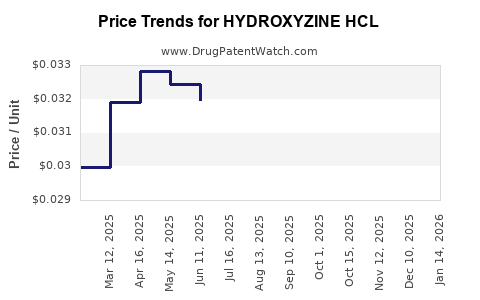
- Pricing Trends: Prices have remained relatively stable, with minor fluctuations attributed to raw material costs, manufacturing efficiencies, and tender awards by large healthcare systems or government bodies. Significant price drops have occurred historically due to market saturation from generic entry.
What are the key regulatory considerations affecting the Hydroxyzine HCl market?
Regulatory approvals and pharmacovigilance are critical for market access and product lifecycle management. Regulatory bodies focus on quality, safety, and efficacy.
- FDA (United States): Hydroxyzine HCl is available as an approved generic drug. The FDA monitors manufacturing practices and post-market safety data. Off-label use is common but not directly regulated, though prescribing guidelines from professional bodies influence its application.
- EMA (European Union): Similar to the FDA, the EMA oversees the marketing authorization and safety monitoring of hydroxyzine HCl in member states. National regulatory agencies within the EU handle specific pricing and reimbursement decisions.
- Other Regions: Approval processes vary by country. Market entry often requires adherence to local Good Manufacturing Practices (GMP) and product registration requirements.
What are the primary competitive threats and alternative therapies?
Hydroxyzine HCl faces competition from both direct generic alternatives and newer therapeutic classes offering more targeted or improved safety profiles.
- Direct Generic Competition: Within the antihistamine class, other first-generation antihistamines like diphenhydramine and chlorpheniramine compete on price and availability.
- Second-Generation Antihistamines: Drugs such as loratadine, cetirizine, and fexofenadine offer reduced sedative effects and are preferred for chronic allergic conditions. These are significant competitors in the allergy segment.
- Anxiolytics and Sedatives: For anxiety indications, selective serotonin reuptake inhibitors (SSRIs) and benzodiazepines represent more potent and widely prescribed alternatives.
- Other Antiemetics: Ondansetron and other serotonin 5-HT3 receptor antagonists are frequently used for nausea and vomiting, particularly in chemotherapy-induced scenarios, offering more specific mechanisms of action.
What are the future market outlook and potential opportunities?
The future of the hydroxyzine HCl market is tied to its established cost-effectiveness and its role as a second-line or adjunctive therapy. Opportunities lie in emerging markets and specific niche applications.
- Emerging Markets: As healthcare access expands in developing countries, the demand for affordable generic medications like hydroxyzine HCl is expected to increase.
- Combination Therapies: While not currently a significant area, exploring fixed-dose combinations for specific allergic dermatitis or anxiety profiles could present a future opportunity if clinical utility is demonstrated.
- Cost-Effectiveness: In healthcare systems focused on cost containment, hydroxyzine HCl will likely retain its position due to its low acquisition cost compared to newer agents.
What are the key challenges facing the Hydroxyzine HCl market?
The primary challenges are inherent to a mature generic drug market, including intense price pressure and evolving treatment guidelines.
- Price Erosion: Continued generic competition leads to ongoing pressure on profit margins for manufacturers.
- Therapeutic Advancements: The development of newer drugs with better efficacy, safety profiles, or novel mechanisms of action can displace older medications.
- Sedation Concerns: The significant sedative side effect profile of hydroxyzine HCl limits its use in certain patient populations or for daytime use where alertness is required.
- Regulatory Scrutiny: Increased pharmacovigilance and potential for updated safety warnings can impact prescribing patterns.
Key Takeaways
- The global hydroxyzine HCl market is valued between $150 million and $200 million, projected to grow at 2-3% CAGR.
- Allergic conditions represent the largest market segment, followed by anxiety and nausea/vomiting.
- The market is dominated by generic manufacturers with a fragmented share distribution.
- Hydroxyzine HCl pricing is low, ranging from $0.10-$0.30 per 25mg tablet.
- Key competitors include other first and second-generation antihistamines, SSRIs, benzodiazepines, and newer antiemetics.
- Future growth opportunities exist in emerging markets and through demonstrating cost-effectiveness.
- Primary challenges include intense price erosion and the displacement by newer therapeutic options.
Frequently Asked Questions
1. What is the patent status of hydroxyzine HCl?
Hydroxyzine HCl is an off-patent drug. Its original patents expired many years ago, leading to widespread generic manufacturing and marketing.
2. How does hydroxyzine HCl compare in terms of side effects to newer antihistamines?
Hydroxyzine HCl is a first-generation antihistamine and is associated with significant sedative effects, dry mouth, and potential anticholinergic side effects. Second-generation antihistamines, such as loratadine and cetirizine, generally have fewer sedating properties and a better-tolerated side effect profile.
3. Can hydroxyzine HCl be used for long-term anxiety management?
While hydroxyzine HCl can provide temporary relief for anxiety symptoms, it is typically not considered a first-line treatment for chronic anxiety disorders. Longer-term management often involves other classes of medications like SSRIs or benzodiazepines, under the guidance of a healthcare professional.
4. What are the typical dosage forms available for hydroxyzine HCl?
Hydroxyzine HCl is commonly available in oral tablet and capsule forms, as well as an oral solution for patients who have difficulty swallowing. Injectable formulations are also available for specific clinical settings.
5. What factors are driving the demand for hydroxyzine HCl in emerging markets?
Demand in emerging markets is driven by its affordability as a generic medication, its broad spectrum of uses for common conditions like allergies and anxiety, and the increasing accessibility of basic healthcare services in these regions.
6. Are there any significant safety concerns associated with hydroxyzine HCl that could impact its market?
A notable safety concern is its potential to prolong the QT interval, which can increase the risk of serious cardiac arrhythmias. This has led to prescribing recommendations that advise caution in patients with pre-existing cardiac conditions or those taking other QT-prolonging medications. Regulatory agencies monitor these safety signals.
Citations
[1] Various pharmaceutical market research reports (proprietary data).
[2] U.S. Food & Drug Administration (FDA) drug database.
[3] European Medicines Agency (EMA) product information.
[4] Drug pricing databases and wholesale drug acquisition cost indices.
[5] Peer-reviewed clinical pharmacology journals.