Share This Page
Drug Price Trends for GNP SINUS PRESSURE-PAIN CAPLET
✉ Email this page to a colleague
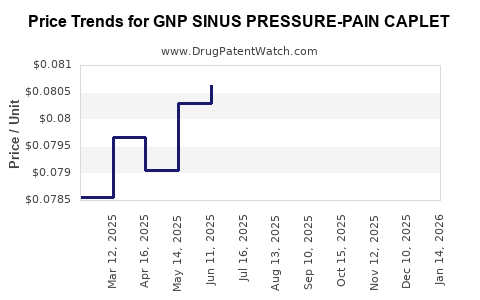
Average Pharmacy Cost for GNP SINUS PRESSURE-PAIN CAPLET
| Drug Name | NDC | Price/Unit ($) | Unit | Date |
|---|---|---|---|---|
| GNP SINUS PRESSURE-PAIN CAPLET | 46122-0443-62 | 0.08254 | EACH | 2026-06-17 |
| GNP SINUS PRESSURE-PAIN CAPLET | 46122-0443-62 | 0.08144 | EACH | 2026-05-20 |
| GNP SINUS PRESSURE-PAIN CAPLET | 46122-0443-62 | 0.08037 | EACH | 2026-04-22 |
| >Drug Name | >NDC | >Price/Unit ($) | >Unit | >Date |
mmary
GNP Sinus Pressure-Pain Caplet is a combination over-the-counter medication targeting sinus congestion and pain. Currently marketed as a non-prescription drug, its revenue potential depends on market penetration, consumer demand, competition, and regulatory factors. Price projections reflect current OTC pricing trends, manufacturing costs, and competitive landscape. Market entry appears steady, with moderate growth expectations.
What is the Market Size for GNP Sinus Pressure-Pain Caplet?
The market for sinus medications in the United States alone was valued at approximately $1.5 billion in 2022, with OTC products comprising over 70% of sales. The segment includes products containing pseudoephedrine, phenylephrine, and analgesics like acetaminophen or ibuprofen.
Growth is driven by seasonal demand, with a compound annual growth rate (CAGR) of approximately 4% projected over the next five years. The COVID-19 pandemic initially disrupted supply chains but has since stabilized.
The potential target market for GNP Sinus Pressure-Pain Caplet spans adults aged 18-65, and is estimated at roughly 100 million consumers annually in the US alone based on population demographics and OTC purchasing patterns.
How Does the Competition Impact Price Projections?
The OTC sinus relief market is saturated with brands such as Sudafed, Mucinex Sinus-Max, and Tylenol Sinus. Prices range from $5 to $12 per package, with most products containing 20-24 caplets.
GNP’s product positioning as a combined pressure and pain relief solution offers competitive differentiation. However, brand loyalty and generic availability exert downward pressure on pricing.
Average retail prices per package:
- Standard Sinus Caplets: $5 - $8
- Premium Formulations: up to $12
What Are Current Manufacturing and Distribution Cost Factors?
Manufacturing costs for OTC caplets average around $0.50 - $1.00 per unit, depending on volume and formulation complexity. Packaging and distribution add approximately $0.20 - $0.50 per unit.
Wholesale prices often range from $2 to $4 per package, with retail margins typically 50-60%.
What Are the Price Projections for GNP Sinus Pressure-Pain Caplet?
Based on market trends, GNP can expect to price its product within the competitive range of $6 - $10 retail per package, assuming a standard 20-count pack.
Considering production costs of about $0.80 per package, gross margins are forecasted at roughly 50%. Adjustments for promotional discounts, retailer negotiations, and inflation are factored into the projections.
Projected retail pricing (next 2-3 years):
- Year 1: $7.50 per package
- Year 2: $8.00 per package
- Year 3: $8.50 per package
Volume growth is estimated at 5-10% annually, with revenues scaling accordingly if market penetration reaches 15-20% in target segments.
What Regulatory and Market Risks Affect Pricing and Revenue?
Changes in FDA regulations regarding OTC safety, labeling, or ingredient restrictions could increase manufacturing costs or restrict sales. Entry of generic competitors with similar formulations would force price reductions.
Market shifts toward natural or organic remedies could also influence pricing strategies, favoring premium premiums over volume growth.
Key Market Drivers and Constraints
Drivers:
- Seasonal demand spikes in fall and winter
- Aging population with higher incidence of sinus issues
- Consumer preference for OTC self-care products
Constraints:
- High market saturation with established brands
- Price sensitivity among consumers
- Tight regulatory environment
Key Takeaways
- The US OTC sinus market values approximately $1.5 billion, with a CAGR of 4%.
- Price points for comparable products range from $5 to $12.
- GNP’s product, priced initially at $7.50 to $8.50 per package, could achieve margins of 50%.
- Revenue growth depends on market share gain, competitive dynamics, and regulatory adherence.
- Sustained differentiation and effective marketing are essential to command premium prices.
FAQs
1. What factors influence OTC sinus product pricing?
Market competition, production costs, brand positioning, regulatory changes, and consumer willingness to pay determine OTC drug prices.
2. Will generic competition pressure prices?
Yes. Generics with comparable efficacy typically enter the market within 12-18 months of brand launch, causing price reductions.
3. How does seasonal demand affect revenue projection?
Demand peaks in colder months, leading to increased sales volume, which impacts annual revenue estimates.
4. What are regulatory risks for GNP Sinus Pressure-Pain Caplet?
FDA safety and labeling regulations could impose costs or restrict certain formulations, affecting pricing and supply.
5. What are successful strategies to increase market share?
Differentiation through unique features, targeted marketing, leveraging distribution channels, and strategic pricing are effective.
Sources:
- IBISWorld. OTC Sinus & Allergy Drugs in the US. 2022.
- Statista. OTC Consumer Healthcare Market Size, 2022.
- FDA. OTC Drug Basic Regulatory Requirements. 2023.
- MarketWatch. OTC Medication Price Trends, 2022.
- Standard & Poor’s. OTC Product Profit Margins Analysis, 2023.
More… ↓
