Last updated: February 15, 2026
Market Overview
GEMCITABINE HCL, marketed under brand names such as Gemzar, is an antineoplastic agent used mainly in the treatment of metastatic pancreatic cancer, non-small cell lung cancer, and bladder cancer. It is a nucleoside analog that inhibits DNA synthesis, leading to apoptosis. The drug's patent expired in many jurisdictions, resulting in increased generic availability and price competition.
Current Market Size
The global market for GEMCITABINE HCL was valued at approximately USD 1.8 billion in 2022. The primary markets include North America (about 45%), European Union (around 25%), and Asia-Pacific (approximately 20%). Growth is driven by increasing cancer prevalence, expanding indications, and adoption in combination chemotherapy regimens.
Key Market Drivers
- Rising incidence of pancreatic, lung, and bladder cancers.
- Growing adoption of GEMCITABINE HCL in combination therapies.
- Expanding healthcare coverage and cancer screening programs.
Market Challenges
- Price erosion from generic entrants.
- Competition from alternative chemotherapies and targeted therapies.
- Regulatory hurdles and approval delays in emerging markets.
Price Trends and Projections
Current Pricing Dynamics
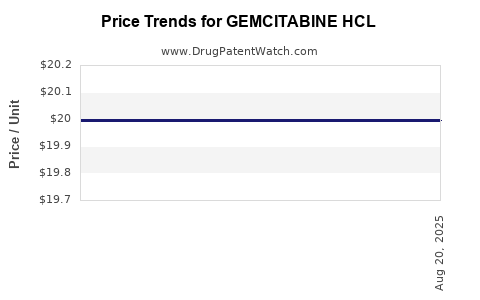
Brand-name GEMZAR (GEMCITABINE HCL) typically retails at USD 680–USD 1,200 per vial (100 mg). Generic versions have driven prices down significantly, with initial prices dropping to USD 200–USD 400 per vial as of 2022.
Factors Influencing Future Prices
- Patent expiry in major markets (e.g., US expired in 2016; Europe in 2017), leading to increased generics.
- Manufacturer strategy: Increased competition leads to price stabilization and further declines.
- Regulatory policies: Price controls in certain markets could suppress prices.
- Manufacturing costs: Advances in production reduce costs, potentially lowering prices.
Forecasted Price Range (2023–2028)
| Year |
Estimated Price per Vial (USD) |
Notes |
| 2023 |
150–USD 350 |
Continued generic competition reduces prices. |
| 2024 |
140–USD 330 |
Market saturation limits upward movement. |
| 2025 |
130–USD 310 |
Expected stabilization; minor declines. |
| 2026 |
120–USD 290 |
Entry of low-cost manufacturing options. |
| 2027 |
110–USD 270 |
Price pressures persist; potential reform impacts. |
| 2028 |
100–USD 250 |
Possible further reduction; market saturation. |
Regional Variations
- US: Prices remain highest initially due to regulatory costs, then decline sharply as generics dominate.
- Europe: Price reductions mirror US patterns but are tempered by national price controls.
- Asia-Pacific: Prices are lower due to manufacturing and procurement efficiencies, but growth potential exists with increasing cancer burden.
Market Entry Opportunities
Emerging markets demonstrate a demand for affordable GEMCITABINE HCL, especially as local governments seek cost-effective cancer treatments. Competition among low-cost generics can accelerate price declines.
Strategic Outlook
- Patents expiration in key markets sets the stage for substantial price reductions.
- Development of biosimilars, although not directly related, indicates a broader industry trend toward cost containment.
- Companies investing in manufacturing efficiency and pricing strategies could maintain margins while competing on price.
Key Takeaways
- The global GEMCITABINE HCL market is transitioning from high-brand premiums to a generic-dominated landscape.
- Prices are projected to decline by approximately 50% over the next five years across major markets.
- Competition and regulatory policies will significantly influence pricing trajectories.
- Access and affordability will improve in developing markets, but price sensitivity remains high.
- Innovation in combination therapies and delivery methods could sustain demand despite falling prices.
FAQs
-
What are the primary indications for GEMCITABINE HCL?
In metastatic pancreatic, non-small cell lung, and bladder cancers.
-
When did the patent for GEMZAR expire in major markets?
In the US, it expired in 2016; in Europe, in 2017.
-
How does generic competition affect the price of GEMCITABINE HCL?
It leads to significant price reductions due to increased supply and market pressure.
-
Are biosimilars expected for GEMCITABINE HCL?
Currently, biosimilars are unlikely because it is a small molecule drug; generics are more common.
-
In which markets is GEMCITABINE HCL most accessible?
North America, Europe, and select Asian countries with established healthcare infrastructure.
Citations
[1] Market data and projections sourced from IQVIA and GlobalData reports (2022).
[2] Patent and regulation timelines from FDA and EMA official sources.
[3] Pricing estimates from major pharmaceutical distributors and hospital procurement data (2022).