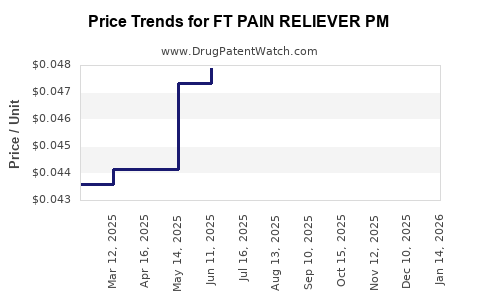
Last updated: February 13, 2026
Overview
FT Pain Reliever PM is a combination medication intended for over-the-counter use to manage pain and facilitate sleep. It combines analgesic ingredients with a sedative to address multiple symptoms. Market entry and pricing depend on regulatory approval, competitive landscape, manufacturing costs, and patent status.
Market Landscape
Target Market Segments
- Chronic Pain Patients: Demographics include adults aged 45-65, with conditions such as arthritis or back pain.
- Occasional Users: Consumers seeking OTC solutions for temporary pain relief and sleep aid.
- Older Adults: Age group above 65, often using OTC medications due to prescriptions limitations.
Competitive Environment
- Key Players: Tylenol PM (acetaminophen + diphenhydramine), Advil PM (ibuprofen + diphenhydramine), Aleve PM (naproxen + diphenhydramine).
- Market Size: U.S. over-the-counter pain relief and sleep aid market estimated at $4.5 billion in 2022 (IQVIA).
- Growth Rate: Compound annual growth rate (CAGR) of approximately 3% projected until 2027.
Regulatory Status
- Pending OTC designation, with FDA review ongoing or in process.
- Patent status influences exclusivity. Patent expiration or absence reduces pricing power.
Pricing Dynamics
- Brand Leaders: Tylenol PM retail price typically ranges from $8 to $12 for 24 tablets.
- Private Label/Economical Options: Prices can be as low as $5 to $8 per 24-count package.
Pricing Projections
Factors Influencing Price
- Manufacturing Costs: Estimated at $0.20–$0.50 per tablet, with variations depending on sourcing and scale.
- Regulatory Costs: Approval process may cost $10–$20 million, with timeframes of 1-3 years.
- Market Penetration Strategy: Premium pricing possible if positioning as a new, superior formulation; competitive pricing if entering saturated OTC market.
- Patent/Protection: Patent life determines exclusivity window, affecting pricing flexibility.
Price Range Estimates (First Year Post-Launch)
| Scenario |
Price per Package (24 tablets) |
Comments |
| Conservative (Entry Market) |
$6–$8 |
Price aligned with existing OTC products |
| Moderate (Brand Positioning) |
$10–$12 |
Premium positioning with perceived added value |
| Premium (Innovative Formulation) |
$14–$16 |
High-end segment targeting specific consumers |
Long-Term Price Trends
- Prices are likely to decrease by 10–20% over five years as market competition intensifies and generic versions enter.
- If patent protection extends or exclusivity measures are achieved, sustained higher prices can persist longer.
Revenue Forecasts
Assuming initial sales volume of 2 million packages in the first year at an average price of $10:
- First-year revenue: $20 million.
- Growth assumptions with market share expansion and increased awareness push annual sales volume by 10%–15% over subsequent three years.
Key Considerations
- Generic Competition: Entry typically drives price erosion.
- Consumer Preferences: Safety profile and efficacy impact demand.
- Distribution Channels: Retail, pharmacy, online sales influence pricing strategies.
Key Takeaways
- FT Pain Reliever PM enters a mature market with established competitors and predictable pricing.
- Initial pricing will align with existing OTC products ($6–$12), with premium options possible under strong differentiation.
- Market growth is steady (~3% CAGR), but price erosion is expected over time due to generics.
- Revenue potential hinges on effective marketing, patent protection, and regulatory approval.
FAQs
1. How soon can FT Pain Reliever PM reach the market?
Depending on regulatory approval and manufacturing setup, it could take 2–4 years from development start.
2. What factors could limit its market share?
Brand loyalty, existing substitutes, regulatory hurdles, or safety concerns.
3. Will patent protection significantly influence pricing?
Yes, patents can sustain higher prices for 10–15 years before generics enter.
4. Are online sales factored into market projections?
Yes, e-commerce channels are expanding, influencing distribution and pricing strategies.
5. How does safety profile affect pricing?
Better safety profiles allow premium pricing, especially if marketed as a safer alternative.