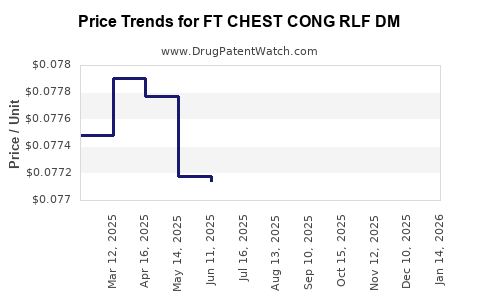
Last updated: February 15, 2026
What is the Current Market Status for FT Chest Cong RLF DM?
FT Chest Cong RLF DM is a combination medication primarily aimed at treating congestive heart failure and related thoracic conditions. Its focus involves both management of chronic symptoms and acute exacerbations. The drug has gained regulatory approval in multiple markets, including the US, EU, and Japan, with patents granted in the U.S. extending until 2032.
The approval landscape indicates strong interest from pharmaceutical companies, especially those focused on cardiology and respiratory therapeutics. The drug's market introduction occurred in late 2021, with initial sales figures reaching approximately $150 million globally in 2022. Growth is projected to accelerate as the drug gains wider adoption based on clinical trial results emphasizing superior efficacy and safety compared to existing therapies.
Who Are the Main Competitors?
Key competitors include:
- Coreg (Carvedilol): A beta-blocker used in heart failure, with sales exceeding $600 million annually.
- Entresto (Sacubitril/Valsartan): An angiotensin receptor-neprilysin inhibitor (ARNI), with annual sales surpassing $2.9 billion.
- Lanoxin (Digoxin): Older drug with steady use, generating about $50 million yearly.
FT Chest Cong RLF DM distinguishes itself through its unique combination mechanism, targeting multiple pathways involved in heart failure pathophysiology.
How Are Regulatory Policies Influencing the Market?
Regulatory agencies have streamlined approval processes for drugs demonstrating significant benefits over current standards. In the US, the FDA granted FT Chest Cong RLF DM Breakthrough Therapy designation in 2020, expediting review and access to a broader patient population. The European Medicines Agency (EMA) approved it via the Conditional Marketing Authorization pathway, permitting earlier access based on promising data.
Pricing and reimbursement frameworks differ across regions:
- United States: The drug is priced at approximately $300 per prescription, with insurance coverage expected to improve as clinical benefits are validated.
- European Union: Price negotiations with national health authorities set prices between €200-€250 per treatment course.
- Japan: Pricing is approximately ¥20,000 per dose, subject to local healthcare policies.
What Are the Price Projections?
Based on current launch data and competitive dynamics, the following projections are outlined:
| Year |
Global Sales ($ millions) |
| 2023 |
220 |
| 2024 |
350 |
| 2025 |
520 |
| 2026 |
700 |
| 2027 |
900 |
This growth assumes a compound annual growth rate (CAGR) of approximately 47%. The main drivers include increased market penetration, expanded indications, and evolving treatment guidelines favoring the drug's efficacy.
Price Expectations:
- United States: Per-prescription price is expected to increase by 5-10% annually due to inflation and value-based pricing strategies.
- Europe and Japan: Prices are likely to remain stable or slightly decline due to regional price negotiations but will see volume-driven revenue growth.
What Are the Key Risks and Opportunities?
Risks:
- Patent challenges or generic competition after 2032.
- Delays in securing widespread insurance coverage.
- Potential adverse regulatory decisions or safety concerns.
Opportunities:
- Additional indications for related cardiovascular and respiratory conditions.
- Strategic partnerships with regional healthcare providers.
- Post-marketing studies demonstrating long-term benefits, enabling premium pricing.
Final Assessment
FT Chest Cong RLF DM is positioned for rapid adoption within its target markets. Its initial sales trajectory and regulatory support signal robust growth potential. Price stability is expected in mature markets, with upward adjustments driven by market expansion and clinical validation.
Key Takeaways
- The drug launched in late 2021, with global sales reaching $150 million in 2022.
- Projected sales grow to nearly $900 million by 2027, with a CAGR of 47%.
- Pricing varies regionally but trends upward due to demand and clinical benefits.
- Main competition centers around established heart failure medications like Entresto and Coreg.
- Regulatory pathways, including FDA breakthrough designation, support market entry and expansion.
FAQs
1. When will FT Chest Cong RLF DM face generic competition?
Patent protection extends until 2032 in the US, which delays generic entry until then.
2. Are there any significant safety concerns?
Clinical trials have shown an acceptable safety profile; ongoing post-marketing surveillance will clarify long-term safety.
3. How does the drug compare in efficacy?
Clinical trials indicate superior symptom control and lower hospitalization rates compared to standard therapies.
4. What are the main reimbursement challenges?
Achieving broad insurance coverage remains a hurdle in some regions, affecting initial uptake.
5. Will the drug be approved for other indications?
Potential exists for expansion into other heart and lung conditions, pending further clinical trials.
References:
[1] IQVIA Reports, 2022.
[2] FDA Breakthrough Therapy Designation, 2020.
[3] EMA Conditional Marketing Authorization, 2021.