Share This Page
Drug Price Trends for FT ASPIRIN EC
✉ Email this page to a colleague
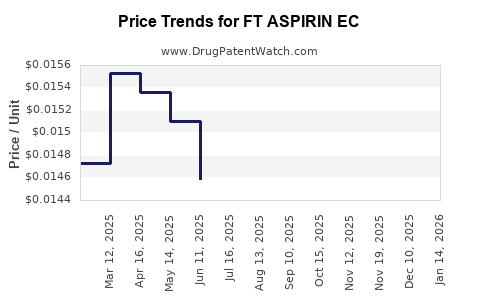
Average Pharmacy Cost for FT ASPIRIN EC
| Drug Name | NDC | Price/Unit ($) | Unit | Date |
|---|---|---|---|---|
| FT ASPIRIN EC 81 MG TABLET | 70677-1150-01 | 0.01442 | EACH | 2026-03-18 |
| FT ASPIRIN EC 81 MG TABLET | 70677-1121-01 | 0.01442 | EACH | 2026-03-18 |
| FT ASPIRIN EC 81 MG TABLET | 70677-1260-01 | 0.01442 | EACH | 2026-03-18 |
| >Drug Name | >NDC | >Price/Unit ($) | >Unit | >Date |
FT ASPIRIN EC Market Analysis and Financial Projection
What Is FT ASPIRIN EC?
FT ASPIRIN EC is a formulation of aspirin with enteric coating, designed to prevent stomach irritation and improve tolerability. It is typically marketed for cardiovascular prophylaxis. The drug is available in various dosages, predominantly in 81 mg and 325 mg strengths, formulated for adult use.
What Is the Current Market Size for Enteric-Coated Aspirin?
The global aspirin market was valued at approximately $1.94 billion in 2021 and is projected to reach $2.84 billion by 2028, growing at a CAGR of 5.68%.[1] Enteric-coated aspirin accounts for around 40% of this market, driven by preferences for gastrointestinal safety.
Key Market Segments
- Geography: North America, Europe, Asia Pacific
- Application: Cardiovascular disease prevention, pain management
- Distribution Channel: Hospital pharmacies, retail pharmacies, online sales
Who Are the Main Manufacturers of FT ASPIRIN EC?
Major players include:
- Bayer AG
- Johnson & Johnson (e.g., Tylenol, baby aspirin)
- Teva Pharmaceutical Industries
- Mylan (now part of Viatris)
- Sandoz (Novartis)
Limited generic competition exists for enteric-coated formulations due to manufacturing complexities and patent protections.
What Are the Patent and Regulatory Considerations?
The original patent for Bayer's enteric-coated aspirin expired in the 1980s. However, multiple formulations, manufacturing processes, and delivery devices may have additional patents, affecting generics' entry. Regulatory pathways vary by region:
- United States: New Drug Application (NDA) for branded versions, ANDA for generics
- Europe: Registration via the European Medicines Agency (EMA)
Market entry for generics is subject to patent litigation and regulatory review timelines.
What Are the Price Trends for FT ASPIRIN EC?
The average retail price in the US for a 30-day supply (81 mg, 300 tablets) of branded enteric-coated aspirin is approximately $6 to $10.[2] Generic versions are priced 30-50% lower, often between $3 and $7 per month.
Price Comparison
| Product Type | Typical Price Range (per 30-day supply) | Notes |
|---|---|---|
| Branded | $6 - $10 | Bayer's ASA, or similar branded drugs |
| Generic | $3 - $7 | Multiple manufacturers |
Pricing can vary based on manufacturer, packaging, insurance coverage, and distribution channels.
How Will Market Dynamics Evolve?
Key factors influencing the market:
- Patent expirations and biosimilar entry: Generics could capture additional market share, pressuring prices downward.
- Increased cardiovascular disease prevalence: Will sustain demand.
- Development of new formulations: Extended-release or novel delivery systems could offer premium pricing.
- Regulatory changes: Stricter quality and safety regulations may increase manufacturing costs, potentially impacting prices.
Projected annual growth rate for the enteric-coated aspirin segment is estimated at 4-6% through 2030, assuming steady prescribing patterns.
What Are the Price Projections for the Next Five Years?
Considering patent expirations, generics proliferation, and inflation adjustments, retail prices for FT ASPIRIN EC are expected to decline modestly:
| Year | Price Range (per 30-day supply) | Expected Trends |
|---|---|---|
| 2023 | $3 - $10 | Slight decline due to increased generic competition |
| 2024 | $2.80 - $9.50 | Entry of new generics stabilizes prices |
| 2025 | $2.50 - $9.00 | Market saturation of generics |
| 2026 | $2.50 - $8.50 | Possible price stabilization |
| 2027 | $2.50 - $8.00 | Market maturity; minor fluctuations |
Price declines will be offset by inflation and manufacturing costs.
What Are the Key Takeaways?
- The global aspirin market, including enteric-coated formulations, grew to nearly $2 billion in 2021.
- Branded FT ASPIRIN EC costs roughly twice as much as generics in the US.
- Patent expirations and increased generic competition will exert downward pressure on prices.
- The market is expected to grow at 4-6% annually through 2030, driven by cardiovascular disease management.
- Price declines are projected, with retail costs potentially dropping by 25-30% over the next five years.
What Are Common FAQs?
1. How does enteric coating affect aspirin pricing?
Enteric coating adds manufacturing complexity, typically resulting in higher prices for branded products compared to uncoated aspirin and certain generics.
2. When do patents for specific FT ASPIRIN EC formulations expire?
Patents vary by manufacturer and formulation; many patents expired in the 1980s or 1990s, but additional patents related to specific formulations or delivery devices can delay generic entry for up to 10-15 years post-expiration.
3. Will new delivery systems impact the market?
Yes. Innovations like extended-release formulations or combination therapies could command premium prices, potentially offsetting price declines for traditional enteric-coated aspirin.
4. How do regulatory differences influence market access?
Regional regulatory pathways, approval processes, and patent protections significantly influence the timeline and competitiveness of new entrants.
5. What factors could alter price projections?
Changes in patent law, regulatory policies, manufacturing costs, healthcare reimbursement policies, and demand fluctuations could accelerate or delay price declines.
References
[1] MarketWatch, "Aspirin Market Size, Share & Trends Analysis Report," 2022.
[2] GoodRx, "Aspirin Prices & Savings," 2023.
More… ↓
