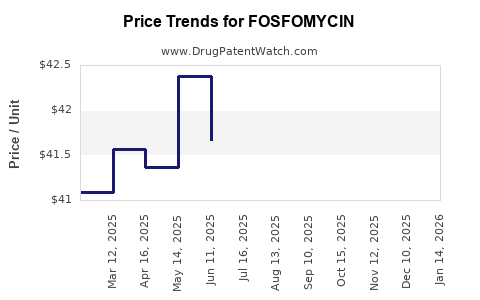
Last updated: July 27, 2025
Introduction
Fosfomycin is an alternative broad-spectrum antibiotic with increasing relevance amidst rising antimicrobial resistance (AMR). Originally developed in the 1960s, it has gained renewed interest due to its efficacy against multidrug-resistant pathogens, particularly urinary tract infections (UTIs). This analysis explores the current market landscape, competitive dynamics, regulatory environment, and future price trajectories of fosfomycin, providing valuable insights for pharmaceutical stakeholders and investors.
Market Overview
Historical Context and Therapeutic Utility
Fosfomycin functions as an inhibitor of bacterial cell wall synthesis. Its unique mechanism complements existing antibiotics, especially against resistant strains of E. coli, Klebsiella pneumoniae, and Enterococcus faecalis. It is primarily formulated for oral administration (fosfomycin trometamol) and intravenous use. Its pivotal role in combating complicated UTIs and multidrug-resistant bacterial infections underpins its growing clinical importance.
Market Drivers
- Rising Antimicrobial Resistance (AMR): The World Health Organization classifies AMR as a global health crisis, prompting a surge in demand for novel and effective antibiotics such as fosfomycin.[1]
- Regulatory Reconsideration and Expanded Indications: Recent approvals and off-label use in multidrug-resistant infections have expanded fosfomycin's accessibility.
- Limited New Antibiotics Pipeline: The scarcity of novel antibiotics has increased reliance on existing drugs, including fosfomycin, especially in hospital settings.
- Increasing Use in Combination Therapies: Combining fosfomycin with other antibiotics enhances efficacy, especially against resistant bacteria, bolstering demand.
Market Size and Trends
The global fosfomycin market size was valued at approximately USD 250 million in 2022, with projections reaching USD 350-400 million by 2030 at a compound annual growth rate (CAGR) of around 4-6%.[2] Factors contributing to growth include increased adoption in developed nations and emerging markets' rising antibiotic resistance burdens.
Geographical Market Distribution
-
North America: Dominates due to high AMR prevalence, advanced healthcare infrastructure, and regulatory approvals.
-
Europe: Significant growth driven by government initiatives targeting antibiotic stewardship and infection control.
-
Asia-Pacific: Rapidly expanding segment owing to improving healthcare infrastructure, increasing AMR issues, and rising bacterial infection rates, particularly in China and India.
Regulatory and Labeling Landscape
Approvals and Off-Label Use
Fosfomycin is FDA-approved for uncomplicated UTIs in the U.S., primarily in the form of fosfomycin trometamol. European Medicines Agency (EMA) approvals are similarly focused, though some markets permit broader off-label applications, especially in hospital contexts targeting multidrug-resistant infections.
Off-Patent Status and Generic Market
Many formulations of fosfomycin are off-patent, fostering a robust generic industry. This drives down prices but may limit profit margins for branded versions, influencing overall market dynamics.
Competitive Landscape
Major players include:
-
Zambon (Italy): Pioneers in fosfomycin formulation production, including marketing approvals in multiple geographies.
-
Shanghai Pharmaceuticals: Offering both oral and intravenous formulations, targeting Asian markets.
-
Meiji Seika Pharma (Japan): Focused on the domestic market with innovative formulations.
-
Emerging Generics Manufacturers: Entering markets globally, intensifying price competition.
Novel formulations, combination therapies, and regional approvals influence competitive positioning. Limited patent protections for key formulations have facilitated market entry and price competition.
Pricing Dynamics
Historical Pricing Trends
-
Brand-Name vs. Generics: Branded fosfomycin products historically traded at premiums of 20-40% over generics.
-
Unit Cost Variability: In North America, a single-dose packet costs approximately USD 50-80, while in emerging markets, generic prices range between USD 10-20 per dose.
Factors Influencing Price Fluctuations
-
Regulatory Approvals: Expanded indications increase volume but may not proportionally increase margins due to generic competition.
-
Patent and Exclusivity Status: Off-patent status exerts downward pressure.
-
Manufacturing Costs: Raw material prices and manufacturing efficiencies impact wholesale and retail prices.
-
Market Demand and Supply Chain Dynamics: Sudden spikes in resistance levels or shortages can temporarily elevate prices.
Future Price Projections and Market Dynamics
Based on current trends, price projections for fosfomycin suggest modest decline over the next decade, with average unit prices decreasing by approximately 10-15% as more manufacturers enter established markets and generics proliferate.
However, in specific emerging markets, prices may stabilize or even increase due to supply constraints or regulatory barriers. Additionally, the development of combination formulations and new delivery systems may command premium pricing, offsetting declines.
Impact of Resistance and Clinical Guidelines
The escalation of multidrug-resistant infections incentivizes clinicians to prefer fosfomycin, potentially stabilizing or increasing prices in niche markets. Conversely, widespread off-label use and off-patent status could keep prices suppressed.
Regulatory and Innovation Outlook
The future of fosfomycin's pricing hinges on regulatory actions and clinical innovation:
-
Expanded Indications: Broader approval for complicated infections could facilitate premium pricing.
-
Novel Formulations: Extended-release or combination drugs could command higher prices, especially if backed by clinical efficacy evidence.
-
Regional Market Developments: Local manufacturing and approval pathways may influence regional pricing structures.
Key Challenges and Opportunities
-
Challenges: Price competition driven by generics, regulatory hurdles in certain regions, and limited patent protection constrain profit margins.
-
Opportunities: Rising resistance profiles, clinical data supporting broader use, and innovative delivery systems can sustain or enhance pricing power.
Conclusion
Fosfomycin's market is positioned for steady growth, driven by its role in combating AMR and expanding clinical applications. While generic proliferation will likely suppress unit prices in mature markets, clinical demand, opportunities for formulation innovation, and regional market expansion sustain its value proposition. Stakeholders should monitor regulatory developments and resistance trends, leveraging these factors to optimize pricing strategies.
Key Takeaways
- The global fosfomycin market is projected to grow at approximately 4-6% CAGR through 2030.
- Pricing is expected to decline modestly (~10-15%) due to generic competition; however, niche uses and new formulations could sustain premium prices.
- High AMR levels globally bolster clinical demand, supporting stable revenue streams.
- Region-specific regulatory landscapes significantly influence market access and pricing policies.
- Innovations in formulations and expanded indications present opportunities for value capture despite generic price pressures.
FAQs
-
What are the main therapeutic uses of fosfomycin?
Primarily for uncomplicated urinary tract infections, with increasing off-label use in multidrug-resistant systemic bacterial infections.
-
How does antimicrobial resistance impact fosfomycin's market?
Rising resistance enhances fosfomycin's clinical utility, increasing demand and supporting price stability in certain markets.
-
Are there patent restrictions on fosfomycin?
Most formulations are off-patent, leading to a competitive generic landscape that exerts downward pressure on prices.
-
What are the prospects for premium pricing in the future?
Potential exists if new indications, formulations, or regional approvals are achieved; otherwise, prices are expected to decline gradually.
-
Which regions offer the highest growth opportunities?
Asia-Pacific and emerging markets with rising AMR and improving healthcare infrastructure present significant growth and pricing opportunities.
References
[1] World Health Organization. "Antimicrobial resistance." 2022.
[2] Research and Markets. "Global Fosfomycin Market Analysis & Trends." 2023.