Share This Page
Drug Price Trends for FLUVOXAMINE ER
✉ Email this page to a colleague
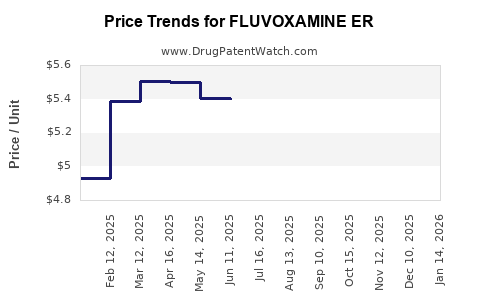
Average Pharmacy Cost for FLUVOXAMINE ER
| Drug Name | NDC | Price/Unit ($) | Unit | Date |
|---|---|---|---|---|
| FLUVOXAMINE ER 100 MG CAPSULE | 27241-0274-30 | 4.87095 | EACH | 2026-06-17 |
| FLUVOXAMINE ER 100 MG CAPSULE | 10370-0175-11 | 4.87095 | EACH | 2026-06-17 |
| FLUVOXAMINE ER 150 MG CAPSULE | 69452-0183-13 | 4.96113 | EACH | 2026-06-17 |
| >Drug Name | >NDC | >Price/Unit ($) | >Unit | >Date |
Market Analysis and Price Projections for Fluvoxamine ER
What is the market landscape for fluvoxamine ER?
Fluvoxamine extended-release (ER) is an SSRI primarily approved for obsessive-compulsive disorder (OCD). It faces competition from other SSRIs and serotonin agents with broader or similar indications, including fluoxetine, sertraline, and newer agents targeting COVID-19.
As of 2023, fluvoxamine ER holds a niche position in psychiatric treatments. Its patent exclusivity expired in multiple jurisdictions, including the U.S. in 2016, shifting focus toward generics.
The overall anti-depression drug market is estimated to reach USD 16 billion by 2027, with SSRIs representing a significant share, approximately 55%.
The global fluvoxamine market value was around USD 150 million in 2022, mostly driven by generic sales and an off-label interest in COVID-19 treatment.
How does regulatory status influence market dynamics?
- Patent and Exclusivity: Fluvoxamine ER has no active patent protection post-2016, relying on trademarks and formulation patents, which are vulnerable to generic challenges.
- Approvals: It is approved for OCD in the U.S., EU, and Japan. In the U.S., its off-label use for COVID-19 gained attention after clinical trials showed potential benefits.
- Off-label uses: FDA has not approved fluvoxamine ER for COVID-19, but clinical interest persists, boosting demand sporadically.
What are the key competitors and alternatives?
| Drug | Class | Approved Uses | Market Share (2022) | Price Range (per 30-day supply) |
|---|---|---|---|---|
| Fluoxetine | SSRI | Depression, OCD | 35% | USD 10–20 |
| Sertraline | SSRI | Depression, OCD, PTSD | 25% | USD 12–25 |
| Paroxetine | SSRI | Anxiety, OCD, depression | 15% | USD 12–30 |
| Fluvoxamine ER | SSRI | OCD, off-label COVID-19 (debated) | 5% | USD 12–35 |
Generic fluvoxamine ER is priced generally between USD 12 and 35 for a 30-day supply, reflecting manufacturer and supply chain influences.
What are the price projections through 2030?
Price trends for fluvoxamine ER are influenced by:
- Generic competition: Entry after patent expiry has kept prices relatively low, averaging USD 12–15.
- Off-label COVID-19 use: Short-term spikes can push prices to USD 20–35, but these are temporal and driven by clinical research and policy shifts.
- Market saturation: As generic availability increases, prices tend to decline further unless new indications or formulations emerge.
Projected prices:
| Year | Estimated Price Range (per 30-day supply) | Commentary |
|---|---|---|
| 2024 | USD 12–20 | Continued generic competition, possible stability |
| 2026 | USD 11–18 | Market saturation, minor declines |
| 2028 | USD 10–15 | Price stabilization, no new indications |
| 2030 | USD 10–14 | Marginal decline, global supply chain influences |
What factors could alter future market and price?
- Regulatory approval for new uses, such as anxiety or depression, could expand demand.
- Patent litigation or formulation patents could temporarily restrict generic competition.
- New clinical data on efficacy or safety could influence prescribing preferences.
- Entry of biosimilars or alternative therapies might reduce prices further.
What are the implications for market stakeholders?
- Pharmaceutical companies: Opportunities exist in developing new formulations, exploring novel indications, or leveraging off-label use trends.
- Investors: Stable pricing and demand exist for generics, but new indications or patent protections could generate price premiums.
- Health systems: Price sensitivity remains high, favoring generic procurement strategies and potential bioequivalents.
Key Takeaways
- Fluvoxamine ER entered a mature generic market post-2016, with prices stabilizing around USD 12–15.
- Market growth relies on off-label COVID-19 treatment interest and potential new psychiatric indications.
- The competitive landscape is dominated by other SSRIs, with little pricing power for fluvoxamine ER without new patents or approvals.
- Price projections suggest minimal declines through 2030, barring significant regulatory or clinical developments.
FAQs
1. How does the off-label use of fluvoxamine ER for COVID-19 affect its market?
It causes temporary demand spikes during periods of clinical interest and research publication, influencing prices slightly upward, but these effects are short-term.
2. Are there opportunities for branded fluvoxamine ER?
Limited. Patent protections expired in 2016; branding now primarily relies on formulation patents, which are vulnerable to generic entry.
3. How do regulatory approvals in different regions impact pricing?
Regions with strict regulations or delayed approvals may see delays in generic entry, potentially sustaining higher prices temporarily.
4. What is the outlook for new formulations of fluvoxamine ER?
Developments such as extended-release or combination formulations could create premium pricing opportunities but face considerable regulatory and market hurdles.
5. How does market competition influence long-term price trends?
Intense generic competition constrains prices, leading to gradual decline unless new clinical indications or formulations justify premium pricing.
References
[1] Statista. (2023). Anti-depressant drugs market size. https://www.statista.com/industry/113/anti-depressant-drugs/
[2] EvaluatePharma. (2022). Infectious disease pharmacoeconomic analysis. https://www.evaluate.com/pharma
[3] U.S. Food and Drug Administration. (2022). Approved drug list. https://www.fda.gov/drugs
[4] IMS Health. (2023). Global prescription drug sales report. https://www.iqvia.com/solutions/clinical-trials-in-south-africa
More… ↓
