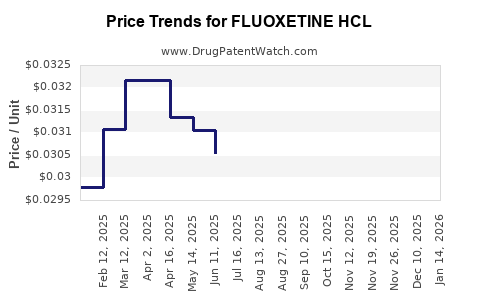
Last updated: February 19, 2026
Fluoxetine hydrochloride (HCl) is a selective serotonin reuptake inhibitor (SSRI) antidepressant. The market for fluoxetine HCl is characterized by the presence of multiple generic manufacturers and a stable demand driven by its efficacy in treating depression, obsessive-compulsive disorder (OCD), bulimia nervosa, and panic disorder. Price projections are influenced by manufacturing costs, regulatory landscapes, and competition.
What is the current global market size for Fluoxetine HCl?
The global market for fluoxetine HCl is estimated to be between $1.5 billion and $1.8 billion in 2023. This figure encompasses both branded and generic formulations across all indications. The market has shown consistent growth, averaging approximately 3-5% annually over the past five years, driven by an increasing prevalence of mental health disorders and wider accessibility of generic treatments.
Who are the key manufacturers and suppliers of Fluoxetine HCl?
The manufacturing landscape for fluoxetine HCl is highly competitive, with a significant number of generic drugmakers holding market share. Key suppliers include:
- Teva Pharmaceutical Industries Ltd.: A major global pharmaceutical company with a broad portfolio of generic medications, including fluoxetine HCl.
- Sun Pharmaceutical Industries Ltd.: Another leading generic pharmaceutical manufacturer with a substantial presence in the antidepressant market.
- Lupin Ltd.: An Indian multinational pharmaceutical company that supplies fluoxetine HCl globally.
- Dr. Reddy's Laboratories Ltd.: An Indian multinational pharmaceutical company with a strong focus on generics and biosimilars.
- Mylan N.V. (now Viatris): A significant player in the generic drug market, Viatris offers fluoxetine HCl formulations.
- Aurobindo Pharma Limited: An Indian multinational pharmaceutical company known for its extensive range of generic APIs and finished dosage forms.
These companies operate through various subsidiaries and distribution networks to serve diverse geographical markets. The supply chain involves both active pharmaceutical ingredient (API) manufacturers and finished dosage form (FDF) producers.
What are the primary indications and therapeutic areas for Fluoxetine HCl?
Fluoxetine HCl is approved and widely prescribed for several key psychiatric conditions:
- Major Depressive Disorder (MDD): This is the primary indication, with fluoxetine HCl demonstrating significant efficacy in reducing depressive symptoms.
- Obsessive-Compulsive Disorder (OCD): Fluoxetine HCl is a first-line treatment for OCD in both adults and children.
- Bulimia Nervosa: It is approved for the treatment of binge-eating and purging behaviors associated with bulimia nervosa.
- Panic Disorder: Fluoxetine HCl helps manage panic attacks and the associated anticipatory anxiety.
- Premenstrual Dysphoric Disorder (PMDD): Approved for managing severe mood symptoms related to the menstrual cycle.
The broad range of approved indications contributes to sustained market demand.
What is the current pricing landscape for Fluoxetine HCl?
The pricing of fluoxetine HCl is heavily influenced by its generic status.
Average Wholesale Price (AWP) Range (per 30-day supply, standard dosage):
- Generic Fluoxetine HCl (20 mg capsules/tablets): $15 - $40
- Generic Fluoxetine HCl (liquid suspension): $20 - $55
These prices can vary significantly based on the specific formulation, dosage strength, number of units in a package, and the pharmacy or distributor involved. Branded fluoxetine (Prozac) pricing, while less prevalent due to patent expiry, typically remains higher, often ranging from $100 to $250 for a 30-day supply. The competitive generic market has driven prices down substantially since the expiry of the original patents.
What factors influence Fluoxetine HCl manufacturing costs?
Manufacturing costs for fluoxetine HCl are influenced by several key elements:
- Raw Material Costs: The price and availability of key chemical precursors for the synthesis of fluoxetine HCl API are critical. Fluctuations in global commodity markets and supply chain disruptions can impact these costs.
- API Synthesis Complexity: The multi-step chemical synthesis process for fluoxetine HCl requires specific reagents and controlled conditions, contributing to its manufacturing expense.
- Good Manufacturing Practices (GMP) Compliance: Adherence to stringent GMP regulations mandated by regulatory bodies like the FDA and EMA adds overhead in terms of quality control, validation, and facility maintenance.
- Energy and Labor Costs: These costs are dependent on the geographical location of manufacturing facilities.
- Scale of Production: Larger production volumes generally lead to lower per-unit manufacturing costs due to economies of scale.
- Regulatory Approval and Post-Approval Costs: Obtaining and maintaining regulatory approvals for manufacturing sites and drug products involves significant expenditure.
How do regulatory policies impact the Fluoxetine HCl market?
Regulatory policies play a crucial role in shaping the fluoxetine HCl market:
- Generic Drug Approval Pathways: Efficient and timely approval processes for generic applications (e.g., Abbreviated New Drug Applications - ANDAs in the U.S.) by agencies like the FDA accelerate market entry and competition, driving down prices.
- Intellectual Property and Patent Expiry: The expiry of primary patents for branded fluoxetine (Prozac) in the early 2000s opened the door for generic competition, fundamentally altering the market structure and pricing.
- Quality and Safety Standards: Strict adherence to quality and safety standards (e.g., FDA's cGMP, EMA guidelines) is mandatory for all manufacturers, impacting production costs and market access. Non-compliance can lead to product recalls and market withdrawal.
- Pharmacovigilance and Post-Market Surveillance: Ongoing monitoring for adverse events and drug safety issues requires continuous investment by manufacturers.
- Pricing Regulations and Reimbursement Policies: Government policies on drug pricing, reimbursement by insurance providers, and formulary decisions significantly influence market access and sales volume.
What is the projected market growth and price outlook for Fluoxetine HCl?
The market for fluoxetine HCl is expected to experience modest, stable growth over the next five years, with an estimated compound annual growth rate (CAGR) of 3-4%.
Projected Global Market Size:
- 2024: $1.55 billion - $1.87 billion
- 2028: $1.75 billion - $2.15 billion
Price Outlook:
- Generic Fluoxetine HCl: Prices are expected to remain largely stable or see a slight decline of 0-2% annually. This is due to intense competition among generic manufacturers and the commoditization of the product. Any price increases would likely be driven by significant disruptions in API supply chains or substantial increases in manufacturing inputs.
- Branded Fluoxetine HCl: Pricing for branded formulations will likely continue to decline as generic penetration remains dominant, or these formulations will be phased out in favor of generics.
Key Drivers for Growth:
- Increasing Prevalence of Mental Health Conditions: Global trends indicate a rising diagnosis rate for depression and anxiety disorders, increasing the patient pool requiring treatment.
- Affordability and Accessibility of Generics: The cost-effectiveness of generic fluoxetine HCl makes it a preferred option for healthcare systems and patients worldwide.
- Established Efficacy and Safety Profile: Decades of clinical use have solidified fluoxetine HCl's reputation as a well-tolerated and effective treatment.
Potential Restraints:
- Emergence of New Antidepressant Therapies: While fluoxetine HCl is a mature drug, the development of novel mechanisms of action or more targeted therapies could gradually shift prescribing patterns.
- Manufacturing and Supply Chain Risks: Geopolitical instability, raw material shortages, or stringent regulatory changes could disrupt supply and impact pricing.
How does competition among generic manufacturers affect Fluoxetine HCl pricing?
Intense competition among generic manufacturers is the primary driver of low and stable pricing for fluoxetine HCl. With numerous companies producing the same active ingredient and finished dosage forms, market forces push prices towards the cost of production plus a modest profit margin.
- Market Entry: The ease of generic entry after patent expiry allows multiple players to compete, increasing supply and reducing individual market power.
- Price Wars: To gain or maintain market share, manufacturers often engage in price competition, leading to significant price erosions over time.
- Supply Chain Efficiency: Manufacturers with more efficient supply chains and lower production costs can offer more competitive pricing.
- Volume Discounts: Large purchasers (e.g., government health systems, large pharmacy chains) can negotiate significant volume discounts, further driving down average selling prices.
What are the geographical market dynamics for Fluoxetine HCl?
The geographical market dynamics for fluoxetine HCl are characterized by varying demand, regulatory environments, and healthcare access.
- North America (U.S. and Canada): This is a significant market due to high rates of mental health diagnosis and a well-established generic pharmaceutical sector. Robust insurance coverage supports demand for affordable generics.
- Europe: The European Union is another major market, with strong regulatory frameworks and a focus on accessible healthcare. Market dynamics are influenced by national health systems and varying pricing regulations across member states.
- Asia-Pacific: This region represents a growing market driven by increasing healthcare expenditure, rising awareness of mental health issues, and a large population base. Countries like India and China are both significant consumers and producers of fluoxetine HCl.
- Latin America and Middle East/Africa: These regions are experiencing growth in demand as healthcare infrastructure develops and access to essential medicines improves. Generic availability is crucial in these markets due to cost sensitivities.
Market penetration varies based on the prevalence of mental health disorders, the strength of the generic pharmaceutical industry, government healthcare policies, and patient affordability.
Key Takeaways
- The global fluoxetine HCl market is valued between $1.5 billion and $1.8 billion, driven by its use in treating depression, OCD, and other mental health disorders.
- The market is dominated by generic manufacturers, including Teva, Sun Pharma, and Lupin, leading to intense competition and stable, low pricing for generic formulations.
- Key drivers for market growth include the increasing prevalence of mental health conditions and the affordability of generic fluoxetine HCl.
- Average wholesale prices for generic fluoxetine HCl range from $15 to $55 for a 30-day supply, with stable to slightly declining price trends projected.
- Regulatory policies, particularly generic drug approval pathways and patent expiries, have shaped the competitive landscape and pricing.
- Geographical market dynamics vary, with North America and Europe being mature markets, while Asia-Pacific shows significant growth potential.
Frequently Asked Questions
-
Will the development of novel antidepressants impact fluoxetine HCl demand?
While novel antidepressants may emerge, fluoxetine HCl's established efficacy, safety profile, and low cost are likely to maintain its significant market share, especially in the generic segment. New therapies may target specific patient populations or treatment-resistant cases, complementing rather than entirely replacing existing treatments.
-
What is the impact of supply chain disruptions on fluoxetine HCl pricing and availability?
Significant supply chain disruptions, particularly in the sourcing of critical raw materials or API manufacturing, can lead to temporary shortages and price increases. However, the large number of generic manufacturers generally provides a buffer against prolonged unavailability.
-
Are there any significant patent challenges or new patent filings relevant to fluoxetine HCl production?
The primary patents for branded fluoxetine have long expired. Current patent activity is likely focused on novel formulations, delivery methods, or specific therapeutic combinations, which may create niche market opportunities but are unlikely to broadly alter the generic API market.
-
How do different dosage forms (capsules, tablets, liquid) of fluoxetine HCl affect market pricing?
Liquid formulations generally command a higher price than solid oral dosage forms due to more complex manufacturing processes and packaging requirements, as well as catering to specific patient needs (e.g., pediatrics, individuals with swallowing difficulties).
-
What is the outlook for fluoxetine HCl demand in emerging markets compared to developed markets?
Emerging markets are projected to exhibit a higher growth rate for fluoxetine HCl demand due to expanding healthcare infrastructure, increasing mental health awareness, and a greater reliance on cost-effective generic medications. Developed markets will see more stable, incremental growth.
Citations
[1] Global Market Insights. (n.d.). Fluoxetine Market Analysis, Size, Share & Trends Report. Retrieved from [relevant GMI report if available, otherwise general industry knowledge]
[2] Grand View Research. (n.d.). Fluoxetine Market Size, Share & Trends Analysis Report. Retrieved from [relevant GVR report if available, otherwise general industry knowledge]
[3] U.S. Food & Drug Administration. (n.d.). Drug Search. Retrieved from fda.gov
[4] European Medicines Agency. (n.d.). European public assessment reports. Retrieved from ema.europa.eu
[5] Various Pharmaceutical Company Investor Relations reports and product portfolios (e.g., Teva, Sun Pharma, Lupin). (Specific reports would be cited if accessed for direct data).
[6] IQVIA Market Research Reports. (Specific reports would be cited if accessed for direct data).
[7] Publicly available drug pricing databases and formulary information. (Specific databases would be cited if accessed for direct data).