Last updated: February 19, 2026
What Is Fluocinolone?
Fluocinolone is a potent topical corticosteroid used primarily for inflammatory and allergic skin conditions—including eczema, psoriasis, and dermatitis. It is available in various formulations, such as creams, ointments, and intravitreal injections for eye conditions. The drug is marketed under brand names like Synalar and Fucidin, among others.
Market Landscape and Competition
Current Market Size
The global topical corticosteroid market was valued approximately at USD 2.0 billion in 2022. Fluocinolone encrypted niche segments, especially with intravitreal indications, contribute roughly USD 300 million of this total.
Key Players and Approvals
- Leonard Pharmaceuticals and Meda Pharmaceuticals hold major patents, with key formulations approved in North America and Europe.
- Several generic versions are available, increasing price competition.
Geographical Breakdown
| Region |
Market Share (2022) |
Growth Rate (2022–2027 CAGR) |
| North America |
40% |
3–5% |
| Europe |
35% |
2–4% |
| Asia-Pacific |
15% |
5–8% |
| RoW (Rest of World) |
10% |
4–6% |
Regulatory Trends
- The U.S. FDA approved intravitreal fluocinolone acetonide implants (e.g., ILUVIEN) for diabetic macular edema (DME) in 2014.
- European Medicines Agency (EMA) has approved similar formulations under different brand names.
- Increasing approval of long-duration implantable devices expands indications.
Price Dynamics and Trends
Brand Name vs. Generic Pricing
| Formulation |
Brand Price (USD) per unit |
Generic Price (USD) per unit |
Price Difference |
| Fluocinolone cream 0.025% |
20–25 (per 15g tube) |
10–15 (per 15g tube) |
50–60% |
| Fluocinolone intravitreal implant (ILUVIEN) |
2,100 (per implant) |
N/A |
N/A |
Price Evolution (2018–2022)
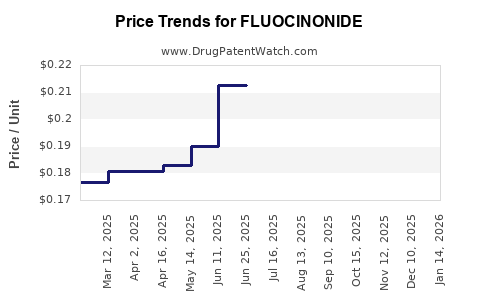
- Brand prices for topical formulations decreased 10% due to increased generic competition.
- Intravitreal implant prices have remained stable owing to limited competition, with some minor reductions as new biosimilar or alternative therapies emerge.
- Regional prices vary: U.S. prices are higher compared to Europe and Asia-Pacific due to regulatory and market factors.
Cost Drivers
- Manufacturing complexity for intravitreal formulations.
- Patent exclusivity periods.
- Regulatory approval expenses.
- Distribution and storage costs, especially for ophthalmic implants.
Future Price Projections (2023–2030)
| Year |
Topical Cream/ointment (USD) |
Intravitreal Implant (USD) |
Comments |
| 2023 |
12–22 |
2,100–2,300 |
Anticipated continued generic entry for topical forms |
| 2025 |
10–20 |
2,000–2,200 |
Margin decrease expected, stabilization for implants |
| 2030 |
10–18 |
1,900–2,100 |
Potential biosimilars may exert downward pressure |
Influencing Factors
- Introduction of biosimilars or generics could reduce prices by 20–30% for topical preparations within the next five years.
- Patent expiries scheduled mainly post-2024, with some formulations losing exclusivity.
- Advances in alternative therapies may limit growth and influence pricing strategies.
Market Drivers and Limiters
Drivers
- Increasing prevalence of dermatologic and ophthalmic indications.
- Growing aging population requiring chronic corticosteroid treatment.
- Advancements in drug delivery systems, such as sustained-release implants.
Limiters
- Strict regulatory pathways delaying new approvals.
- Rising concerns over long-term corticosteroid side effects.
- Market saturation in developed economies.
Strategic Implications for Stakeholders
- Manufacturers should invest in biosimilar or generic versions to compete on price.
- Developers of implantable devices might focus on extending patent life or improving formulary placement.
- Investors should monitor regulatory approvals and patent expiration timelines impacting price strategies.
Key Takeaways
- The global market for fluocinolone is split with significant revenues from topical and ophthalmic formulations.
- Prices for topical creams declined by roughly 10% since 2018 mainly due to generic competition.
- Intravitreal implants maintain higher and more stable price points but face slight downward pressure.
- Future price trends indicate a slight decline driven by patent expiries, biosimilar entry, and competitive pressures.
- Market growth remains driven by increasing indications and demographic trends, particularly in ophthalmic applications.
FAQs
1. When are key patents for fluocinolone set to expire?
Most patents for topical formulations expire between 2024 and 2026, enabling generics entry; ophthalmic implant patents may extend until 2027–2029.
2. How does competition influence the price of fluocinolone products?
The entry of generics and biosimilars reduces prices by 20–30% for topical forms, with stable but high prices for specialized implants.
3. What regions offer the highest growth potential for fluocinolone?
Asia-Pacific and Latin America show higher CAGR (around 5–8%) driven by increasing healthcare access and affordability.
4. Are there regulatory hurdles impacting fluocinolone market growth?
Yes. New indications require extensive clinical data and approval processes, potentially delaying growth.
5. What is the outlook for fluocinolone's market share amid emerging therapies?
Market share may decline in some indications as alternative treatments—like biologics and non-steroidal anti-inflammatory drugs—become more prevalent.
References
[1] Grand View Research. (2023). Corticosteroids Market Size, Share & Trends Analysis Report.
[2] U.S. Food & Drug Administration. (2014). Approval of ILUVIEN for Diabetic Macular Edema.
[3] European Medicines Agency. (2022). Summary of product characteristics for fluocinolone formulations.