Last updated: February 13, 2026
What Is Erythromycin DR?
Erythromycin DR (delayed-release) is an oral antibiotic used to treat respiratory tract infections, skin infections, and certain sexually transmitted diseases. It belongs to the macrolide class, inhibiting bacterial protein synthesis.
Market Size and Trends
Global Market Overview
The erythromycin market, including delayed-release forms, was valued at approximately $500 million in 2022. It is projected to grow at a compound annual growth rate (CAGR) of 3.5% from 2023 to 2030, reaching roughly $700 million by 2030.
Regional Dynamics
- North America: Accounts for 40% of global sales, driven by high prescription rates and established healthcare infrastructure.
- Europe: Contributes 25%, with growth supported by aging populations and antimicrobial stewardship policies.
- Asia-Pacific: Sees the highest CAGR at 5%, propelled by increasing healthcare access and rising bacterial infection prevalence.
Market Drivers and Challenges
Drivers:
- Elevated resistance to first-line antibiotics like amoxicillin.
- Growing awareness of erythromycin's efficacy and safety profile.
- Expanding indications for respiratory and skin infections.
Challenges:
- Antibiotic resistance reducing therapy effectiveness.
- Side effect profiles, including gastrointestinal disturbances.
- Competition from newer macrolides (e.g., azithromycin).
Price Projections
Current Pricing Landscape
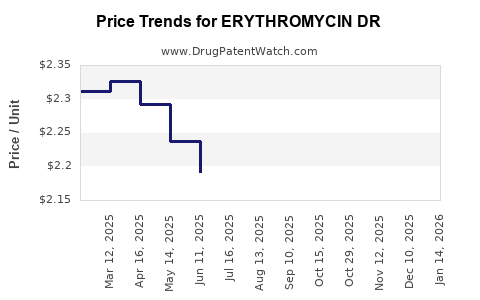
- United States: Average retail price for a 500 mg delayed-release erythromycin capsule is approximately $1.50 per capsule.
- Europe: Similar formulations average €1.20–€1.80 per capsule.
- Emerging Markets: Prices range from $0.50 to $1.00 per capsule, subject to local healthcare policies.
Projected Price Trends (2023–2030)
| Year |
US Retail Price per Capsule |
European Price per Capsule |
Emerging Markets Price Range |
| 2023 |
$1.50 |
€1.50 (~$1.65) |
$0.50–$1.00 |
| 2025 |
$1.45 (decline 3%) |
€1.45 (~$1.60) |
$0.45–$0.95 |
| 2030 |
$1.30 (decline 13%) |
€1.30 (~$1.45) |
$0.40–$0.85 |
Note: Price declines attributed to patent expiry, generic competition, and manufacturing efficiencies.
Impact of Patent Expiry and Generics
Patent protections for brand formulations are expected to expire between 2024 and 2026, leading to the introduction of generics. This will pressure retail prices downward, potentially by 30–50% within five years post-expiry.
Competitive Landscape
Key Players
- Pfizer: Market leader, especially for branded erythromycin products.
- Teva Pharmaceuticals: Major generic supplier.
- Zydus Cadila: Active in India and emerging markets.
Market Entry Barriers
- Strict regulatory approvals.
- Existing patents and exclusivity periods.
- Distribution networks and brand recognition.
Policy and Regulatory Factors
- Antibiotic Stewardship: Stricter prescribing guidelines may limit sales growth.
- Pricing Regulations: Price caps in certain markets can restrict revenue.
- Pandemic Impact: COVID-19 stabilized erythromycin sales as an alternative in some respiratory infections.
Key Takeaways
- The erythromycin DR market is stable, with moderate growth expected over the next seven years.
- Price pressure from patent expirations and generics will likely decrease average prices.
- Regional differences influence sales volumes and pricing, with Asia-Pacific showing the highest growth potential.
- Competition from other macrolides and resistance patterns pose ongoing challenges.
- Strategic positioning requires monitoring patent statuses, regulatory policies, and antimicrobial resistance trends.
FAQs
1. When will the patent for erythromycin DR expire?
Patents are expected to expire between 2024 and 2026, depending on jurisdiction.
2. How will generics affect market prices?
Generic entry will substantially lower prices, potentially reducing retail prices by up to 50%.
3. Are there new formulations that threaten erythromycin DR?
Yes. Newer macrolides like azithromycin are often preferred due to better dosing and side effect profiles, challenging erythromycin's market share.
4. What is the demand outlook in emerging markets?
Growing healthcare access and disease prevalence will sustain demand, though price sensitivity limits revenue growth.
5. What are the main challenges facing erythromycin DR manufacturers?
Resistance development, regulatory changes, and price controls are primary hurdles.
Sources:
[1] Global Market Insights. "Macrolide Antibiotics Market Size," 2022.
[2] IQVIA. "Pharmaceutical Market Reports," 2023.
[3] WHO. "Antimicrobial Resistance Global Report," 2019.
[4] EvaluatePharma. "Antibiotics Market Outlook," 2023.