Last updated: February 15, 2026
Market Overview and Price Projections for Enoxaparin
Enoxaparin, a low molecular weight heparin (LMWH), is widely used for anticoagulation in conditions such as deep vein thrombosis, pulmonary embolism, and during surgical procedures. The drug’s global market is driven by increasing prevalence of thromboembolic disorders, expanding indications, and rising adoption in outpatient settings.
Current Market Landscape
Market Size and Growth Trends
- The global enoxaparin market was valued at approximately $4.2 billion in 2022.
- Compound annual growth rate (CAGR) from 2023 to 2030 is projected at 6.2%.
Geographical Distribution
| Region |
Market Share (2022) |
Growth Drivers |
| North America |
45% |
High prevalence of thrombotic diseases, extensive healthcare infrastructure, off-label use in cardiology |
| Europe |
25% |
Aging population, clinical guideline endorsements |
| Asia-Pacific |
20% |
Increasing healthcare access, aging population, expanding outpatient care |
| Rest of World |
10% |
Market entry of biosimilars, rising healthcare expenditure |
Competitive Landscape
Major manufacturers include:
- Sanofi (Lovenox)
- Hisamitsu Pharmaceutical (parnaparin, a biosimilar)
- Zhejiang Hisun Pharmaceutical
- Cynta Pharmaceuticals
- Biosimilar entrants are accelerating, especially in Europe and emerging markets.
Pricing and Cost Dynamics
Current Pricing Structure
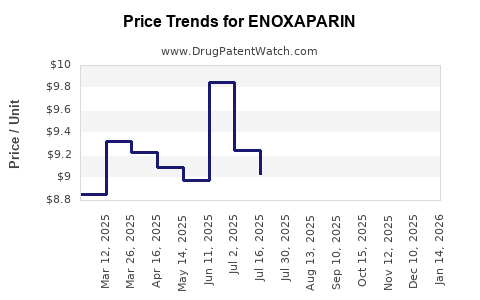
- The average wholesale price (AWP) of enoxaparin in the US ranges from $0.40 to $1.00 per IU (International Units), depending on formulation and dosage.
- Typical therapeutic regimens involve daily doses ranging from 40 mg to 120 mg once or twice daily.
Biosimilar Impact on Pricing
- Biosimilars launched globally since 2017 have reduced prices by approximately 20-35%.
- In Europe, biosimilars account for over 25% of LMWH prescriptions[1], driving down costs and expanding access.
Market Drivers and Constraints
Drivers
- Rising incidence of venous thromboembolism (VTE), diabetes, and cancer.
- Expanded labeling for outpatient prophylaxis.
- Increasing use in pregnancy and pediatric populations.
Constraints
- High manufacturing costs and complex biosimilar development.
- Regulatory and patent barriers delaying biosimilar entry.
- Concerns over safety and anticoagulation management.
Price Projections (2023-2030)
| Year |
Estimated Market Size |
Average Price per IU |
Notable Trends |
| 2023 |
$4.2 billion |
$0.65 |
Stable but gradually declining prices due to biosimilars |
| 2025 |
$5.1 billion |
$0.55 |
Biosimilar market share reaches 35%; price pressure intensifies |
| 2027 |
$6.2 billion |
$0.50 |
Expanded indications; biosimilar adoption peaks |
| 2030 |
$7.6 billion |
$0.45 |
Greater competition; price reductions continue |
Prices are expected to decline by up to 30-40% by 2030, primarily driven by biosimilar penetration, healthcare system cost containment, and increased outpatient use.
Regulatory and Innovation Outlook
- Emerging biosimilars are approved in Europe and Asia.
- US FDA approvals remain limited; key biosimilar filings are ongoing.
- Drug patents for Sanofi's Lovenox are set to expire between 2024 and 2028, opening avenues for biosimilar competition.
Key Takeaways
- The enoxaparin market is expanding at over 6% annually, reaching $7.6 billion by 2030.
- Biosimilars are a primary force in price reduction, with prices expected to decline by about 30-40% over the next seven years.
- North America leads in market share, with Europe and Asia-Pacific rapidly growing segments.
- Cost containment and newer biosimilars will influence pricing dynamics, impacting manufacturer margins and payer strategies.
Frequently Asked Questions
1. How will biosimilar entry affect enoxaparin prices?
Biosimilar entry typically reduces prices by 20-35%, increasing competition and driving down costs across markets.
2. What are the main factors influencing enoxaparin adoption?
Prevalence of thromboembolic conditions, updated clinical guidelines, outpatient management trends, and biosimilar availability.
3. Which regions will see the fastest market growth?
Asia-Pacific and emerging markets will grow faster due to increasing healthcare access and expanding indications.
4. What challenges could hinder price reductions?
Regulatory delays, patent litigations, manufacturing costs, and safety concerns can limit biosimilar market penetration.
5. How are changing healthcare policies impacting the market?
Policies favoring cost-effective treatments and reimbursement reforms support utilization growth and biosimilar uptake.
References
[1] European Medicines Agency. "Biosimilar Medicines in the EU," 2022.