Last updated: July 27, 2025
Introduction
Dihydroergotamine (DHE), a semi-synthetic ergot alkaloid, is primarily used for the acute treatment of migraines and cluster headaches. Its clinical prominence, coupled with patent expirations and emerging therapies, influences its market dynamics. This analysis explores current market landscapes, competitive positioning, regulatory considerations, and future price projections for DHE.
Market Overview
Therapeutic Indications and Clinical Usage
DHE serves as a second-generation triptan alternative, especially indicated for moderate to severe migraines and cluster headaches resistant to first-line therapies. Its administration typically involves intravenous, intranasal, or intramuscular routes. The drug is especially preferred in cases where contraindications to triptans—such as cardiovascular risks—are present.
Current Market Players and Formulations
Major pharmaceutical companies manufacturing DHE include Boehringer Ingelheim and Mylan (now part of Viatris). Multiple formulations are available—primarily nasal sprays (e.g., Migranal) and injectable forms—creating a diversified market offering.
Market Size and Growth Trends
The global headache therapeutics market, valued at approximately USD 4 billion in 2022, is projected to grow at a compound annual growth rate (CAGR) of around 4%, reaching USD 5.3 billion by 2030. While direct data on DHE-specific sales is limited, its segment within acute migraine treatments accounts for an estimated USD 500 million globally. Factors influencing growth include:
- Rising prevalence of migraines, affecting around 15% of the global population (WHO).
- Increased adoption of alternative acute therapies, particularly among patients contraindicated for triptans.
- Greater awareness and diagnosis of cluster headaches.
Competitive Landscape and Market Dynamics
Patent and Regulatory Environment
DHE itself is off-patent, with generic formulations dominating the landscape. Patent expirations have reduced exclusivity and fostered increased generic competition, exerting downward pressure on prices.
Emergence of Alternative Therapies
New classes of drugs, notably calcitonin gene-related peptide (CGRP) antagonists like erenumab, fremanezumab, and galcanezumab, are reshaping migraine management. These biologics offer prophylactic benefits with fewer side effects but are more expensive upfront, influencing DHE's market share.
Pricing Factors
Pricing for DHE formulations varies across regions:
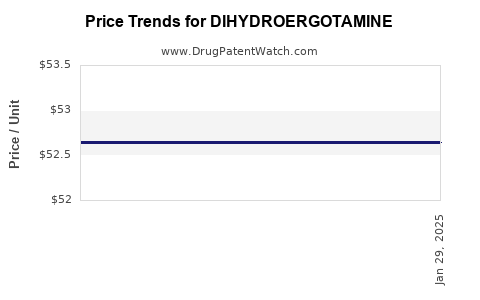
- United States: Nasal spray (Migranal) retails around USD 30–60 per dose.
- Europe: Prices range broadly, often subsidized through healthcare systems.
- Generics: Available at significantly reduced prices, often under USD 20 per dose.
Pricing is impacted by factors such as manufacturing costs, distribution, reimbursement policies, and competition from alternative treatments.
Price Projections
Short-Term Outlook (Next 3-5 Years)
As patent protections have expired and generics dominate, DHE prices are expected to decline further. The average price per dose is projected to decrease by 20–30%, driven by generic proliferation and healthcare cost containment strategies.
Furthermore, the increasing adoption of CGRP monoclonal antibodies may slightly displace DHE in certain indications, especially in prophylactic settings. However, DHE's affordability and administration routes (especially nasal spray) sustain its role as an accessible acute treatment.
Long-Term Outlook (5-10 Years)
Over the next decade, DHE’s market share may plateau or decline, particularly if new, more effective triptans or CGRP options become standard care. Nonetheless, its role might persist in:
- Specialist and hospital settings.
- Patients with contraindications to newer therapies.
- Regions with limited access to biologics.
Price-wise, the downward trend is expected to continue, potentially stabilizing at USD 10–15 per dose for generics in developed markets.
Market Drivers and Challenges
Drivers:
- Increasing migraine and cluster headache prevalence.
- Growing preference for injectable and nasal formulations.
- Cost-effectiveness of generics.
- Expansion into emerging markets with growing healthcare infrastructure.
Challenges:
- Competition from biologic therapies.
- Regulatory shifts favoring newer drugs.
- Limited differentiation among generic DHE products.
- Shifts towards prophylactic biologics reducing demand for acute treatments.
Regulatory and Reimbursement Considerations
Global reimbursement policies significantly impact DHE pricing:
- In the U.S., Medicare and private insurers often favor generic pricing and cost-effective treatments.
- European healthcare systems frequently regulate drug prices to maintain affordability.
- Emerging markets see variable pricing, influenced by local policies and import tariffs.
Regulatory approval for newer formulations or combination therapies could influence market dynamics and prices.
Concluding Insights
Dihydroergotamine remains a relevant therapeutic agent within acute migraine and cluster headache management, especially in specific patient subsets. Its patent expiration and competition have driven prices down, which combined with emerging biologics, will continue to influence its market position.
While short-term prices are expected to decline further, the drug's utility in specific clinical scenarios and regions may sustain a niche market. Long-term trends suggest that innovation and competitive pressures will highly influence DHE pricing, necessitating ongoing monitoring.
Key Takeaways
- Market Stability: DHE holds a stable niche, especially where cost considerations and contraindications limit biologic or triptan use.
- Price Decline: Generic proliferation and patent expirations are driving prices downward, with an expected 20–30% drop over the next 5 years.
- Competitive Landscape: Biologics and newer triptans may reduce DHE’s market share but will not eliminate its clinical utility.
- Regional Variability: Pricing and adoption rates vary significantly across regions; emerging markets may see increased use due to affordability.
- Future Opportunities: Innovation in delivery methods and combination formulations could provide growth avenues despite overall price pressures.
FAQs
1. What factors influence Dihydroergotamine pricing?
DHE pricing is chiefly affected by patent status, generic competition, formulation type, regional healthcare policies, and the presence of alternative therapies such as CGRP biologics.
2. How is the market share of DHE expected to change in the next decade?
While currently stable, DHE’s market share may decline owing to newer, more convenient therapies, though it will retain relevance in specific clinical populations and regions.
3. Are there emerging formulations of DHE?
Research is ongoing into novel delivery methods like inhalers or combination products, which could enhance safety and efficacy, possibly impacting future pricing.
4. How do healthcare systems impact DHE’s market?
Reimbursement policies and regulatory frameworks in different countries influence drug affordability and, consequently, market penetration and pricing.
5. What is the outlook for DHE’s pricing in developing countries?
Prices are likely to stay relatively low due to the availability of generics, with demand driven by healthcare infrastructure development and migraine prevalence rates.
References
- World Health Organization. Headache Disorders Fact Sheet. 2022.
- MarketWatch. Global Headache Therapeutics Market. 2022.
- U.S. Food & Drug Administration. Drug Approvals and Labeling. 2022.
- IQVIA Institute. Global Medicine Spending and Usage Trends. 2022.
- Industry Reports. Emerging Trends in Migraine Treatment. 2022.