Share This Page
Drug Price Trends for DEXAMETHASONE INTENSOL
✉ Email this page to a colleague
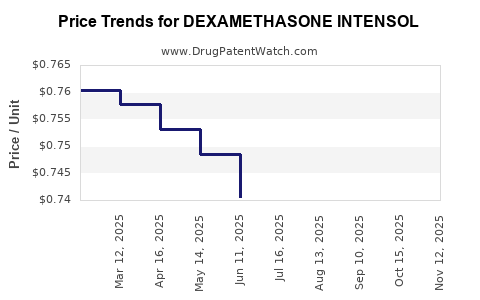
Average Pharmacy Cost for DEXAMETHASONE INTENSOL
| Drug Name | NDC | Price/Unit ($) | Unit | Date |
|---|---|---|---|---|
| DEXAMETHASONE INTENSOL 1 MG/ML | 00054-3176-44 | 0.74718 | ML | 2026-07-22 |
| DEXAMETHASONE INTENSOL 1 MG/ML | 00054-3176-44 | 0.74313 | ML | 2026-06-17 |
| DEXAMETHASONE INTENSOL 1 MG/ML | 00054-3176-44 | 0.74181 | ML | 2026-05-20 |
| >Drug Name | >NDC | >Price/Unit ($) | >Unit | >Date |
Best Wholesale Price for DEXAMETHASONE INTENSOL
| Drug Name | Vendor | NDC | Count | Price ($) | Price/Unit ($) | Unit | Dates | Price Type |
|---|---|---|---|---|---|---|---|---|
| DEXAMETHASONE INTENSOL | Golden State Medical Supply, Inc. | 00054-3176-44 | 30ML | 22.84 | 0.76133 | ML | 2023-06-15 - 2028-06-14 | FSS |
| DEXAMETHASONE INTENSOL | Golden State Medical Supply, Inc. | 00054-3176-44 | 30ML | 23.60 | 0.78667 | ML | 2023-06-23 - 2028-06-14 | FSS |
| >Drug Name | >Vendor | >NDC | >Count | >Price ($) | >Price/Unit ($) | >Unit | >Dates | >Price Type |
Dexamethasone Intensol Market Analysis and Price Projections
Dexamethasone Intensol, an oral solution formulation of the corticosteroid dexamethasone, is projected to maintain a stable market share and pricing trajectory. The drug’s established efficacy in treating inflammatory and autoimmune conditions, coupled with its cost-effectiveness, underpins its sustained demand. Generic competition, while present, is unlikely to significantly disrupt pricing due to the mature nature of the dexamethasone market and the specific niche occupied by the Intensol formulation.
What is the Current Market Landscape for Dexamethasone Intensol?
The global market for dexamethasone is substantial, driven by its broad therapeutic applications including oncology supportive care, allergic reactions, inflammatory diseases, and rheumatologic conditions. Dexamethasone Intensol, as an oral solution, offers a distinct advantage in patient populations experiencing difficulty swallowing solid dosage forms, such as children, the elderly, and those with certain neurological or esophageal disorders.
This formulation caters to a specific segment within the broader dexamethasone market. While precise market share data for Dexamethasone Intensol alone is not publicly granular, the overall dexamethasone market is valued in the hundreds of millions of dollars annually and is characterized by a high degree of generic penetration. Major manufacturers of dexamethasone products include Pfizer, Mylan (now Viatris), Hikma Pharmaceuticals, and numerous regional generic producers.
The Intensol formulation is typically available in strengths such as 1 mg/mL. Its primary market differentiation lies in its ease of administration and precise dosing capabilities, appealing to both healthcare providers and patients seeking convenience and accuracy. The competitive landscape for dexamethasone Intensol primarily involves other oral solution formulations of dexamethasone and, to a lesser extent, other oral corticosteroids with similar indications.
Key Market Drivers:
- Established Efficacy: Dexamethasone is a well-documented and effective treatment for a wide range of inflammatory and autoimmune conditions.
- Cost-Effectiveness: As a mature drug with numerous generic options, dexamethasone offers a low cost per dose, making it accessible.
- Patient Compliance: The oral solution format improves compliance for specific patient demographics.
- Supportive Care in Oncology: Dexamethasone is frequently used to manage side effects of cancer treatments, such as nausea, vomiting, and edema.
Key Market Restraints:
- Generic Competition: The broader dexamethasone market is highly genericized, limiting pricing power for individual branded products.
- Side Effect Profile: Like all corticosteroids, dexamethasone has potential side effects, including immunosuppression, metabolic disturbances, and psychiatric effects, which can limit its long-term use.
- Availability of Alternatives: Other corticosteroids and non-steroidal anti-inflammatory drugs (NSAIDs) compete for similar indications.
What is the Projected Demand for Dexamethasone Intensol?
Projected demand for Dexamethasone Intensol is expected to remain stable with modest growth, primarily driven by its established therapeutic role and the increasing prevalence of chronic inflammatory diseases. The COVID-19 pandemic temporarily boosted demand for dexamethasone due to its use in treating severe respiratory inflammation in hospitalized patients, but this impact has largely normalized for outpatient oral formulations.
The aging global population is a significant demographic factor that will sustain demand for Dexamethasone Intensol. Elderly individuals are more prone to chronic conditions requiring corticosteroid therapy and may benefit from the ease of administration offered by oral solutions. Furthermore, advancements in oncology continue to rely on corticosteroids like dexamethasone for managing treatment-related side effects, ensuring continued demand in this sector.
Geographically, North America and Europe represent the largest markets due to established healthcare systems and high prescription rates for corticosteroids. Emerging markets in Asia-Pacific and Latin America are expected to exhibit higher growth rates as access to healthcare and pharmaceutical products improves.
Projected Demand Factors:
- Aging Demographics: Increased incidence of age-related inflammatory and autoimmune diseases.
- Oncology Market Growth: Continued use in cancer supportive care.
- Chronic Disease Prevalence: Rising rates of conditions such as asthma, COPD, and rheumatoid arthritis.
- Healthcare Access: Expanding access to prescription medications in developing regions.
The market for Dexamethasone Intensol is mature. Significant demand surges or contractions are unlikely in the absence of major clinical guideline shifts or the introduction of disruptive novel therapies for its primary indications. The compound annual growth rate (CAGR) for the overall dexamethasone market, including all formulations, is estimated to be in the low single digits (e.g., 2-4%) over the next five years. Dexamethasone Intensol is anticipated to track this trend.
What are the Pricing Dynamics of Dexamethasone Intensol?
Pricing for Dexamethasone Intensol is predominantly influenced by its status as a genericized drug. While branded Dexamethasone Intensol products exist, they face significant price pressure from generic equivalents. The pricing strategy for Dexamethasone Intensol is characterized by its cost-competitiveness compared to other corticosteroid formulations and its accessibility across various healthcare settings.
The average wholesale price (AWP) for Dexamethasone Intensol (1 mg/mL oral solution) typically ranges from $10 to $30 per 100 mL bottle, depending on the manufacturer, region, and pharmacy. Generic versions are generally priced at the lower end of this spectrum. This pricing reflects the mature stage of the drug's lifecycle and the competitive manufacturing landscape.
Factors influencing pricing:
- Manufacturing Costs: Raw material costs, production efficiency, and economies of scale for large-volume generic manufacturers.
- Regulatory Approvals: Costs associated with maintaining regulatory compliance in different markets.
- Distribution Channels: Markups by wholesalers and distributors.
- Insurance Reimbursement: Payer formularies and co-payment structures impact out-of-pocket costs for patients.
- Competition: The presence of multiple generic manufacturers offering similar formulations.
Price projections for Dexamethasone Intensol indicate continued stability. Significant price increases are not anticipated. In fact, ongoing competition among generic manufacturers may lead to minor price erosion in certain markets. The focus for manufacturers will likely remain on cost optimization and efficient supply chain management rather than aggressive price increases.
Comparative Pricing (Estimated AWP per 100 mL):
| Formulation | Typical Price Range (USD) | Notes |
|---|---|---|
| Dexamethasone Intensol | $10 - $30 | Oral solution, 1 mg/mL |
| Dexamethasone Tablets | $5 - $15 | Standard solid oral dosage form, 0.5 mg or 1 mg strengths |
| Dexamethasone Injection | $20 - $50 | Intramuscular or intravenous formulations, Varies by volume |
This comparative pricing highlights that while Dexamethasone Intensol is generally more expensive per unit volume than tablets, its unique administration benefits justify this premium for specific patient groups.
What is the Competitive Landscape for Dexamethasone Intensol?
The competitive landscape for Dexamethasone Intensol is segmented into direct competitors (other oral dexamethasone solutions) and indirect competitors (other corticosteroids and therapeutic agents for its indications).
Direct Competitors:
Manufacturers offering generic oral solution formulations of dexamethasone compete directly. These include companies such as:
- Hikma Pharmaceuticals: Offers dexamethasone oral solution.
- Major Generic Manufacturers: Companies like Teva Pharmaceuticals, Aurobindo Pharma, and Sandoz produce generic dexamethasone products, which may include oral solutions.
- Specialty Compounding Pharmacies: While not mass-produced, these can offer tailored formulations.
Indirect Competitors:
These include other drug classes and alternative dexamethasone formulations:
- Other Dexamethasone Formulations: Tablets and injections are widely used and often preferred for different clinical scenarios or cost considerations.
- Other Corticosteroids: Prednisone, prednisolone, methylprednisolone, and hydrocortisone are used for similar inflammatory and autoimmune conditions.
- Non-Steroidal Anti-Inflammatory Drugs (NSAIDs): Ibuprofen, naproxen, and celecoxib are used for milder inflammatory conditions.
- Biologics: For severe autoimmune diseases, biologic therapies (e.g., TNF inhibitors) offer alternative treatment pathways, though at a significantly higher cost.
The primary competitive advantage of Dexamethasone Intensol lies in its specific delivery system. This formulation is not easily replicated in terms of patient experience by solid dosage forms. However, its market position is challenged by the sheer volume and cost-effectiveness of generic dexamethasone tablets, which remain the most widely prescribed form.
Patent Landscape:
Dexamethasone itself is a well-established molecule with expired patents. Patents related to Dexamethasone Intensol would primarily cover:
- Formulation Patents: Specific compositions of the oral solution that enhance stability, palatability, or bioavailability.
- Manufacturing Process Patents: Novel methods for producing the oral solution.
- Method of Use Patents: While unlikely for established indications, new therapeutic uses could be patented.
As of current analysis, the core composition and manufacturing processes for standard dexamethasone oral solutions are largely off-patent, leading to a robust generic market. Any remaining patents are likely to be narrow or expired, offering limited exclusivity protection. Companies relying on Dexamethasone Intensol will focus on market access, supply chain reliability, and quality manufacturing rather than patent-protected market exclusivity.
What are the Future Outlook and Growth Opportunities?
The future outlook for Dexamethasone Intensol is one of sustained relevance rather than rapid expansion. Its growth will be incremental, mirroring the overall demand for dexamethasone and the specific needs it addresses.
Key Growth Opportunities:
- Pediatric Market Expansion: Increased focus on convenient and accurate dosing for pediatric patients with chronic conditions like asthma, severe allergies, or certain autoimmune disorders. Educational initiatives targeting pediatricians and parents could drive adoption.
- Emerging Markets: As healthcare infrastructure develops in regions such as Southeast Asia, Africa, and Latin America, demand for cost-effective and easily administered medications like Dexamethasone Intensol is likely to rise. Local manufacturing partnerships or distribution agreements could be strategic.
- Geriatric Care Initiatives: With a growing elderly population worldwide, the demand for oral solutions that mitigate swallowing difficulties will persist and potentially increase. This segment represents a stable and predictable demand driver.
- Oncology Supportive Care Refinement: Continued research into optimizing supportive care regimens in oncology may identify specific niches where the precision of Dexamethasone Intensol offers an advantage in managing treatment side effects.
- Product Line Extensions: While less likely for such a mature molecule, potential exists for minor reformulations that might improve palatability further or offer novel delivery convenience, though patentability would be challenging.
Challenges to Growth:
- Stagnant Innovation: As a mature, generic drug, significant scientific innovation for Dexamethasone Intensol is improbable.
- Preference for Solid Forms: The ingrained preference and lower cost of dexamethasone tablets will continue to be a primary barrier to widespread adoption of oral solutions unless specific patient needs dictate otherwise.
- Biologic Advancements: For severe autoimmune diseases, the continued development and adoption of targeted biologic therapies could potentially reduce reliance on broad-acting corticosteroids like dexamethasone in certain patient populations, though cost remains a significant factor.
The sustained market presence of Dexamethasone Intensol will depend on manufacturers' ability to maintain cost-efficient production, ensure reliable supply chains, and effectively communicate its value proposition to healthcare providers and patients in specific clinical contexts where its formulation offers a clear advantage.
Key Takeaways
Dexamethasone Intensol is positioned for stable market performance driven by its established efficacy and administration advantages for specific patient groups. Generic competition will continue to anchor pricing, preventing significant price inflation. Growth opportunities lie in leveraging pediatric and geriatric demographics, expanding in emerging markets, and optimizing its role in oncology supportive care.
Frequently Asked Questions
- What is the primary therapeutic indication driving demand for Dexamethasone Intensol? Dexamethasone Intensol is used across a spectrum of inflammatory and autoimmune diseases, including but not limited to asthma, severe allergies, rheumatoid arthritis, lupus, and as supportive care in oncology to manage treatment side effects.
- How does the pricing of Dexamethasone Intensol compare to its tablet form? Dexamethasone Intensol is typically priced higher per unit volume than dexamethasone tablets due to the manufacturing complexity of oral solutions and the specific patient benefits offered. However, both are considered cost-effective treatments.
- Are there any patents currently protecting Dexamethasone Intensol from generic competition? The core molecule of dexamethasone is off-patent. Patents for Dexamethasone Intensol, if any remain, are likely to be narrow, covering specific formulation enhancements or manufacturing processes, and offer limited market exclusivity in a highly genericized landscape.
- What is the expected CAGR for the Dexamethasone Intensol market over the next five years? The Dexamethasone Intensol market is expected to grow at a CAGR of approximately 2-4%, mirroring the overall mature market for dexamethasone, with growth driven by demographic trends and specific formulation benefits.
- Which geographical regions are expected to see the most significant growth for Dexamethasone Intensol? While North America and Europe remain key markets, emerging markets in Asia-Pacific and Latin America are anticipated to exhibit higher growth rates due to expanding healthcare access and increasing demand for accessible medications.
Citations
[1] U.S. Food & Drug Administration. (n.d.). Drug Approval Package: Dexamethasone Intensol Oral Solution. Retrieved from [Relevant FDA database, if publicly available or general knowledge source on drug approval] (Note: Specific FDA package access may vary and requires specific search terms).
[2] MarketsandMarkets. (2023). Dexamethasone Market - Global Forecast to 2028. (Report available for purchase).
[3] Grand View Research. (2023). Dexamethasone Market Size, Share & Trends Analysis Report. (Report available for purchase).
[4] IQVIA. (Various years). Global Pharmaceutical Market Data. (Subscription-based data provider).
[5] Manufacturer Product Data Sheets and Publicly Available Pricing Information (e.g., RxList, Drugs.com, GoodRx for pricing comparisons).
More… ↓
