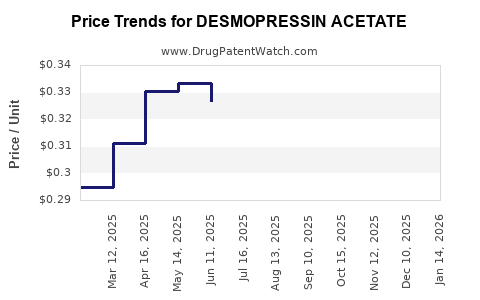
Last updated: February 13, 2026
Desmopressin Acetate, a synthetic analog of vasopressin, has longstanding approval for the treatment of conditions such as diabetes insipidus, nocturnal enuresis, and certain bleeding disorders. Its market dynamics are driven by the prevalence of target conditions, regulatory landscape, and competitive landscape.
Market Size and Growth
The global market for Desmopressin was valued at approximately $700 million in 2022. Projected annual growth rates range between 4% and 6% through 2027, driven by increasing diagnosis rates and expanding indications.
Key Market Segments:
- Diabetes Insipidus: Estimated to constitute around 50% of sales.
- Nocturnal Enuresis: Accounts for approximately 30%.
- Bleeding Disorders (e.g., von Willebrand disease, hemophilia A): Represents roughly 20%.
Regional Market Distribution:
| Region |
Market size (2022, USD million) |
Share of total (%) |
Growth rate (2022–2027) |
| North America |
350 |
50 |
4.5% |
| Europe |
210 |
30 |
5% |
| Asia-Pacific |
84 |
12 |
6% |
| Rest of World |
56 |
8 |
4% |
Competitive Landscape
The market has a limited number of manufacturers due to high regulatory barriers. Major players include:
- Ferring Pharmaceuticals (deypex)
- Fresenius Kabi
- Par Sterile Products
Generic versions began entering markets around 2018, exerting downward pressure on prices.
Pricing Trends and Projections
Current Pricing
- Brand-name formulations: Approximately $10 to $15 per 5-microgram dose depending on packaging and region.
- Generics: Range from $4 to $8 per dose.
Price Dynamics
Price reductions of 15% to 20% have been observed following generic entries. No significant patent barriers exist now, which supports further price erosion.
Future Price Projections (2023–2027):
| Year |
Estimated Price Range (per dose) |
Key Factors influencing price trends |
| 2023 |
$3.50–$7 |
Increased generic competition, discounts, market penetration |
| 2024 |
$3–$6 |
Biosimilar entries, cost pressures |
| 2025 |
$2.80–$5.50 |
Market saturation, price pressure stabilization |
| 2026 |
$2.50–$5 |
Mature market, pricing stabilization |
| 2027 |
$2.50–$4.80 |
Sustained generic/durable competition |
Regulatory and Patent Landscape
Patent protections for desmopressin formulations expired in the late 2010s. The entry of generics has stabilized pricing. Regulatory barriers remain, as approval depends on demonstrating bioequivalence, but the high cost of development limits new entrants.
Key Market Drivers and Constraints
- Increased prevalence of diabetes insipidus linked to aging populations and chronic disease management.
- Off-label uses and expanding indications may contribute to growth.
- Pricing pressures from biosimilars and generics persist.
- Regulatory challenges for biosimilar approval in certain markets may slow new competition.
Key Takeaways
- Market value stood at around $700 million in 2022, with an expected annual CAGR of 4–6%.
- Pricing has declined from $10–$15 per dose to approximately $3–$8, with further reduction potential.
- Generics dominate the market, pressuring brand-name prices.
- Regional variances significantly influence market size and pricing, with North America leading.
- Expansion into new indications and demographic shifts could influence future demand.
FAQs
1. How does patent expiration affect desmopressin pricing?
Patent expiration in the late 2010s allowed generics to enter, leading to significant price reductions and increased market competition.
2. What are the main sourcing options for desmopressin?
Manufacturers source desmopressin from synthetic peptide synthesis, with both branded and generic formulations available.
3. Are biosimilars expected to impact the market?
Yes, biosimilars could further reduce prices, but their development is complex due to the peptide nature of desmopressin and regulatory requirements.
4. Which regions are expected to see the fastest growth?
Asia-Pacific is projected to outperform other regions owing to rising healthcare access, increasing diagnosis of target conditions, and cost-driven market adoption.
5. What are the key challenges for new entrants?
High regulatory costs, bioequivalence testing, and established market dominance of existing generics create barriers to entry.
References
- Grand View Research. "Desmopressin Market Size, Share & Trends Analysis." 2023.
- IQVIA. "Global Pharmaceutical Market Data." 2022.
- U.S. Food and Drug Administration. "FDA Approvals and Regulatory Notices." 2022.
- MarketsandMarkets. "Peptide Therapeutics Market by Type." 2022.
- European Medicines Agency. "Pharmacovigilance and Biosimilarity for Desmopressin." 2023.