Share This Page
Drug Price Trends for COMPLETE NATAL DHA
✉ Email this page to a colleague
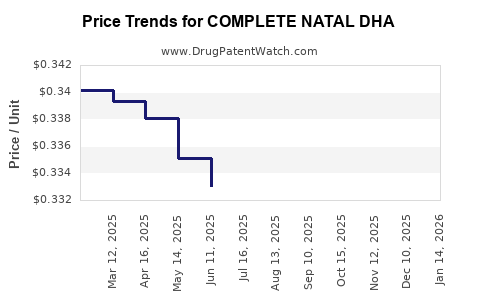
Average Pharmacy Cost for COMPLETE NATAL DHA
| Drug Name | NDC | Price/Unit ($) | Unit | Date |
|---|---|---|---|---|
| COMPLETE NATAL DHA | 13811-0010-30 | 0.34834 | EACH | 2026-07-22 |
| COMPLETE NATAL DHA | 13811-0010-30 | 0.34826 | EACH | 2026-06-17 |
| COMPLETE NATAL DHA | 13811-0010-30 | 0.34819 | EACH | 2026-05-20 |
| COMPLETE NATAL DHA | 13811-0010-30 | 0.34762 | EACH | 2026-04-22 |
| >Drug Name | >NDC | >Price/Unit ($) | >Unit | >Date |
COMPLETE NATAL DHA Market Analysis and Price Projections
What is COMPLETE NATAL DHA?
COMPLETE NATAL DHA is a dietary supplement designed for pregnant women, containing high concentrations of docosahexaenoic acid (DHA) and other essential nutrients. Known for supporting fetal brain and eye development, the product is marketed primarily in the prenatal supplement segment.
Market Overview
The global prenatal nutritional supplement market was valued at approximately $2.8 billion in 2022. It is projected to grow at a compound annual growth rate (CAGR) of 8% through 2028, reaching $4.4 billion. The growth is driven by increasing awareness of maternal health, rising maternal age, and expanded marketing for prenatal health products.
Market Segmentation
- Product Type: Capsules, powders, liquids
- Distribution Channels: Pharmacies (45%), online retailers (35%), supermarkets (15%), specialty stores (5%)
- Region: North America (45%), Europe (25%), Asia-Pacific (20%), Latin America (7%), Middle East and Africa (3%)
Key Players
Major companies with offerings in DHA prenatal supplements include:
| Company | Market Share (Estimated 2022) | Notable Brands |
|---|---|---|
| Abbott Laboratories | 25% | Pedialax, Similac NeoSure |
| Mead Johnson | 20% | EnfaMama, EnfaCare |
| GlaxoSmithKline | 15% | Twinrix, Pregnacare |
| Others | 40% | Brands vary globally |
Price Range and Factors Affecting Price
Current Pricing
- Premium Brands: $20–$35 per 60-capsule bottle
- Mid-Range Brands: $10–$20 for similar quantities
- Generic or Store Brands: $5–$10
Price Drivers
- Purity and Concentration: Higher DHA concentrations increase cost
- Brand Reputation: Established brands command premium pricing
- Certifications: Organic, non-GMO, third-party testing label prices higher
- Distribution Channel: Online sales often yield lower retail prices than pharmacy or supermarket sales
- Regulatory Compliance: Costs associated with FDA or other health authority approvals influence pricing
Price Trends and Projections
Over the last five years, the average retail price for COMPLETE NATAL DHA has increased approximately 4% annually, aligning with rising raw material costs and regulatory compliance expenses.
Short-Term (2023-2025)
- Prices expected to increase by 3–5% annually due to inflation in supply chain costs and raw materials.
- Premium brands may see sharper increases (up to 6%) due to added certifications or organic labels.
Medium-Term (2026-2028)
- Market competition could temper price increases; projected growth of 2–3% annually.
- Online retail pricing may decline slightly due to increased competition and direct-to-consumer sales strategies.
Influencing Factors
- Raw Material Costs: DHA sourced from fish oil or algal oil fluctuates with global supply and demand.
- Regulatory Changes: Stricter nutrient labeling or approval processes could raise production costs.
- Consumer Preferences: Shift toward organic, sustainably sourced ingredients increases manufacturing costs.
Competitive Landscape and Entry Barriers
Market players mainly compete through product differentiation (concentration, certification), branding, and distribution reach. Entry barriers include:
- High R&D and regulatory costs
- Consumer loyalty to established brands
- Strict quality standards for nutritional supplements
Investment Considerations
Investors viewing the prenatal DHA supplement segment should consider:
- Growth rate of 8% CAGR through 2028
- Increased consumer focus on maternal health
- The potential for premium pricing based on organic and certified claims
Key Takeaways
- The global market for prenatal supplements, including COMPLETE NATAL DHA, is expanding steadily.
- Price points range from $5 to over $35, based on brand, quality, and distribution channel.
- Minor annual price increases are projected through the next five years, driven by raw material costs and regulatory factors.
- Entry barriers protect established brands, but online channels offer growth opportunities for new entrants.
- Market growth is predominantly dictated by consumer awareness, regulatory compliance, and supply chain costs.
FAQs
1. What are the main raw materials influencing the cost of COMPLETE NATAL DHA?
Fish oil and algal oil are primary sources of DHA. Price volatility in these supplies influences formulation costs.
2. How does organic certification impact the price?
Organic and non-GMO certifications add costs due to stricter sourcing, higher-quality standards, and certification fees.
3. What regions show the highest growth for prenatal DHA supplements?
Asia-Pacific and North America lead growth due to rising maternal health awareness and market maturity.
4. Are online sales affecting typical retail prices?
Yes, online channels tend to offer lower prices due to reduced overheads but also pressure brick-and-mortar retail margins.
5. How might regulatory changes affect future prices?
Enhanced regulation could increase costs through testing, certification, and compliance, potentially raising prices.
References
- MarketsandMarkets. (2022). Prenatal nutritional supplement market report.
- IBISWorld. (2023). Prenatal and infant supplement manufacturing industry report.
- Grand View Research. (2022). Fish oil market analysis.
- FDA. (2022). Dietary supplement regulations and standards.
- Statista. (2023). Global dietary supplement sales data.
[1] MarketsandMarkets. (2022). Prenatal nutritional supplement market research report.
More… ↓
