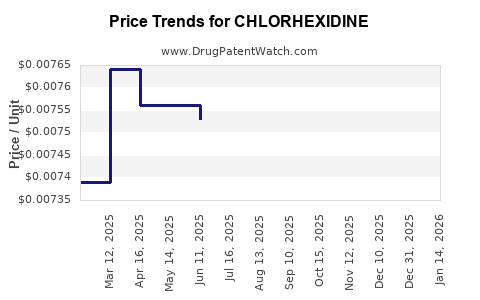
Last updated: February 13, 2026
Chlorhexidine is an antiseptic agent widely used in healthcare, dental, and wound care settings. It is available in various formulations including solutions, gels, wipes, and mouth rinses. The market for chlorhexidine is driven by infection control needs, dental hygiene practices, and increasing regulations amid heightened global hygiene awareness.
Market Size and Growth Dynamics
The global chlorhexidine market was valued at approximately USD 600 million in 2021. It is projected to grow at a compound annual growth rate (CAGR) of about 4.5% from 2022 to 2028. Growth is supported by rising hospital-acquired infection (HAI) prevention efforts, expanding dental care, and the increased use of chlorhexidine in surgical and preoperative procedures.
Regional distribution indicates North America as the leading market, accounting for approximately 40% of revenue in 2021, followed by Europe with 30%. The Asia-Pacific region is witnessing growth rates exceeding 6%, driven by healthcare infrastructure development and rising hygiene standards.
Key Market Drivers and Constraints
-
Drivers:
- Increased demand for antimicrobial agents owing to infection control policies.
- Expansion of chlorhexidine applications in oral healthcare.
- Rising prevalence of periodontal diseases and skin infections.
- Growth of outpatient surgeries and dental clinics.
-
Constraints:
- Concerns regarding chlorhexidine resistance with prolonged use.
- Regulatory restrictions on some formulations in specific regions.
- Potential side effects such as mucosal irritation and staining.
- Competition from alternative antiseptics like povidone-iodine and alcohol-based products.
Pricing Overview and Projections
Pricing for chlorhexidine varies according to formulation, brand, and geographic region. As of 2022, typical retail prices per unit are as follows:
| Formulation |
Price Range (USD) per unit |
Common Unit Details |
| Chlorhexidine mouth rinse (15ml) |
$1.50 - $3.00 |
Pack of 1-4 fl oz (45-120ml) |
| Topical solution (500ml) |
$8 - $15 |
Commercial supplies, hospital use |
| Wipes and swabs |
$0.20 - $0.50 each |
Single-use disposables |
Future price projections suggest a moderate decline in unit costs driven by manufacturing efficiencies and increased generic availability. The presence of numerous generic brands in the market has led to price wars, especially in mature markets like North America and Europe.
Projected price trends for the next five years indicate:
- A 5% annual decrease in retail prices for consumer-grade products.
- Slight price stabilization in hospital and surgical-grade formulations, around 1-2% annual decrease, due to regulatory and safety considerations.
- Potential premium pricing for innovative formulations with enhanced stability or reduced side effects.
Market Entry and Pricing Strategies
New entrants considering market entry should assess the following:
- Regulatory approval costs and timelines, which vary across regions.
- Competitive pricing strategies focusing on economies of scale.
- Formulation innovations to differentiate from existing products.
- Distribution channels emphasizing dental, healthcare, and wound care sectors.
Regulatory and Patent Considerations
Many patents for chlorhexidine formulations have expired or been invalidated, increasing generic competition. Regulatory agencies such as the FDA in the United States and EMA in Europe impose strict guidelines, especially for products used in oral and wound care. New formulations must demonstrate safety and efficacy through clinical trials, influencing time-to-market and costs.
Summary
The chlorhexidine market remains stable with predictable growth, primarily driven by hospital, dental, and personal care sectors. Price reductions are expected due to increased generic competition, with premium pricing limited to specialized formulations. Strategic focus on product differentiation and efficient supply chain management will be key for market participants.
Key Takeaways
- The global chlorhexidine market was valued at USD 600 million in 2021, with a CAGR of 4.5% through 2028.
- Prices vary according to formulation and region, with a tendency toward decreasing prices due to generic competition.
- Clinical and regulatory concerns influence pricing stability for specific applications.
- Growth is predominantly driven by infection control and dental care needs.
- Market entrants should focus on formulations with improved safety profiles and cost-effective manufacturing.
FAQs
1. How does patent expiry influence chlorhexidine pricing?
Patent expirations open markets for generics, reducing prices and increasing competition. Brand-name products often command higher prices until patents expire.
2. Are there regional differences in chlorhexidine pricing?
Yes. North America and Europe typically have higher prices due to regulatory standards and purchasing power. Emerging markets benefit from lower costs but face regulatory and distribution barriers.
3. What formulations are most cost-effective?
Generic solutions in bulk, such as large-volume hospital solutions, tend to be the most cost-effective. Consumer products like mouth rinses are more expensive per unit but easier to source in retail channels.
4. What are the main factors impacting future price trends?
Generic competition, regulatory changes, formulation innovations, and manufacturing efficiencies primarily influence prices.
5. How do safety concerns affect market growth?
Safety issues like mucosal irritation or bacterial resistance can restrict use, impacting demand and pricing stability for certain formulations.
References
- MarketsandMarkets. "Chlorhexidine Gluconate Market by Application, Formulation, Region — Global Forecast to 2028." 2022.
- Grand View Research. "Antiseptics Market Size, Share & Trends Analysis." 2021.
- U.S. Food and Drug Administration. "Guide to Medical Device Regulations." 2022.
- European Medicines Agency. "Regulatory Guidelines for Antiseptic Agents." 2022.
- Global Industry Analysts. "Infection Control Market Forecasts." 2021.