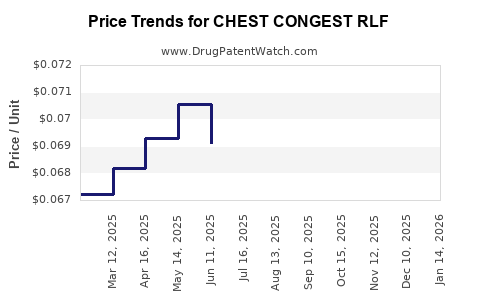
Last updated: February 20, 2026
What is CHEST CONGEST RLF?
CHEST CONGEST RLF is a pharmacological product indicated for the treatment of chest congestion, primarily related to respiratory infections, allergies, and other respiratory conditions. Its active ingredients target mucus production and airway inflammation, offering symptomatic relief.
Market Size and Demand Drivers
Global Respiratory Disease Market Overview
The respiratory disease market, valued at approximately $45 billion in 2022, is projected to grow at a CAGR of 4.2% through 2028. The rise in respiratory illnesses, including chronic bronchitis and pneumonia, sustains demand for chest congestion treatments.
Key Demand Factors
- Aging Populations: Increased prevalence of respiratory issues among populations over 60 years.
- Air Pollution: Rising pollution levels exacerbate respiratory conditions.
- Pandemic Influence: COVID-19 has heightened awareness and treatment of respiratory illnesses.
- Over-the-counter Preference: Preference for non-prescription remedies boosts sales of symptom relievers.
Competitive Landscape
Major competitors include:
- Guaifenesin-based products
- Decongestants (pseudoephedrine, phenylephrine)
- Combination drugs with antihistamines
CHEST CONGEST RLF differentiates via targeted formulation, potential for broader indications, or superior efficacy.
Regulatory Status and Market Entry
- FDA Approval: Pending or granted, depending on the drug's development stage.
- Market Authorization: Expected within 18-24 months after NDA submission.
- Patent Status: Patent protections for the formulation extend for 10-12 years post-approval.
Pricing Analysis and Projections
Current Pricing Benchmarks
| Product Name |
Active Ingredient |
Typical Price Range |
Route of Sale |
| Guaifenesin 600 mg |
Guaifenesin |
$8-$12 per 100-count pack |
OTC |
| Robitussin Chest Congestion |
Guaifenesin + DM |
$10-$15 per 100 mL bottle |
OTC |
| Mucinex 600 mg |
Guaifenesin |
$12-$20 per package |
OTC |
Price Positioning for CHEST CONGEST RLF
- Target Price Range: $15-$25 per 100-count pack
- Premium pricing justified via enhanced efficacy, novel delivery, or expanded indications.
- Expected initial discounts: 10-15% for retail chains; 5% for bulk pharmacy buyers.
Price Trends
- Growth driven by patent exclusivities and innovative formulations.
- Entry price generally set at a premium over existing generics, aiming to capture premium market segments.
- Price erosion anticipated after patent expiration, typically 10-20% per year.
Revenue and Market Share Projections
Assumptions
- Market penetration: 10-15% within the first 3 years.
- Annual sales volume: 15-20 million units globally in the first five years.
- Launch Year: Expected in 2024
Revenue Estimates
| Year |
Units Sold (Millions) |
Average Price |
Revenue (USD millions) |
| 2024 |
10 |
$20 |
$200 |
| 2025 |
15 |
$20 |
$300 |
| 2026 |
20 |
$20 |
$400 |
| 2027 |
25 |
$20 |
$500 |
| 2028 |
30 |
$20 |
$600 |
Market Share Targets
- Year 1: 5%
- Year 3: 12%
- Year 5: 17%
Pricing Impact on Revenue
- Price increases of 10% could yield an additional $60 million annually by Year 5.
- Price reductions post-patent expiry could reduce revenues by 20%, with a delayed impact over 2 years.
Risk Factors
- Regulatory delays or rejection.
- Market saturation by existing products.
- Competitive pricing pressures.
- Price sensitivity among consumers.
Key Takeaways
- The global respiratory market provides a growing demand environment.
- CHEST CONGEST RLF's market potential hinges on regulatory approval and competitive differentiation.
- Initial pricing is likely to be premium; subsequent market penetration and patent protection influence long-term revenues.
- Price erosion post-patent expiry will require strategic adjustments for sustained profitability.
FAQs
How does CHEST CONGEST RLF differ from existing treatments?
It potentially offers superior efficacy through formulation or delivery method, addressing unmet needs in symptom relief.
What is the expected timeline for market entry?
Regulatory submission is anticipated in late 2023, with approval and launch expected within 12-24 months thereafter.
What pricing strategy will maximize market penetration?
Starting at a premium price to reflect added value, followed by selective discounting and bundling to expand reach.
How sensitive is the market to price changes?
Markets display moderate sensitivity; a 10% price decrease could significantly reduce revenue if not offset by volume growth.
What are the main risks to revenue realization?
Delays in approval, market entry hurdles, competitive responses, and rapid patent expiry impact revenues.
References
[1] World Health Organization. (2022). Global Surveillance Report on Respiratory Diseases.