Last updated: February 19, 2026
What is the current size and scope of the calcium acetate market?
The global calcium acetate market was valued at approximately USD 560 million in 2022. It is projected to grow at a compound annual growth rate (CAGR) of 4.2% from 2023 to 2030, reaching USD 770 million by 2030. The market covers applications in pharmaceuticals, animal feed, and food additives, with pharmaceuticals constituting the largest segment accounting for roughly 55% of total sales.
What are the key drivers influencing market growth?
- Increased prevalence of chronic kidney disease (CKD): As CKD patients require phosphate binders, demand for calcium acetate in renal therapies rises.
- Growth in pharmaceutical applications: Calcium acetate is a common phosphate binder in dialysis patients.
- Expansion in animal feed and food industries: As a calcium supplement and acid regulator, demand in these sectors increases amid rising health consciousness.
- Regulatory approvals: SEC approvals for calcium acetate in various formulations bolster adoption.
How do manufacturing and supply chain factors impact pricing?
Supply chain disruptions, especially in raw material supply (calcium carbonate and acetic acid), directly influence production costs. Availability of raw materials can fluctuate due to regional shortages or geopolitical issues, affecting overall pricing. Manufacturing costs are also impacted by regulatory compliance, quality standards, and economies of scale.
What are current pricing dynamics?
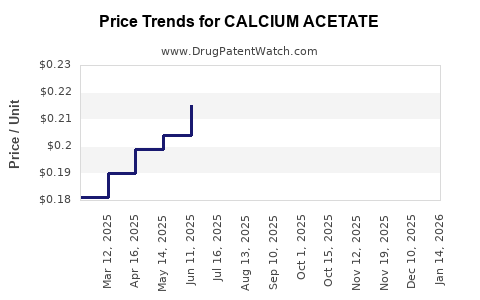
As of Q1 2023, wholesale prices for pharmaceutical-grade calcium acetate (powder form) average USD 12.50 per kilogram. Prices have risen by an average of 3.5% over the past year, mainly due to raw material costs and supply chain constraints. Food-grade calcium acetate prices hover around USD 8.00 per kilogram, reflecting lower purity standards.
What are the outlooks for future price trends?
Pricing is projected to increase modestly at an average CAGR of 2–3% through 2030. Factors influencing this include:
- Raw material cost volatility: Potential increases in calcium carbonate and acetic acid costs.
- Regulatory frameworks: Stricter quality control may marginally raise manufacturing expenses.
- Market demand growth: Expansion in pharmaceutical and food sectors sustains overall price stability.
How does competitive pricing vary across regions?
| Region |
Price Range (USD/kg) |
Key Factors |
| North America |
12.00 – 14.00 |
Higher regulatory standards, advanced distribution networks |
| Europe |
11.50 – 13.50 |
Stringent regulations, diversified suppliers |
| Asia-Pacific |
8.00 – 11.00 |
Lower manufacturing costs, growing demand |
| Latin America |
9.00 – 12.00 |
Import dependency, regional regulations |
What are significant patent and regulatory issues?
No recent patents blocking generic production are active as of 2023. Regulatory standards focus on Good Manufacturing Practices (GMP) and safety dossiers, with approvals issued by agencies such as the FDA, EMA, and PMDA. Patent expiration dates for key formulations vary but generally fall between 2025 and 2030.
What are potential risks affecting prices?
- Raw material shortages: Can lead to unpredictable price hikes.
- Regulatory changes: May impose higher compliance costs.
- Market competition: Entry of generics can stabilize prices but also pressure margins.
Summary of key factors and projections
| Factor |
Current Impact |
Future Trend |
| Raw material costs |
Moderate influence on prices |
Potential increase due to supply constraints |
| Regulatory environment |
Standardized, with some tighter controls |
Slight increase in manufacturing costs |
| Market demand |
Growing in pharmaceuticals, stable in food/feed |
Continues upward trend |
| Regional disparities |
Price variation based on regional economic conditions |
Persistent, but narrowing gaps |
Key Takeaways
- The calcium acetate market is valued at USD 560 million (2022) with projections to reach USD 770 million (2030).
- Prices are currently USD 12.50/kg (pharmaceutical grade) and expected to grow at 2–3% CAGR.
- Growth is driven by rising CKD treatment needs and food supplement demand.
- Raw material costs, regulatory requirements, and regional market dynamics influence prices.
- Market risks include raw material shortages and regulatory shifts.
FAQs
1. What are the primary applications of calcium acetate?
Pharmaceuticals (phosphate binders for CKD), food additives, and animal feed supplements.
2. How do raw material prices influence calcium acetate costs?
Fluctuations in calcium carbonate and acetic acid prices directly affect the manufacturing costs and, consequently, market prices.
3. What regions exhibit the highest calcium acetate prices?
North America and Europe, due to stringent regulations and higher manufacturing standards.
4. When might patent protections on calcium acetate expire?
Most patents expiring between 2025 and 2030, opening opportunities for generic manufacturers.
5. What are the main risks to market stability?
Raw material shortages, regulatory changes affecting manufacturing costs, and regional geopolitical issues.
References
[1] MarketsandMarkets. (2022). Calcium Acetate Market by Application, End-User, and Region—Global Forecast to 2030.
[2] Grand View Research. (2023). Market Size and Trends for Calcium Compounds.
[3] U.S. Food and Drug Administration. (2023). Approvals and Regulations for Pharmaceutical Ingredients.