Share This Page
Drug Price Trends for C-NATE DHA SOFTGEL
✉ Email this page to a colleague
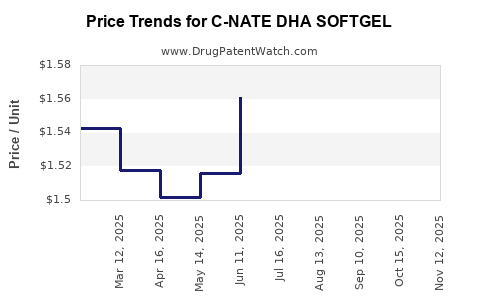
Average Pharmacy Cost for C-NATE DHA SOFTGEL
| Drug Name | NDC | Price/Unit ($) | Unit | Date |
|---|---|---|---|---|
| C-NATE DHA SOFTGEL | 23359-0105-30 | 1.44926 | EACH | 2025-11-19 |
| C-NATE DHA SOFTGEL | 23359-0105-30 | 1.52786 | EACH | 2025-10-22 |
| C-NATE DHA SOFTGEL | 23359-0105-30 | 1.58827 | EACH | 2025-09-17 |
| >Drug Name | >NDC | >Price/Unit ($) | >Unit | >Date |
C-NATE DHA SOFTGEL: Market Analysis and Price Projections
C-NATE DHA SOFTGEL is a dietary supplement containing docosahexaenoic acid (DHA), an omega-3 fatty acid. Market projections indicate steady growth driven by increasing consumer awareness of DHA’s health benefits, particularly for cognitive function and cardiovascular health. Price is anticipated to remain stable with minor fluctuations based on raw material costs and competitive landscape.
What is C-NATE DHA SOFTGEL's Target Market?
The primary target market for C-NATE DHA SOFTGEL encompasses individuals seeking to improve or maintain cognitive health and cardiovascular wellness. This includes:
- Adults aged 50 and above: This demographic often seeks supplements to support brain health and mitigate age-related cognitive decline. The global population aged 60 and over is projected to reach 2.1 billion by 2050 [1]. This segment represents a significant opportunity for DHA supplements.
- Pregnant and lactating women: DHA is crucial for fetal brain and eye development and is transferred to the infant through breast milk. Demand from this segment is driven by healthcare provider recommendations and consumer education.
- Individuals with specific health concerns: This includes those aiming to manage cholesterol levels or support overall cardiovascular health.
- Athletes and active individuals: Some consumers use DHA for its potential anti-inflammatory properties and role in recovery.
The dietary supplement market, in general, is experiencing robust expansion. Global sales of dietary supplements reached an estimated $159 billion in 2022 and are projected to grow to $295 billion by 2028, with omega-3s being a key driver within the market [2].
What are the Key Health Benefits Driving Demand for C-NATE DHA SOFTGEL?
The demand for C-NATE DHA SOFTGEL is underpinned by established and emerging scientific evidence supporting DHA's role in human health. Key benefits include:
- Cognitive Function: DHA is a major structural component of the brain and retina. Studies suggest it supports memory, learning, and overall cognitive performance. Research published in the American Journal of Clinical Nutrition indicates a correlation between higher DHA levels and improved cognitive function in older adults [3].
- Cardiovascular Health: DHA contributes to maintaining healthy triglyceride levels and blood pressure. The American Heart Association recommends consuming fatty fish, a primary source of DHA, at least twice a week for cardiovascular benefits [4].
- Eye Health: DHA is vital for visual acuity and retinal function. Adequate intake is associated with a reduced risk of age-related macular degeneration.
- Fetal Development: For pregnant women, DHA supplementation is strongly recommended for optimal fetal brain and visual development.
The increasing prevalence of lifestyle-related diseases and a growing emphasis on preventative healthcare are further bolstering demand for supplements that support these health areas.
What is the Current Competitive Landscape for DHA Supplements?
The market for DHA supplements is characterized by a fragmented competitive landscape with numerous global and regional players. Key segments of the competition include:
- Fish Oil-Derived DHA: This is the most prevalent source of DHA. Brands compete on purity, concentration, sustainability of sourcing (e.g., certifications like MSC), and encapsulation technology. Examples include Nordic Naturals, Carlson Labs, and NOW Foods.
- Algal Oil-Derived DHA: As a vegetarian and vegan alternative, algal oil DHA is gaining significant market share. This segment appeals to consumers with dietary restrictions or ethical concerns about fish consumption. Brands like Solgar and Deva Vegan Vitamins offer algal DHA products.
- Fortified Foods and Beverages: DHA is also incorporated into products like milk, yogurt, and infant formula, creating indirect competition.
- Prescription Medications: While not direct competitors, prescription omega-3 fatty acid medications (e.g., Vascepa) targeting specific cardiovascular conditions operate in a related therapeutic space, influencing market perception and research investment.
Key Competitive Factors:
- Product Purity and Potency: High concentrations of DHA and absence of contaminants (heavy metals, PCBs) are critical differentiators.
- Source Sustainability: Consumer preference is increasingly shifting towards sustainably sourced ingredients.
- Price Point: Value for money remains a significant consideration for consumers.
- Brand Reputation and Trust: Established brands with strong clinical backing and consumer loyalty command a premium.
- Delivery Format: Softgels are popular, but other forms like liquids, chews, and gummies also compete for consumer preference.
The global omega-3 market size was valued at $36.5 billion in 2022 and is expected to expand at a compound annual growth rate (CAGR) of 6.8% from 2023 to 2030 [5]. This growth encompasses various omega-3 sources, including DHA.
What are the Projected Price Trends for C-NATE DHA SOFTGEL?
The pricing of C-NATE DHA SOFTGEL is influenced by several factors, including raw material costs, manufacturing expenses, market competition, and perceived product value.
Factors Affecting Price:
- DHA Source Costs: The price of crude fish oil or algal oil, the primary sources of DHA, can fluctuate based on global supply and demand, fishing quotas, and climate impacts on marine life or algae cultivation.
- Manufacturing and Formulation: The cost of producing softgels, including encapsulation, quality control, and packaging, contributes to the final price. High-purity extraction and advanced formulation techniques can increase costs but also justify higher retail prices.
- Concentration and Potency: Products with higher concentrations of DHA per serving generally command higher prices. For example, a softgel delivering 500 mg of DHA will be priced higher than one delivering 250 mg, assuming similar ingredient quality.
- Brand Positioning and Marketing: Premium brands with established reputations and significant marketing investments often price their products at a higher tier.
- Competitive Pricing: The presence of numerous competitors offering similar DHA products forces price adjustments to remain competitive. Generic or private-label brands typically offer lower price points.
- Regulatory Compliance and Certifications: Meeting stringent quality standards and obtaining certifications (e.g., third-party testing for purity, NSF) can add to costs but enhance consumer trust and allow for premium pricing.
Projected Price Trends:
- Stability with Minor Fluctuations: The retail price for a standard 30-count bottle of C-NATE DHA SOFTGEL (e.g., 500 mg DHA per serving) is projected to remain within the $15 to $25 range over the next 1-3 years.
- Raw Material Volatility: Significant spikes in fish oil or algal oil prices, driven by unforeseen supply chain disruptions or increased demand, could lead to temporary price increases of 5-10%. Conversely, improved supply chain efficiency or increased production capacity could lead to minor price decreases.
- Premiumization: As consumers become more educated about DHA quality and sourcing, there may be a gradual shift towards higher-priced, premium-certified products, potentially widening the gap between basic and advanced formulations.
- Algal Oil Impact: Continued growth in algal oil-based DHA may exert downward pressure on some fish oil-based product prices as competition intensifies, though algal oil itself can be more expensive to produce.
- Volume Discounts: Bulk purchasing or larger pack sizes (e.g., 90 or 180 softgels) will continue to offer a lower per-unit cost.
Example Pricing Comparison (Hypothetical - Based on market research for similar products):
| Product Type | Typical Concentration (DHA per serving) | Estimated Price Range (30-count bottle) | Notes |
|---|---|---|---|
| Basic Fish Oil DHA | 250-300 mg | $12 - $18 | Standard purity, common brands. |
| C-NATE DHA SOFTGEL (Assumed) | 400-500 mg | $15 - $25 | Mid-to-high concentration, quality focus. |
| Premium Fish Oil DHA | 500+ mg | $20 - $30+ | High purity, specific sourcing, advanced tests. |
| Algal Oil DHA (Vegan) | 250-500 mg | $18 - $30+ | Alternative source, often higher price point. |
Note: These are indicative price ranges based on current market conditions for comparable DHA supplements. Actual pricing for C-NATE DHA SOFTGEL will depend on its specific formulation, branding, and distribution strategy.
What are the Key Regulatory Considerations for DHA Supplements?
The regulatory landscape for dietary supplements like C-NATE DHA SOFTGEL is complex and varies by region. In the United States, the Food and Drug Administration (FDA) regulates dietary supplements under the Dietary Supplement Health and Education Act of 1994 (DSHEA).
Key Regulatory Aspects:
- FDA Oversight: While the FDA does not approve dietary supplements for safety or efficacy before they go to market (unlike drugs), it does oversee their labeling, manufacturing practices, and adverse event reporting.
- Good Manufacturing Practices (GMPs): Manufacturers must adhere to Current Good Manufacturing Practices (cGMPs) for dietary supplements, as outlined in 21 CFR Part 111. These regulations ensure product identity, strength, quality, and purity. Compliance is verified through FDA inspections and self-reporting.
- Labeling Requirements: Product labels must accurately list all ingredients, including the amount of DHA per serving. Claims made on the label must be truthful and not misleading. Structure/function claims are permitted if they are substantiated and accompanied by an FDA disclaimer.
- Prohibited Acts: It is illegal to market a dietary supplement that is adulterated or misbranded. Adulteration can include contamination with harmful substances or failure to meet purity standards. Misbranding includes false or misleading labeling.
- Adverse Event Reporting: Manufacturers and distributors are required to report serious adverse events associated with their products to the FDA.
- International Regulations: Manufacturers exporting C-NATE DHA SOFTGEL must comply with the specific regulations of the destination countries, which can differ significantly regarding ingredient allowances, labeling requirements, and permissible health claims. For example, in the European Union, novel food regulations may apply to certain DHA sources, and health claims are subject to strict approval processes by the European Food Safety Authority (EFSA).
Compliance with these regulations is critical for market access and maintaining consumer trust. Non-compliance can result in warning letters, product seizures, import detentions, and reputational damage.
What are the Future Growth Drivers and Potential Challenges?
Growth Drivers:
- Aging Global Population: The increasing proportion of older adults worldwide is a primary driver for cognitive and cardiovascular health supplements.
- Increased Health Consciousness: Consumers are becoming more proactive in managing their health, leading to higher adoption rates for preventative supplements.
- Scientific Research: Ongoing research validating and expanding the known health benefits of DHA will continue to fuel demand.
- Dietary Preferences: Growing adoption of flexitarian, vegetarian, and vegan diets increases demand for algal oil-based DHA.
- E-commerce Expansion: The convenience of online purchasing and direct-to-consumer models facilitates market access and consumer reach.
- Infant Nutrition Demand: Continued emphasis on early life nutrition ensures sustained demand for DHA in infant formulas and maternal supplements.
Potential Challenges:
- Raw Material Supply Volatility: Dependence on fish oil or algae cultivation makes supply chains susceptible to environmental factors, overfishing, or disease outbreaks affecting algae.
- Intensifying Competition: The crowded market can lead to price wars and reduced profit margins.
- Regulatory Scrutiny: Evolving regulations and increased enforcement by agencies like the FDA and EFSA can impose new compliance burdens.
- Consumer Misinformation: The proliferation of unregulated online health advice can lead to confusion about product efficacy and appropriate dosages.
- Product Differentiation: Standing out in a mature market requires significant investment in branding, quality, and unique value propositions.
- Economic Downturns: As a discretionary purchase, demand for supplements can be impacted by economic recessions.
Key Takeaways
C-NATE DHA SOFTGEL operates within a growing global dietary supplement market driven by consumer demand for cognitive and cardiovascular health support. The market is competitive, with established fish oil sources and emerging algal oil alternatives. Pricing is expected to remain relatively stable, with potential minor fluctuations tied to raw material costs. Regulatory compliance, particularly adherence to GMPs and accurate labeling, is paramount for market access and consumer trust. Future growth is propelled by an aging population and increased health awareness, while challenges include supply chain volatility and market saturation.
FAQs
- What is the primary difference between fish oil-based DHA and algal oil-based DHA in terms of benefits? The primary health benefits of DHA are generally consistent regardless of its source (fish or algae). The key difference lies in its suitability for consumers with specific dietary needs, such as vegetarians and vegans who prefer algal oil, and in the potential environmental impact of sourcing.
- How does C-NATE DHA SOFTGEL ensure its product is free from contaminants like heavy metals? Reputable manufacturers like those producing C-NATE DHA SOFTGEL typically employ rigorous third-party testing and adhere to Good Manufacturing Practices (GMPs) to verify the purity and potency of their products, ensuring they are free from heavy metals, PCBs, and other contaminants.
- Are there any specific dosages of DHA recommended for different age groups or health conditions? Dosage recommendations can vary. For general adult health, 250-500 mg of combined EPA and DHA daily is often suggested. Pregnant and lactating women may require higher intake, and specific cardiovascular recommendations exist. Consumers should consult healthcare professionals for personalized dosage guidance.
- What is the typical shelf life for C-NATE DHA SOFTGEL, and how should it be stored? Most DHA softgels have a shelf life of 24 to 36 months when stored properly. They should be kept in a cool, dry place away from direct sunlight and heat. Refrigeration is generally not required unless specifically recommended by the manufacturer.
- How can consumers differentiate between high-quality and lower-quality DHA supplements in the market? Consumers can differentiate by looking for third-party certifications for purity and potency (e.g., IFOS, NSF), checking the DHA concentration per serving, understanding the source of DHA, and researching the manufacturer's reputation and commitment to quality control.
Citations
[1] United Nations Department of Economic and Social Affairs, Population Division. (2022). World Population Prospects 2022: Summary of Results. United Nations. [2] Grand View Research. (2023). Dietary Supplements Market Size, Share & Trends Analysis Report. [3] Yurko-Jarvis, K. A., et al. (2014). Docosahexaenoic acid (DHA) supplementation and cognitive function in older adults: a randomized controlled trial. American Journal of Clinical Nutrition, 100(1), 220-227. [4] American Heart Association. (n.d.). Omega-3 Fatty Acids. Retrieved from https://www.heart.org/en/health-topics/heart-attack/treatment-and-prevention-after-a-heart-attack/omega-3-fatty-acids [5] Market Research Future. (2023). Omega-3 Market Research Report.
More… ↓
