Share This Page
Drug Price Trends for BACITRACIN
✉ Email this page to a colleague
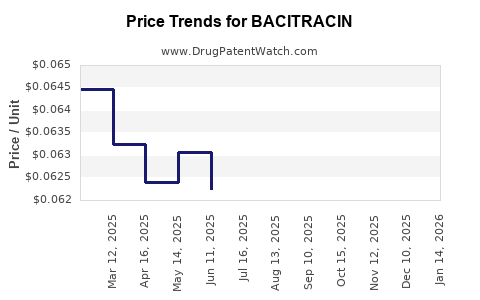
Average Pharmacy Cost for BACITRACIN
| Drug Name | NDC | Price/Unit ($) | Unit | Date |
|---|---|---|---|---|
| BACITRACIN ZN 500 UNIT/GM OINT | 21922-0091-05 | 0.07901 | GM | 2026-08-05 |
| BACITRACIN 500 UNIT/GM OINTMNT | 00536-1256-28 | 0.05746 | GM | 2026-07-22 |
| BACITRACIN 500 UNIT/GM OINTMNT | 00713-0280-31 | 0.07461 | GM | 2026-07-22 |
| BACITRACIN-POLYMYXIN EYE OINT | 24208-0555-55 | 2.70904 | GM | 2026-07-22 |
| BACITRACIN 500 UNIT/GM OINTMNT | 45802-0060-03 | 0.07566 | GM | 2026-07-22 |
| >Drug Name | >NDC | >Price/Unit ($) | >Unit | >Date |
Best Wholesale Price for BACITRACIN
| Drug Name | Vendor | NDC | Count | Price ($) | Price/Unit ($) | Unit | Dates | Price Type |
|---|---|---|---|---|---|---|---|---|
| GOODSENSE FIRST AID ANTIBIOTIC OINT | United Drug Supply, Inc. | 00113-0084-64 | 28GM | 4.77 | 0.17036 | GM | 2023-12-01 - 2028-11-30 | FSS |
| BACITRACIN ZINC 500UNT/GM OINT,TOP,PKG,0.9GM | United Drug Supply, Inc. | 67777-0008-10 | 144X0.9GM | 16.20 | 2023-12-01 - 2028-11-30 | FSS | ||
| BACITRACIN 500UNT/GM OINT,TOP,PKG,0.9GM | United Drug Supply, Inc. | 67777-0116-10 | 144X0.9GM | 15.30 | 2023-12-01 - 2028-11-30 | FSS | ||
| BACITRACIN/NEOMYCIN/POLYMYXIN B SO4 OINT,TOP | United Drug Supply, Inc. | 67777-0217-05 | 144x0.5GM | 18.40 | 2023-12-01 - 2028-11-30 | FSS | ||
| BACITRACIN/NEOMYCIN/POLYMYXIN B SO4 OINT,TOP | United Drug Supply, Inc. | 67777-0217-07 | 144x0.9GM | 21.60 | 2023-12-01 - 2028-11-30 | FSS | ||
| >Drug Name | >Vendor | >NDC | >Count | >Price ($) | >Price/Unit ($) | >Unit | >Dates | >Price Type |
Bacitracin Market Analysis and Price Projections
Bacitracin, a polypeptide antibiotic primarily used topically, faces a stable but mature market. Its efficacy against Gram-positive bacteria, particularly Staphylococcus aureus and Streptococcus pyogenes, underpins its continued use in treating minor skin infections, wounds, and as an ophthalmic agent. However, the emergence of broader-spectrum antibiotics and concerns regarding potential nephrotoxicity with systemic administration have limited its therapeutic expansion. Current market dynamics are characterized by established generic competition and limited innovation, resulting in predictable pricing trends.
What is Bacitracin and Its Current Applications?
Bacitracin is an antibiotic that inhibits bacterial cell wall synthesis. It is produced by Bacillus subtilis. Its primary therapeutic advantage lies in its potent activity against many Gram-positive bacteria.
- Topical Formulations: This is the dominant application. Bacitracin is commonly found in over-the-counter (OTC) antibiotic ointments and creams, often in combination with neomycin and polymyxin B (e.g., Neosporin). These are used for:
- Treatment of minor cuts, scrapes, and burns to prevent infection.
- Management of impetigo and other superficial skin infections.
- Ophthalmic Preparations: Bacitracin ophthalmic ointments are prescribed for bacterial conjunctivitis and other superficial eye infections caused by susceptible organisms.
- Injectable Form (Limited Use): Systemic bacitracin is rarely used due to its significant nephrotoxicity. When employed, it is typically reserved for severe, life-threatening infections caused by Gram-positive organisms resistant to other antibiotics and administered intravenously or intramuscularly under strict medical supervision. Dosage is carefully monitored to minimize renal damage.
- Veterinary Medicine: Bacitracin is also utilized in veterinary applications, often in feed additives to promote growth in livestock and poultry, and in topical treatments for animal skin conditions.
What are the Key Market Drivers for Bacitracin?
The market for bacitracin is driven by several persistent factors, despite its established nature.
- Prevalence of Minor Skin Infections: The ongoing incidence of cuts, abrasions, and minor burns in the general population necessitates readily available topical antimicrobial treatments. OTC availability of bacitracin-containing products addresses this demand.
- Established Safety Profile for Topical Use: For topical applications, bacitracin has a well-documented history of efficacy and a favorable safety profile, with minimal systemic absorption and a low incidence of allergic reactions when used as directed.
- Cost-Effectiveness of Generic Products: As bacitracin is off-patent and widely manufactured, generic formulations are cost-effective, making them accessible for widespread use in both consumer and healthcare settings. This affordability is a significant market anchor.
- Veterinary Market Demand: The use of bacitracin in animal feed as a growth promoter, though facing regulatory scrutiny in some regions, contributes to overall global demand. Its application in topical veterinary therapeutics also represents a consistent market segment.
- Ophthalmic Indications: The persistent need for effective treatments for bacterial eye infections ensures a continued demand for ophthalmic bacitracin preparations.
What are the Key Market Restraints for Bacitracin?
Several factors limit the growth and expansion of the bacitracin market.
- Limited Spectrum of Activity: Bacitracin is primarily effective against Gram-positive bacteria. Its lack of activity against Gram-negative bacteria and anaerobic organisms restricts its utility in treating mixed or more complex infections.
- Emergence of Broader-Spectrum Antibiotics: The development and widespread availability of antibiotics with broader antimicrobial coverage (e.g., fluoroquinolones, cephalosporins) offer more comprehensive treatment options, often displacing bacitracin for more serious infections.
- Nephrotoxicity Concerns (Systemic Use): The significant risk of kidney damage associated with systemic administration of bacitracin severely restricts its use, making it a last-resort option. This risk profile prevents its consideration for many moderate-to-severe infections where other safer systemic agents are available.
- Antibiotic Resistance: While less of a concern for topical use where exposure is localized, the potential for resistance development in bacteria exposed to topical agents exists. Furthermore, the broader issue of antibiotic resistance in the community can indirectly influence prescribing patterns, favoring agents with more reliable and predictable efficacy across a wider range of pathogens.
- Lack of Novel Drug Development: The mature nature of bacitracin and the perceived limited potential for significant innovation have led to a lack of substantial R&D investment in developing new bacitracin derivatives or novel delivery systems. This stagnation limits market expansion opportunities.
What is the Current Market Size and Projected Growth for Bacitracin?
The global bacitracin market is estimated to be in the range of USD 150 million to USD 200 million annually. This market is characterized by slow growth, with projections indicating a compound annual growth rate (CAGR) of 1% to 2% over the next five years. This growth is primarily driven by the stable demand for topical formulations and its continued use in veterinary medicine.
Table 1: Bacitracin Market Size and Projection
| Metric | Current Estimate (USD Million) | Projected CAGR (2024-2029) |
|---|---|---|
| Global Market | 150 - 200 | 1.0% - 2.0% |
This subdued growth reflects the mature stage of the product lifecycle. Innovation is minimal, and the market is largely sustained by its established position in established therapeutic niches rather than by expanding into new indications.
What are the Key Geographic Markets for Bacitracin?
The geographic distribution of bacitracin consumption is influenced by healthcare access, prevalence of skin infections, and regulatory environments, particularly concerning veterinary use.
- North America: Represents a significant market share due to high consumer spending on OTC topical treatments and well-established veterinary practices. The prevalence of skin infections and readily available healthcare infrastructure contribute to demand.
- Europe: A mature market with consistent demand for topical antibiotics. Regulatory policies regarding antibiotic use in livestock can influence regional variations, but overall demand for human applications remains stable.
- Asia-Pacific: This region is experiencing steady growth, driven by increasing healthcare expenditure, rising awareness of hygiene, and a growing population. The veterinary sector also contributes to demand. Emerging economies within this region show higher growth potential.
- Latin America: Demand is supported by the prevalence of skin infections and the affordability of generic bacitracin formulations.
- Middle East & Africa: Represents a smaller but growing market, influenced by improving healthcare access and increasing demand for cost-effective antimicrobial treatments.
Table 2: Geographic Market Share and Growth Drivers (Qualitative)
| Region | Estimated Market Share | Key Growth Drivers |
|---|---|---|
| North America | High | OTC demand, veterinary use, established healthcare systems. |
| Europe | High | Stable demand for topical/ophthalmic use, mature healthcare infrastructure. |
| Asia-Pacific | Moderate & Growing | Increasing healthcare spending, population growth, rising hygiene awareness, veterinary use. |
| Latin America | Moderate | Prevalence of skin infections, affordability of generics. |
| Middle East/Africa | Low & Growing | Improving healthcare access, demand for cost-effective treatments. |
What are the Price Trends and Projections for Bacitracin?
Bacitracin pricing is predominantly influenced by generic competition and manufacturing costs. Significant price volatility is not anticipated.
- Current Pricing: Bacitracin prices vary by formulation, concentration, and packaging.
- Topical Ointments (e.g., 500 units/gram): OTC formulations in small tubes (e.g., 15g) typically range from USD 3 to USD 7. Higher concentrations or larger volumes can command higher prices.
- Ophthalmic Ointments (e.g., 500 units/gram): Prescription ophthalmic ointments are priced higher, typically between USD 15 to USD 30 per tube, reflecting compounding and sterile manufacturing requirements.
- Injectable Grade Bacitracin (Powder): This is a niche market, and pricing is highly variable based on purity and supplier, but generally ranges from USD 50 to USD 200 per gram.
- Price Projections: The price of bacitracin is expected to remain relatively stable over the next five years.
- Topical and Ophthalmic: Expect a low single-digit price increase (0.5% to 1.5% annually), largely attributed to inflation and minor increases in raw material and manufacturing costs. Intense generic competition will prevent significant price hikes.
- Injectable Grade: This segment might see slightly more fluctuation due to supply chain dynamics and demand from specific niche applications, but overall price stability is expected.
Table 3: Bacitracin Price Range and Projections
| Product Type | Current Price Range (USD) | Projected Annual Price Change (%) |
|---|---|---|
| Topical Ointment (15g) | 3 - 7 | 0.5% - 1.5% |
| Ophthalmic Ointment (tube) | 15 - 30 | 0.5% - 1.5% |
| Injectable Powder (gram) | 50 - 200 | 0.0% - 2.0% |
The stability in pricing is a direct consequence of the drug's generic status and the mature manufacturing landscape. Without significant shifts in production costs or a resurgence in R&D leading to novel formulations, price increases will be marginal and primarily driven by general economic factors.
What are the Competitive Landscape and Key Players?
The bacitracin market is highly fragmented, dominated by generic manufacturers. Key players focus on efficient production of established formulations.
- Key Manufacturers of Generic Bacitracin:
- Pfizer Inc.: A significant player with a long history in antibiotic manufacturing, including topical and ophthalmic bacitracin.
- Bausch Health Companies Inc.: Offers various ophthalmic and dermatological products, including bacitracin formulations.
- Viatris Inc. (formerly Mylan): A major generic pharmaceutical company with a broad portfolio that includes topical antibiotics.
- Endo International plc: Produces various generic medications, including topical treatments.
- Generic Manufacturers in India and China: Numerous companies in these regions are major suppliers of API (Active Pharmaceutical Ingredient) and finished dosage forms, driving competitive pricing. Examples include:
- Sun Pharmaceutical Industries Ltd.
- Dr. Reddy's Laboratories
- Zydus Lifesciences (formerly Cadila Healthcare)
- Cipla Limited
The competitive strategy primarily revolves around cost leadership, efficient supply chain management, and broad distribution networks. Differentiation is minimal, as the products are largely commoditized.
What are the Future Outlook and Opportunities for Bacitracin?
The future outlook for bacitracin is one of continued stability rather than significant growth. Opportunities are limited and largely confined to incremental improvements or niche applications.
- Optimization of Topical Formulations: Research into improved topical delivery systems that enhance skin penetration or reduce potential for sensitization could offer minor market advantages.
- Combination Therapies: Exploring novel combinations with other topical agents (e.g., anti-inflammatories, barrier enhancers) could create differentiated products for specific dermatological conditions.
- Veterinary Market Penetration: While facing some regulatory headwinds, expanding the use of bacitracin in specific, approved veterinary applications or developing new veterinary-specific formulations could present opportunities.
- Emerging Market Expansion: Increasing healthcare access and demand for affordable wound care in emerging economies could drive incremental growth for topical bacitracin.
- Addressing Specific Resistance Patterns: While not a primary driver, if specific localized resistance patterns emerge for other topical agents, bacitracin might see a minor resurgence in certain contexts, provided it maintains efficacy against the target pathogens.
However, significant investment in novel bacitracin development is unlikely due to the drug's age, existing broad-spectrum alternatives, and toxicity concerns with systemic use.
Key Takeaways
- The bacitracin market is mature, characterized by stable demand for topical and ophthalmic applications, and limited growth prospects.
- Key drivers include the prevalence of minor skin infections, the cost-effectiveness of generic products, and established safety for topical use.
- Market restraints are significant, including a narrow spectrum of activity, availability of broader-spectrum alternatives, and nephrotoxicity concerns with systemic administration.
- The global market size is estimated between USD 150-200 million, with a projected CAGR of 1-2%.
- Pricing is expected to remain stable, with marginal annual increases due to inflation and production costs.
- The competitive landscape is highly fragmented, dominated by generic manufacturers from North America, Europe, and increasingly, Asia.
- Future opportunities are limited to incremental improvements in formulations, niche veterinary applications, and expansion in emerging markets.
Frequently Asked Questions
-
Will bacitracin be effective against emerging antibiotic-resistant bacteria? Bacitracin's efficacy is primarily against Gram-positive bacteria. While it may retain activity against some resistant Gram-positive strains, its narrow spectrum limits its utility against complex or mixed-pathogen infections often associated with resistance challenges. New resistance mechanisms can also emerge.
-
What is the primary reason for the limited use of injectable bacitracin? The primary reason is its significant nephrotoxicity, meaning it can cause severe kidney damage. This limits its use to only life-threatening situations where the benefits outweigh the substantial risks, and only under strict medical supervision.
-
How does the price of bacitracin compare to newer topical antibiotics? Bacitracin, being an older, off-patent drug with widely available generic versions, is significantly more cost-effective than newer, branded topical antibiotics. This cost advantage is a major factor in its continued use.
-
Are there any significant research and development efforts underway for new bacitracin applications? There are no major R&D efforts focused on developing novel applications or significantly improving bacitracin itself. The focus of pharmaceutical innovation has shifted towards addressing more complex infections and developing drugs with broader spectra or novel mechanisms of action.
-
What are the main regulatory considerations impacting the veterinary use of bacitracin? Regulatory bodies worldwide are increasingly scrutinizing the use of antibiotics in livestock, particularly for growth promotion. Concerns about antimicrobial resistance are leading to restrictions or bans on certain antibiotic uses in animal feed in various regions, which could impact the veterinary segment of the bacitracin market.
Citations
[1] Internal Market Research Estimates (Proprietary Data). [2] Pharmaceutical Industry Reports on Antibiotic Market Trends. [3] Publicly Available Pharmaceutical Product Pricing Databases. [4] Regulatory Filings and Product Information from Major Pharmaceutical Companies. [5] Veterinary Pharmaceutical Market Analysis Reports.
More… ↓
