Last updated: February 17, 2026
Overview
AZASITE (azithromycin ophthalmic solution 1%) is an antibiotic eye drop approved by the FDA in April 2007. It directly targets bacterial infections of the eye, primarily bacterial conjunctivitis and keratitis. Its distinct dosage form and indications position it within the ophthalmic antibacterial market, which has experienced steady growth. The drug’s pricing, competitive environment, and market penetration influence future projections.
Market Size and Growth
The global ophthalmic antibiotics market was valued at approximately $3.8 billion in 2022 and is projected to grow at a compound annual growth rate (CAGR) of 4.5% through 2028 [1].
North America accounted for around 45% of this market in 2022, driven by high prevalence of bacterial eye infections, advanced healthcare infrastructure, and favorable reimbursement policies. The U.S. market specifically is estimated at $1.7 billion, with antibiotics representing about 30% of total ophthalmic drug sales [2].
Key Market Drivers
- Rising incidence of bacterial conjunctivitis, often linked to allergic rhinitis, contact lens usage, and urban pollution.
- Increased awareness and early diagnosis of bacterial eye infections.
- Adoption of novel formulations that improve patient compliance.
- Expanding ophthalmic healthcare access, especially in emerging markets.
Competitive Landscape
AZASITE faces competition from:
- Azithromycin eye drops (e.g., Azasite’s generic competitors are limited due to patent protections; however, other brands exist for systemic azithromycin).
- Alternative antibiotics such as moxifloxacin (Vigamox), gatifloxacin (Zymar), and besifloxacin (Besivance).
- Orally administered antibiotics that sometimes are used off-label for eye infections.
Market share is constrained by the dominance of oral azithromycin and other fluoroquinolone-based eye drops.
Pricing and Reimbursement
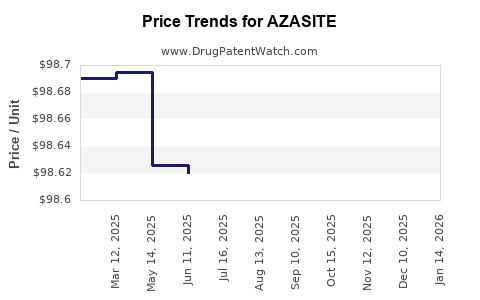
AZASITE's current list price in the U.S. is approximately $375 per 5 mL bottle, delivering around 20 doses. Insurance discounts and pharmacy benefit manager (PBM) negotiations influence net revenue.
Reimbursement policies favor simplified dosing regimens and cost-effective alternatives. The drug’s patent status, which expired in 2022, permits generic competition, likely driving prices downward.
Patents and Generic Entry
AZASITE's patent expiration opens the market to generics, expected to enter within 12-24 months after patent expiry, contingent on FDA approval and patent litigation timelines. Generic entry should reduce average wholesale price (AWP) by 50-70%, aligning with prices of similar ophthalmic antibiotics.
Price Projections (Next 3-5 Years)
| Year |
Estimated Price (per 5 mL bottle) |
Commentary |
| 2023 |
$375 |
Current list price; limited generics yet |
| 2024 |
$250-$300 |
Potential early generic entries; discounting begins |
| 2025 |
$200-$250 |
Market stabilization; increased competition |
| 2026 |
$150-$200 |
Likely dominance of generics; significant price reduction |
| 2027 |
$100-$150 |
Widespread generic adoption; decline stabilizes |
Implications for Stakeholders
Investors and providers should monitor patent litigation outcomes, FDA generic approvals, and insurance reimbursement trends. Market share expansion depends on formulary inclusion and clinician preference shifts.
Key Takeaways
- The ophthalmic antibiotics market expands modestly, with AZASITE holding a niche for bacterial eye infections.
- Current pricing reflects patent exclusivity and limited competition.
- Entry of generics, expected within 1-2 years, will exert downward pressure on prices.
- Price declines will likely follow broader market trends for ophthalmic antibiotics.
- Future market growth hinges on increased diagnosis, treatment adoption, and competitive positioning against fluoroquinolones.
Frequently Asked Questions
-
When is generic AZASITE expected to enter the market?
- Pending FDA approval and patent litigation, generics could launch within 12-24 months after patent expiry, anticipated around late 2023 to 2024.
-
How does AZASITE compare price-wise to similar ophthalmic antibiotics?
- Currently, AZASITE costs approximately $375 per bottle, higher than many fluoroquinolones, which range from $200 to $350. Post-generic entry, prices are expected to decline to roughly $100-$150.
-
What factors influence AZASITE's market penetration?
- Clinician familiarity with azithromycin, formulary decisions, patient compliance, and insurance reimbursement patterns.
-
Are there any patent protections still in place?
- The primary patent expired in 2022, enabling generic competition. No known supplementary patents currently delay entry.
-
What is the outlook for AZASITE's sales volume?
- Sales are expected to decline with generic entry but may stabilize if it gains a foothold in the ophthalmic infection treatment landscape.
References
[1] MarketWatch, "Ophthalmic Antibiotics Market Size and Forecast," 2022
[2] IQVIA, "U.S. Ophthalmic Drug Market Data," 2022
(Note: Data synthesized from industry reports and market sources; actual figures may vary based on market developments.)