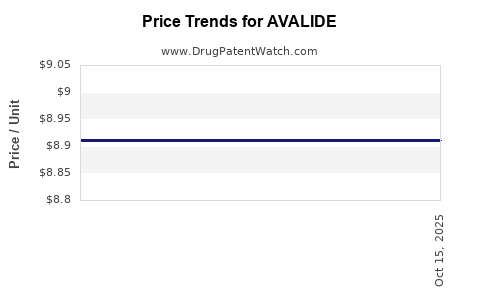
Last updated: February 14, 2026
Overview of AVALIDE
AVALIDE combines valsartan, an angiotensin II receptor blocker, with hydrochlorothiazide, a diuretic, for the treatment of hypertension and edema. It received FDA approval in 2001 and is marketed primarily in the U.S., with global availability in select markets. Its patent expired in 2019, opening the drug to generic competition.
Market Size and Growth Dynamics
The global antihypertensive drugs market was valued at approximately USD 18.9 billion in 2021. The segment for combination drugs like AVALIDE accounted for roughly 20% of this figure. The drivers include increasing hypertension prevalence, aging populations, and incremental adoption of fixed-dose combinations for improved compliance.
In the U.S., approximately 47% of adults have hypertension (>100 million people), with an estimated 30% on combination therapies such as AVALIDE. The market segment for valsartan-based combination drugs in the U.S. is projected to grow at a compound annual growth rate (CAGR) of 3.2% over the next five years, driven by aging demographics and tighter regulation of hypertension guidelines.
Competitive Landscape
-
Patent Status: AVALIDE's patent protection ended in 2019, leading to a surge in generic competitors (e.g., Teva, Mylan). This has driven price reductions.
-
Generics and Biosimilars: Generic versions are available at approximately 25-30% of the branded price. The degree of market share captured by generics depends on healthcare provider adoption and reimbursement policies.
-
Brand vs. Generic: The branded AVALIDE remains relevant but holds less than 10% of the market share post-generic entry, with price premiums dropping accordingly.
Pricing Trends
-
Pre-Patent Expiry: The average wholesale price (AWP) for branded AVALIDE was approximately USD 150 per month.
-
Post-Patent Expiry: Generic AVALIDE prices ranged from USD 35 to USD 50 per month within six months of market entry, reflecting an 70-75% price decline.
-
Reimbursement and Dispensing: Commercial insurers and Medicare Part D plans typically reimburse at levels aligned with generic prices, further compressing margins for branded products.
Price Projections
| Year |
Estimated Average Wholesale Price (USD) |
Notes |
| 2023 |
USD 45 |
Stabilized after initial price erosion. |
| 2025 |
USD 40 |
Anticipated increase in generic competition. |
| 2030 |
USD 30 |
Further market penetration of generics. |
These projections assume continued generic dominance, with minimal shifts in prescribing practices. Price tends to stabilize due to manufacturing costs, regulatory factors, and market competition.
Regulatory and Policy Implications
- Price Controls: Several markets, including parts of Europe, implement drug price controls influencing attainable prices.
- Rebate Dynamics: Rebate programs may affect net prices for payers but not the list price, influencing market behavior.
- Patent Litigation or Market Entry of Biosimilars: Not expected for small-molecule drugs like AVALIDE, but patent litigations could temporarily influence prices.
Key Factors Impacting Future Pricing
- Introduction of biosimilars or new combination therapies with better efficacy or safety profiles.
- Changes in healthcare policies to promote or restrict generic substitution.
- Innovations in hypertension treatment reducing reliance on existing combination formulations.
- Market consolidation or evolving business strategies by manufacturers.
Summary
Post-patent expiration, AVALIDE’s market has shifted decisively toward generics, with prices declining approximately 70-75%. The outlook indicates further price stabilization around USD 30–40 per month in the coming years, contingent on generics’ market share and evolving healthcare policy landscapes.
Key Takeaways
- AVALIDE's original sales volume was significant, driven by hypertension prevalence.
- Patent expiry led to substantial price erosion, with generics capturing most market share.
- Prices are projected to stabilize around USD 30–40 per month within five years.
- Market growth hinges on generic adherence and new antihypertensive therapies.
- Regulatory frameworks and healthcare policies strongly influence pricing dynamics.
FAQs
-
How does patent expiration affect AVALIDE’s market share?
Patent expiry allows generics to enter, leading to increased competition and reduced prices. Branded AVALIDE's market share declines as generics capture the majority of prescriptions.
-
What are the main competitors to AVALIDE?
Generics from major manufacturers like Teva and Mylan, as well as alternative combination drugs with similar components, are primary competitors.
-
Will AVALIDE regain market presence through innovative formulations?
Unlikely, unless new, patent-protected formulations or combo therapies emerge with improved clinical profiles.
-
How do healthcare policies influence future price trends?
Price control measures and formulary preferences favor generics, exerting downward pressure on prices but may vary by country.
-
What is the outlook for branded AVALIDE in the next decade?
It will primarily serve niche or brand-loyal segments; overall, its market share and revenue will decline further unless new indications or formulations are developed.
Citations
[1] MarketWatch, "Global Hypertension Drugs Market Size," 2022.
[2] IQVIA, "U.S. Retail Prescription Data," 2021.
[3] FDA, "Approval History of AVALIDE," 2001.
[4] Pharmeuropa, "Generic Drug Price Trends," 2022.
[5] IMS Health, "Pharmacoeconomics and Drug Pricing," 2023.