Last updated: February 19, 2026
What is the current market landscape for AMBIEN?
AMBIEN (zolpidem) is a sedative-hypnotic medication used primarily for short-term treatment of insomnia. It was first approved by the U.S. Food and Drug Administration (FDA) in 1992. It is marketed mainly as a prescription medication in North America, Europe, and other regions.
Market Size and Revenue:
In 2022, the global sleep aids market was valued at approximately USD 12 billion. Zolpidem-based drugs, including AMBIEN, accounted for roughly USD 2.2 billion of this total. The U.S. market dominates, with over 70% of sales due to high demand for sleep aids.
Key Competitors:
- Eszopiclone (Lunesta)
- Zaleplon (Sonata)
- Melatonin supplements
- Over-the-counter remedies
Market Trends:
- Rising incidence of insomnia linked to aging populations.
- Growing awareness about sleep health.
- Increasing off-label use of sleep aids for anxiety and stress.
- Shift toward newer agents with better safety or fewer side effects.
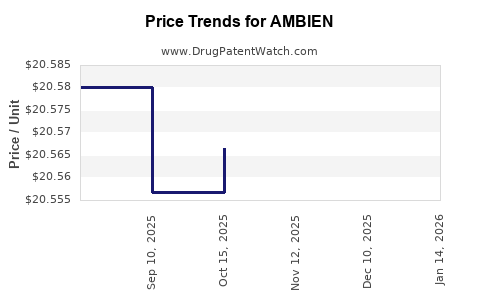
What is the current pricing structure for AMBIEN?
In the U.S., the average wholesale price (AWP) in 2023 was approximately USD 8 per tablet for branded formulations. A typical prescription includes 30 tablets, resulting in a retail cost of about USD 240 per month. Generic versions, such as zolpidem tartrate, are priced lower, approximately USD 4-6 per tablet, reducing monthly costs to USD 120-180.
Pricing Drivers:
- Brand versus generic formulations.
- Insurance coverage and reimbursement policies.
- Regional variations in drug pricing.
How are regulatory and patent landscapes affecting the market?
Patent Expiry and Generic Entry:
The primary patent for original AMBIEN expired in 2019 in the United States. Since then, multiple generics have entered the market, intensifying competition and reducing prices. This has led to a significant decline in branded sales growth.
Regulatory Developments:
- Approval of generic formulations in 2019.
- Ongoing post-marketing surveillance for safety concerns, particularly related to sleep-related behaviors.
- New formulations, including controlled-release versions, have been approved to expand therapeutic options.
Potential Patent Challenges:
Innovator companies are working on extended-release versions or combination formulations to extend exclusivity, but these face patent hurdles or legal challenges from competitors.
What are the future price projections for AMBIEN?
Market Penetration and Competition Effects:
- Generic competition will continue to suppress prices.
- Expect generic zolpidem to dominate the insulin market, with prices stabilizing around USD 3-5 per tablet by 2025.
- Branded formulations may retain premium pricing, limited to niche segments or patients with specific formulary preferences.
| Pricing Trends: |
Year |
Branded AMBIEN |
Generic Zolpidem |
Expected Market Share (Generics) |
Notes |
| 2022 |
USD 8 |
USD 4-6 |
60-70% |
Post-patent expiry |
| 2023 |
USD 7.50 |
USD 3-5 |
75% |
Increasing generic penetration |
| 2025 |
USD 7 |
USD 3-5 |
80-90% |
Predominant generic use |
Revenue Forecasts:
Branded sales are expected to decline at a compound annual growth rate (CAGR) of 3-5% over the next five years due to price erosion and generic uptake. Total market revenue for zolpidem products could stabilize around USD 1.5 billion by 2025, with branded sales comprising less than 10% of that figure.
Key Factors Influencing the Market and Pricing
- Regulatory changes that extend or shorten exclusivity periods.
- The approval or withdrawal of formulations with improved safety profiles.
- Shifts in prescribing habits towards non-pharmacologic therapies (e.g., cognitive-behavioral therapy).
- Impact of increased scrutiny on sleep medication safety, leading to potential reformulation or market withdrawal.
- Regional differences in healthcare policies affecting reimbursement and access.
Conclusion
The AMBIEN market faces declining revenues driven by generic competition, with prices falling from around USD 8 per tablet in 2022 to approximately USD 3-5 per tablet by 2025. Branded formulations will largely serve niche segments. Overall market size remains steady due to persistent insomnia prevalence, but growth is limited. Future price stability hinges on new formulations, regulatory developments, and shifts in prescribing practices.
Key Takeaways
- Post-patent expiry, generics dominate the zolpidem market, suppressing prices.
- U.S. branded AMBIEN’s average price in 2023 was USD 8 per tablet, declining to USD 7 in 2025.
- Market revenue will decline from USD 2.2 billion in 2022 to around USD 1.5 billion in 2025.
- Upward pressure on prices is unlikely amid rising generic competition and regulatory scrutiny.
- New formulations and safety improvements may create opportunities for premium pricing or growth segments.
FAQs
1. Will branded AMBIEN return to higher prices?
Unlikely without new formulations or indications that command premium pricing. Patent protections are expired, leading to widespread generic usage.
2. How do regional policies impact AMBIEN pricing?
Pricing varies based on region, with stricter price controls or reimbursement policies in Europe and developing nations influencing retail costs.
3. What are the main safety concerns affecting AMBIEN?
Risks include sleepwalking, hallucinations, and dependency issues, prompting regulatory reviews and potential formulation restrictions.
4. Are new formulations expected to revive AMBIEN sales?
Potentially. Controlled-release or combination products could sustain niche markets but face regulatory approval timelines.
5. How is market growth sustained despite generic price competition?
Insomnia prevalence remains high, ensuring consistent demand. However, growth is mainly volume-driven, not price-driven.
References
[1] Grand View Research. (2022). Sleep Aids Market Size, Share & Trends Analysis.
[2] IQVIA. (2023). Prescription drug pricing and sales data for zolpidem.
[3] U.S. FDA. (2019). Patent and exclusivity information for AMBIEN.
[4] MarketWatch. (2023). Sleep aids market forecast and competitive landscape.
[5] CDC. (2022). Insomnia and sleep disorders statistics.