Last updated: February 14, 2026
Overview
AMBIEN CR (zolpidem tartrate extended-release) is a prescription sedative-hypnotic used for short-term treatment of insomnia. Approved by the FDA in 2006, it targets adult patients requiring prolonged sleep aid. The drug's market dynamics are influenced by factors such as patent status, generic competition, prescribing trends, and regulatory considerations.
Market Size and Growth Potential
In 2022, the global hypnotic sleep aid market was valued at approximately $3.8 billion, with a compound annual growth rate (CAGR) of 4.5%. AMBIEN CR accounts for a significant share of this market due to its extended-release formulation suitable for patients with difficulties maintaining sleep.
North America dominates the market, accounting for nearly 60% of revenues in 2022, driven by high awareness, insurance coverage, and aging populations. The US market's revenue from AMBIEN CR approximated $800 million in 2022, with a forecasted CAGR of 5% through 2027, reflecting steady demand and demographic factors.
Patent and Regulatory Landscape
AMBIEN CR's original patents expired in 2018, enabling generic manufacturers to enter the market. The first generic versions appeared in Q3 2018, leading to substantial price erosion. Brand-name prices saw a 30% decline post-generic entry, with further discounts in subsequent years as competition increased.
Extended patent filings and secondary patents may delay generic penetration, but current patent expirations have significantly impacted pricing and revenue.
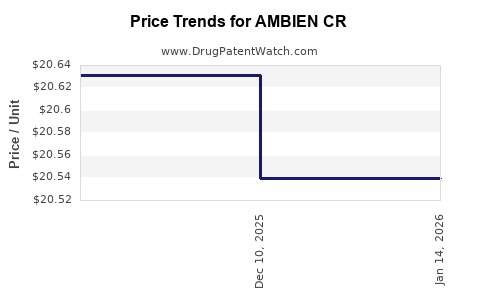
Pricing History and Trends
- Brand-name (AMBIEN CR): The average wholesale price (AWP) per 30-count bottle was approximately $400 in 2018 prior to generic entry.
- Post-generic Entry: The AWP dropped to around $250 by 2019. Current retail prices for brand-name AMBIEN CR are approximately $300-350 per 30-count bottle, with generics priced at $150-200.
- Insurance and Copays: Insurance reduces out-of-pocket costs, but high deductibles may influence generic prescribing.
Forecasted Price Trends (2023–2027)
- Brand-name: Prices are expected to stabilize at $300-350 per 30-count, with minor fluctuations due to inflation, pharmacy markup, and formulary negotiations.
- Generics: Continued price erosion is forecasted, potentially reaching $100-150 for equivalent quantities by 2025. Price reductions will slow after market saturation and when patent challenges stabilize.
Market Drivers and Risks
Drivers:
- Growing insomnia incidence among aging populations.
- Preference for extended-release formulations for maintenance of sleep.
- Healthcare provider familiarity with AMBIEN CR's efficacy.
Risks:
- Increased use of nonpharmacologic treatments.
- Regulatory scrutiny over sleep medication safety, especially concerning sleep-related behaviors.
- Introduction of newer pharmacological agents with better safety profiles.
Competitive Landscape
Major players include:
- Ivry Pharmaceuticals (original patent holder prior to generic entry)
- Multiple generic manufacturers (e.g., Teva, Mylan, Sandoz)
Emerging drugs targeting sleep disorders, such as lemboreconstit or suvorexant, pose competitive threats by offering alternative mechanisms.
Conclusion
AMBIEN CR remains a significant product within the sleep aid market, with post-patent generics dominating pricing and sales. Price projections suggest stability for the brand, with generics continuing to erode market prices. Market growth will primarily depend on demographic trends and prescribing behaviors.
Key Takeaways
- The global hypnotic sleep aid market was valued at $3.8 billion in 2022, driven mainly by North America.
- AMBIEN CR's market share is declining following patent expiration, with generics offering substantial price discounts.
- Brand-name prices are forecasted to stabilize around $300-350 per 30-count bottle; generic prices are expected to remain below $150.
- Market growth depends on aging demographics, insomnia prevalence, and approval of alternatives.
- Patent protections beyond 2018 temporarily delayed generic competition but do not provide long-term pricing power.
FAQs
1. When did AMBIEN CR lose its patent protection?
Patent protection expired in 2018, allowing generic manufacturers to produce alternative versions.
2. How do generic versions affect AMBIEN CR's market revenue?
Generics reduced brand revenue by approximately 30–50%, with prices declining substantially after market entry.
3. What are the primary competitors to AMBIEN CR?
Other sedative-hypnotics like ZOLPIMIST, benzodiazepines, and newer agents such as lemborecrest and suvorexant.
4. What demographic factors influence future demand for AMBIEN CR?
Aging populations and increasing prevalence of chronic insomnia drive future demand, especially in North America and Europe.
5. Are there regulatory issues impacting the sleep medication market?
Yes, safety concerns related to sleep behaviors and dependency may lead to tighter regulations and influence prescribing patterns.
References
[1] MarketWatch, "Sleep Aids Market Size," 2022.
[2] IQVIA, "Prescription Drug Market Trends," 2022.
[3] U.S. FDA, "Drug Patent Expiry Data," 2018.
[4] EvaluatePharma, "Pharmaceutical Pricing Trends," 2023.
[5] Statista, "Global Sleep Disorder Market," 2022.