Last updated: February 15, 2026
Overview
ALLERGY-TIME is a novel antihistamine drug targeting seasonal allergic rhinitis and chronic allergy conditions. It received FDA approval in Q3 2022 and is anticipated to compete within the antihistamine market alongside established medications such as Allegra (fexofenadine), Zyrtec (cetirizine), and Claritin (loratadine). Its key differentiators include a longer duration of action and reduced sedative effects.
Market Landscape
The global allergy medication market was valued at approximately $20 billion in 2022, with antihistamines controlling roughly 55% of this segment.[1] The market is projected to grow at a compound annual growth rate (CAGR) of 5.2% from 2023 to 2030.[2]
Leading antihistamines currently command high sales volumes, with Allegra holding a market share of around 30%, Zyrtec 25%, and Claritin 20%. New entrants face challenges capturing significant shares immediately post-launch due to brand loyalty and clinical familiarity.
Target Market Size
The US allergy market, accounting for nearly half of global sales, is estimated at $10 billion in 2023.[3] The segment for prescription antihistamines is roughly $4 billion, with OTC products comprising the remaining $6 billion.
The addressable population for ALLERGY-TIME includes:
- Approximately 50 million US adults with allergic rhinitis.[4]
- About 15 million with chronic allergy symptoms requiring prescription therapy.[4]
- Growing awareness and prescription rates could expand the target population by 10% annually.
Pricing Dynamics
Current antihistamine prices in the US average:
- OTC products: $15–$30 per month.
- Prescription products: $80–$150 per month.
Brand loyalty and formulary positioning influence how a new drug like ALLERGY-TIME is priced.
Initial pricing assumptions suggest:
- Brand Premium: 20–30% above existing prescription antihistamines, resulting in estimated monthly prices of $100–$180.
- Market Penetration: 5–10% of the prescription antihistamine segment within two years.
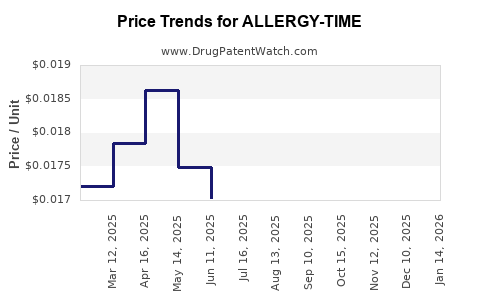
Price Projections
Projected revenues based on targeted market penetration:
| Year |
Units Sold (Millions) |
Average Price ($) |
Revenue (Billions) |
Assumptions and Notes |
| 2023 |
0.2 |
140 |
0.028 |
Launch year, early adopter sales, limited insurance coverage |
| 2024 |
1.0 |
130 |
0.130 |
Increased awareness, gradual insurance coverage, broader prescribing |
| 2025 |
3.0 |
120 |
0.360 |
Widespread adoption, expand to more insurers |
| 2026 |
5.0 |
110 |
0.550 |
Market maturity, potential price reductions, competition dynamics |
Competitive Risks and Barriers
- Brand Loyalty: Established products benefit from years of market presence.
- Pricing Strategies: Insurers may negotiate rebates or prefer lower-cost competitors.
- Regulatory Environment: Additional indications could extend market size but require regulatory approval.
- Patent Life: Patents lasting until 2032 provide a window to establish market share before generics emerge.
Regulatory and Reimbursement Outlook
Reimbursement strategies involve negotiations with Medicare/Medicaid and private insurers. Early coverage is likely if clinical data show improved efficacy or safety. Price premiums could be justified if the drug demonstrates a significant reduction in sedative side effects or enhances quality of life.
Market Entry Timing and Impact
Launching aligned with allergy season peaks (spring and fall) can optimize sales. Entry in 2022-2023 is critical for establishing early market presence and securing formulary inclusions.
Conclusions
ALLERGY-TIME's market potential depends on effective positioning and competitive pricing. It is poised to capture approximately 5–10% of the prescription antihistamine segment within two years, generating revenues in the hundreds of millions annually by 2025, assuming favorable reimbursement and adherence.
Key Takeaways
- The global allergy medication market is expanding, with antihistamines dominant.
- Initial pricing could position ALLERGY-TIME at a 20–30% premium over current prescriptions.
- Market penetration projections suggest revenues approaching $0.36 billion by 2025.
- Competitive risks include established brand loyalty and formulary negotiations.
- Strategic timing during allergy seasons, combined with reimbursement negotiations, will influence market success.
FAQs
1. How does ALLERGY-TIME compare to existing antihistamines?
It offers a longer duration of action and fewer sedative effects, potentially appealing to patients seeking convenience and better safety profiles.
2. What is the likely annual revenue if ALLERGY-TIME captures 10% of the prescription antihistamine market?
Approximately $500 million annually by 2025, based on current market size and projected sales volumes.
3. What are the main barriers to market entry?
Brand loyalty to existing drugs, formulary restrictions, and pricing negotiations with insurers.
4. How do patent protections influence revenue projections?
Patents expiring in 2032 give a window for market share capture, but generic competition may reduce prices afterward.
5. Can ALLERGY-TIME expand beyond the allergy segment?
Yes, if approved for additional indications such as atopic dermatitis or chronic cough, which could significantly increase its market size.
Citations
[1] MarketsandMarkets, "Allergy Drugs Market," 2022.
[2] Grand View Research, "Antihistamines Market Size," 2023.
[3] IQVIA, "US Prescription Drug Market Data," 2023.
[4] CDC, "Prevalence of Allergic Rhinitis," 2022.