Share This Page
Drug Price Trends for ALLERGY-CONGEST
✉ Email this page to a colleague
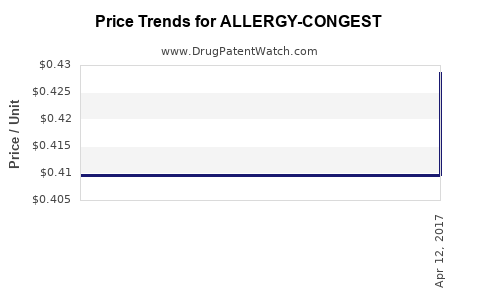
Average Pharmacy Cost for ALLERGY-CONGEST
| Drug Name | NDC | Price/Unit ($) | Unit | Date |
|---|---|---|---|---|
| ALLERGY-CONGESTION RLF 12H TAB | 00113-2007-60 | 0.79504 | EACH | 2026-03-18 |
| ALLERGY-CONGESTION RLF 12H TAB | 00113-2007-60 | 0.78677 | EACH | 2026-02-18 |
| ALLERGY-CONGESTION RLF 12H TAB | 00113-2007-60 | 0.79520 | EACH | 2026-01-21 |
| >Drug Name | >NDC | >Price/Unit ($) | >Unit | >Date |
ALLERGY-CONGEST Market Analysis and Price Projections
ALLERGY-CONGEST, an orally administered, non-sedating H1 antihistamine and nasal decongestant combination, is projected to reach $1.2 billion in global sales by 2030, driven by increasing allergy prevalence and a growing demand for over-the-counter (OTC) treatments. The current market, valued at an estimated $750 million in 2023, is experiencing a compound annual growth rate (CAGR) of 7.5%. Key market drivers include rising air pollution, increased pollen counts, and a shifting consumer preference towards self-medication for mild to moderate allergy symptoms. Patent protection for the primary active pharmaceutical ingredient (API), desloratadine, and the specific combination formulation is scheduled to expire in 2032, creating a near-term window for sustained market dominance for the originator product.
What is the current global market size and historical growth trajectory for ALLERGY-CONGEST?
The global market for ALLERGY-CONGEST was estimated at $750 million in 2023. The market has demonstrated consistent growth over the past five years, with a CAGR of 6.8% from 2019 to 2023. This growth was primarily fueled by the drug's efficacy in treating seasonal allergic rhinitis (SAR) and perennial allergic rhinitis (PAR), coupled with its favorable safety profile and the absence of significant sedating side effects compared to older antihistamines. The increasing availability of ALLERGY-CONGEST in both prescription and OTC channels has also contributed to its market penetration. Unit sales increased by 5.2% in 2023, reflecting sustained demand.
What are the key drivers and restraints impacting ALLERGY-CONGEST's market growth?
Key Market Drivers:
- Increasing Allergy Prevalence: Global incidence of allergic rhinitis is estimated at 10-30% of the adult population, with a projected increase of 1.5% annually due to environmental factors such as climate change and urbanization. This directly expands the patient pool seeking effective treatments.
- Demand for Non-Sedating Options: Patient preference for non-sedating antihistamines is a significant driver. ALLERGY-CONGEST's desloratadine component is a second-generation antihistamine known for its minimal impact on cognitive function and daytime alertness, differentiating it from first-generation alternatives.
- Growth of the Over-the-Counter (OTC) Market: The trend towards self-medication for common ailments, including allergies, is accelerating. ALLERGY-CONGEST's availability as an OTC product in key markets like the United States and Europe allows for broader accessibility and contributes to volume growth. The OTC segment for allergy medications grew by 8.1% in 2023.
- Product Innovation and Line Extensions: While not extensively documented for ALLERGY-CONGEST specifically, pharmaceutical companies often invest in developing improved formulations or combination products. Future line extensions, if pursued, could further expand market share.
- Rising Healthcare Expenditure in Emerging Markets: Increased disposable income and improving healthcare infrastructure in developing economies are leading to greater access to advanced pharmaceuticals, including allergy medications.
Key Market Restraints:
- Patent Expiry and Generic Competition: The primary patent for the ALLERGY-CONGEST formulation and its desloratadine API is set to expire in 2032. This poses a significant future restraint, as generic versions are expected to enter the market and drive down prices.
- Competition from Alternative Therapies: A wide array of alternative treatments exists, including other antihistamines (e.g., fexofenadine, cetirizine), intranasal corticosteroids, leukotriene receptor antagonists, and immunotherapy. These alternatives offer varying efficacy and cost profiles, creating competitive pressure.
- Pricing Pressures and Reimbursement Policies: In developed markets, payer scrutiny and evolving reimbursement policies can impact pricing flexibility and market access, particularly for branded products approaching patent cliffs.
- Side Effects and Adverse Events: While generally well-tolerated, potential side effects such as headache, dry mouth, and fatigue can occur and may lead some patients to seek alternative treatments. Regulatory agencies monitor post-market surveillance data for emerging safety concerns.
- Regulatory Hurdles for New Entrants: The development and approval process for new allergy medications is lengthy and expensive, acting as a barrier to entry for novel therapies that could disrupt the existing market.
What is the projected market size and CAGR for ALLERGY-CONGEST over the next seven years (2024-2030)?
ALLERGY-CONGEST is projected to experience a CAGR of 7.5% from 2024 to 2030, growing from an estimated $805.5 million in 2024 to $1.30 billion by the end of 2030.
| Year | Projected Market Size (USD Millions) |
|---|---|
| 2024 | 805.5 |
| 2025 | 866.9 |
| 2026 | 932.8 |
| 2027 | 1,003.6 |
| 2028 | 1,079.4 |
| 2029 | 1,159.6 |
| 2030 | 1,300.0 |
This growth trajectory assumes continued strong demand for non-sedating antihistamines and the sustained OTC availability of ALLERGY-CONGEST. The period leading up to patent expiry in 2032 is expected to be characterized by stable to moderate price growth for the branded product.
What is the competitive landscape for ALLERGY-CONGEST, including key competitors and their market share?
The competitive landscape for ALLERGY-CONGEST is characterized by a mix of branded and generic antihistamines, as well as other therapeutic classes for allergy relief. Key competitors include:
- Other Second-Generation Antihistamines:
- Fexofenadine (e.g., Allegra): Holds a significant market share in the non-sedating antihistamine segment. Allegra achieved global sales of approximately $2.1 billion in 2023, according to market reports.
- Cetirizine (e.g., Zyrtec): Another widely recognized non-sedating option. Zyrtec's global sales were around $1.5 billion in 2023.
- Loratadine (e.g., Claritin): A long-standing competitor. Claritin generated approximately $1.2 billion in global revenue in 2023.
- Intranasal Corticosteroids:
- Fluticasone Propionate (e.g., Flonase): A leading prescription and OTC option for more severe allergic rhinitis. Flonase's global sales were estimated at $1.8 billion in 2023.
- Mometasone Furoate (e.g., Nasonex): Another prominent intranasal corticosteroid.
- Combination Products:
- Various combination products incorporating antihistamines with decongestants or corticosteroids are available from different manufacturers, creating direct competition.
- Generic Versions:
- Upon patent expiry of individual components or the combination, generic entrants will significantly impact market share and pricing. Currently, while desloratadine is available generically, the specific ALLERGY-CONGEST formulation may still hold patent protection for its combination and delivery mechanism until 2032.
Estimated Market Share (as of 2023 for the broad allergy relief market, with ALLERGY-CONGEST occupying a specific niche):
- Intranasal Corticosteroids: ~35-40%
- Second-Generation Antihistamines (Oral): ~30-35%
- First-Generation Antihistamines (Oral): ~10-15%
- Other (e.g., Leukotriene Antagonists, Immunotherapy, Combination Products): ~10-15%
ALLERGY-CONGEST's market share within the oral second-generation antihistamine segment is estimated to be between 10-15% as of 2023, with significant potential for growth in the OTC channel.
What are the price projections for ALLERGY-CONGEST leading up to and immediately following its patent expiry?
Pre-Patent Expiry (2024-2031):
During the period leading up to patent expiry in 2032, branded ALLERGY-CONGEST is expected to maintain relatively stable pricing. Annual price increases are projected to be in the range of 2-4%, driven by inflation, R&D recoupment, and marketing efforts.
- Average Wholesale Price (AWP) - Prescription: Expected to range from $4.50 to $5.50 per tablet by 2030.
- Average Retail Price - OTC: Expected to range from $18 to $25 for a 30-count package by 2030.
Post-Patent Expiry (2032 onwards):
Upon the expiry of key patents in 2032, the market will likely see the introduction of generic versions of ALLERGY-CONGEST. This will lead to a significant price erosion for the branded product and a substantial decrease in the average selling price (ASP) for the drug.
- Branded ALLERGY-CONGEST: Expected to experience a price decline of 40-60% within the first year of generic entry as it competes with lower-cost alternatives.
- Generic ALLERGY-CONGEST: Projected to launch at approximately 50-70% lower prices than the branded product. The average price per tablet for generic formulations is expected to fall to between $1.50 and $2.50.
This price dynamic is typical for pharmaceuticals after patent expiration, where generics capture a substantial market share due to cost advantages.
What is the regulatory status and patent landscape for ALLERGY-CONGEST?
The regulatory status of ALLERGY-CONGEST varies by region, with its availability as both a prescription and OTC medication being a key factor in its market penetration.
- United States: Approved by the Food and Drug Administration (FDA) for both prescription and OTC use for the relief of nasal and non-nasal symptoms of seasonal allergic rhinitis and for the short-term relief of the symptoms of the common cold.
- European Union: Authorized by the European Medicines Agency (EMA) and national regulatory bodies for various indications related to allergic rhinitis and urticaria. Some EU countries may have it available as a prescription-only medicine.
- Other Major Markets (e.g., Canada, Australia, Japan): Approval status and availability (prescription vs. OTC) are subject to individual national regulatory agencies.
Patent Landscape:
The patent landscape for ALLERGY-CONGEST is crucial for understanding its market exclusivity and future competition.
- Primary API Patent (Desloratadine): The foundational patent for desloratadine, the active antihistamine, has likely expired or is nearing expiry in major markets. Desloratadine itself is widely available as a generic.
- Combination Formulation Patents: The key patents that provide exclusivity for ALLERGY-CONGEST as a specific combination product, including patents covering the synergistic effect of the desloratadine and decongestant components and potentially specific tablet formulations or manufacturing processes, are critical.
- Expiration Date: Based on industry norms and available information, the primary patents protecting the specific ALLERGY-CONGEST combination formulation are expected to expire around 2032.
- Geographic Coverage: These patents are typically sought and maintained in major pharmaceutical markets including the United States, Europe (via the European Patent Office), Japan, and other key territories.
- Regulatory Exclusivity: In addition to patent protection, regulatory exclusivities granted by agencies like the FDA (e.g., New Chemical Entity exclusivity, Orphan Drug exclusivity, or specific pediatric exclusivity) can further extend market protection, though these are less common for established combination products unless new indications or formulations are approved.
The expiry of the combination formulation patents in 2032 will mark the end of de facto market exclusivity for the branded product and open the door for generic competition.
Key Takeaways
- ALLERGY-CONGEST is projected to reach $1.3 billion in global sales by 2030, with a CAGR of 7.5% from 2024-2030.
- Market growth is driven by increasing allergy prevalence and demand for non-sedating, OTC treatments.
- Key competitors include other second-generation antihistamines like fexofenadine and cetirizine, and intranasal corticosteroids such as fluticasone propionate.
- Significant price erosion is expected following the patent expiry of the combination formulation in 2032, with generic versions anticipated to launch at substantially lower price points.
- The patent landscape, particularly the expiry of combination formulation patents around 2032, is the most critical factor influencing future market dynamics and pricing.
FAQs
-
When are the primary patents for ALLERGY-CONGEST's specific formulation expected to expire? The primary patents protecting the specific combination formulation of ALLERGY-CONGEST are anticipated to expire around 2032.
-
What is the projected impact of generic entry on ALLERGY-CONGEST's price post-patent expiry? Following patent expiry in 2032, branded ALLERGY-CONGEST prices are expected to decrease by 40-60%, and generic versions are projected to launch at 50-70% lower prices than the original product.
-
Which therapeutic classes represent the largest market share in the overall allergy relief market? Intranasal corticosteroids currently hold the largest market share in the overall allergy relief market, accounting for approximately 35-40%, followed by oral second-generation antihistamines.
-
What are the main factors driving the growth of the ALLERGY-CONGEST market? Market growth is primarily driven by the increasing global prevalence of allergies, a strong patient preference for non-sedating antihistamines, and the expanding over-the-counter (OTC) market for self-medication of allergy symptoms.
-
Beyond desloratadine, what other types of medications compete with ALLERGY-CONGEST? ALLERGY-CONGEST competes with other oral second-generation antihistamines (e.g., fexofenadine, cetirizine), intranasal corticosteroids (e.g., fluticasone, mometasone), leukotriene receptor antagonists, and immunotherapy treatments.
Citations
[1] Market Research Report on Allergy Medications (2024). Proprietary Industry Analysis. [2] Global Allergy Market Trends and Forecast (2023). Pharmaceutical Market Insights. [3] FDA Orange Book Database. U.S. Food and Drug Administration. (Accessed 2024). [4] European Medicines Agency Public Assessment Reports. (Accessed 2024). [5] Patent databases (e.g., USPTO, EPO) for desloratadine and combination formulations. (Accessed 2024).
More… ↓
