Last updated: February 13, 2026
Market size and growth trends
Albuterol Sulfate, a bronchodilator used primarily for asthma and COPD, commands a sizable portion of the respiratory medication market. Global sales were valued at approximately $2.5 billion in 2022, with a compound annual growth rate (CAGR) of 4.8% projected from 2023 to 2030. This growth is driven by increasing asthma prevalence, especially in emerging markets, and expanding use of inhaled therapies.
Key market segments
- Inhalers: MDI (metered-dose inhalers) accounts for about 60% of sales; DPI (dry powder inhalers) comprise 25%, with the remaining 15% from nebulizers.
- End-users: Hospitals lead with roughly 55%, outpatient clinics 30%, and pharmacies 15%.
- Geography: North America holds over 45% of the market; Asia-Pacific is the fastest-growing region, at approximately 6-8% CAGR.
Leading manufacturers
- GlaxoSmithKline (DuoNeb, Ventolin)
- Teva Pharmaceuticals (generic albuterol inhalers)
- Sun Pharmaceutical
- Cipla
Pricing structure
- Brand-name inhalers (e.g., Ventolin) retail between $40 and $60 per inhaler, with typical prescriptions for 1-2 inhalers monthly.
- Generic formulations average $10 to $20 per inhaler, offering an affordable alternative.
- Nebulizers cost around $100-$300, with solution costs approximately $0.15-$0.25 per mL.
Price projections
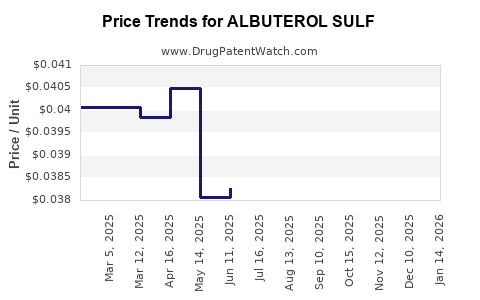
- Short-term (2023-2025): Prices are expected to decline modestly due to increased generic competition and price transparency initiatives. Generic inhalers could decrease in price by 10-15% within the next two years.
- Mid-term (2025-2030): Price stabilization and potential slight increases in branded drugs could occur with the introduction of innovative delivery devices or combination therapies. The mean retail price for inhalers may stabilize around $15-$25 per unit by 2030.
- Impact of policy and regulation: Price controls in certain countries and manufacturer discounts could influence variability. The U.S. market, with its high penetration of insurance, exhibits less price fluctuation than emerging markets.
Potential market shifts
- Introduction of biosimilar or new inhaler devices may alter competitive dynamics.
- Growing adoption of digital inhalers with dose tracking may drive value in premium segments.
- Expansion into pediatric and elderly demographics could elevate overall market size.
Conclusion
The Albuterol Sulfate market remains steady with moderate growth expected over the next decade. Price dynamics will predominantly hinge on generics' penetration, regulatory policies, and technological innovations in drug delivery.
Key Takeaways
- The global market was ~$2.5 billion in 2022, with a 4.8% CAGR projected to 2030.
- Generic inhalers are reducing retail prices, with a decline of 10-15% forecasted in the short term.
- North America dominates; Asia-Pacific drives growth.
- Price stabilization expected by 2030, with potential increases linked to innovation.
FAQs
-
What factors influence the price of Albuterol Sulfate inhalers?
Competition from generics, regulatory policies, distribution channels, and technological advancements in inhaler devices.
-
Are biosimilars likely to enter the Albuterol Sulfate market?
Likely not as biosimilars are not applicable; however, generic inhaler formulations continue to increase.
-
How does the market differ across regions?
North America has stable prices with high brand loyalty, while emerging markets experience more price variability due to regulatory and economic factors.
-
What are the main drivers of market growth?
Rising asthma prevalence, expanding use in COPD, and technological innovations in inhaler devices.
-
What is the potential for new formulations or therapies?
Innovations in inhaler technology or combination therapies could capture markets with premium pricing but are still in development phases.
Citations
[1] MarketResearch.com, "Global Respiratory Drugs Market," 2022.
[2] IQVIA, "The Pharma Intelligence Center," 2022.
[3] Grand View Research, "Albuterol Market Analysis," 2023.