Share This Page
Drug Price Trends for ACETAMINOPHEN-CODEINE
✉ Email this page to a colleague
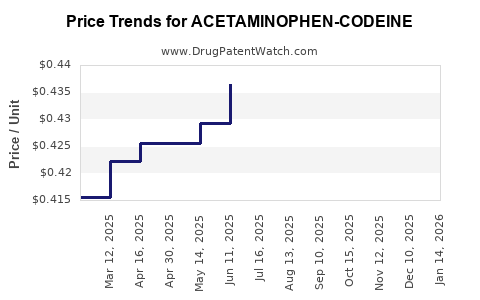
Average Pharmacy Cost for ACETAMINOPHEN-CODEINE
| Drug Name | NDC | Price/Unit ($) | Unit | Date |
|---|---|---|---|---|
| ACETAMINOPHEN-CODEINE 120 MG-12 MG/5 ML SOLUTION | 64950-0374-16 | 0.47351 | ML | 2026-07-22 |
| ACETAMINOPHEN-CODEINE 120 MG-12 MG/5 ML SOLUTION | 64950-0374-16 | 0.47410 | ML | 2026-06-17 |
| ACETAMINOPHEN-CODEINE 120 MG-12 MG/5 ML SOLUTION | 64950-0374-16 | 0.47409 | ML | 2026-05-20 |
| >Drug Name | >NDC | >Price/Unit ($) | >Unit | >Date |
Acetaminophen-Codeine Combination Products: Market Dynamics and Price Outlook
This report analyzes the market landscape and price projections for acetaminophen-codeine combination products. The market is characterized by a mature generic drug segment, subject to payer influence and competition from alternative pain management therapies. Future price trends will be shaped by manufacturing costs, regulatory actions, and evolving treatment paradigms.
What is the current market size for acetaminophen-codeine combination products?
The global market for acetaminophen-codeine combination products is substantial, driven by their long-standing use as a first-line treatment for moderate to moderately severe pain. Precise current market size figures are often aggregated within broader analgesic categories. However, industry data indicates that these combinations represent a significant portion of the over-the-counter (OTC) and prescription opioid analgesic markets. In the United States, for instance, prescription sales of codeine combinations with acetaminophen remain a notable segment, despite shifts in prescribing patterns. The market is largely dominated by generic manufacturers, leading to price sensitivity and high volume sales.
Who are the key manufacturers and suppliers?
The manufacturing and supply of acetaminophen-codeine combination products are primarily handled by generic pharmaceutical companies. Due to the patent expiries of the original innovator products, the market is highly competitive.
Key players include:
- Perrigo Company plc: A significant supplier of private-label OTC products, including acetaminophen-codeine formulations.
- Hikma Pharmaceuticals PLC: Offers a range of generic prescription medications, including acetaminophen and codeine combinations.
- Teva Pharmaceutical Industries Ltd.: A major global generic drug manufacturer with a broad portfolio that includes opioid analgesics.
- Mallinckrodt Pharmaceuticals: While historically a significant player in opioid manufacturing, the company has undergone restructuring. Its product portfolio has included acetaminophen-codeine combinations.
- Amneal Pharmaceuticals LLC: Another prominent generic pharmaceutical company with a presence in the analgesic market.
These manufacturers operate through various channels, including supplying to retail pharmacies, hospital systems, and distributors. The competitive landscape fosters price negotiation and volume-based agreements.
What are the primary indications and therapeutic applications?
Acetaminophen-codeine combination products are indicated for the relief of mild to moderate pain. They are typically prescribed for conditions such as:
- Headaches
- Migraines
- Toothaches
- Menstrual cramps
- Musculoskeletal pain
- Post-operative pain
- Pain associated with minor injuries
The combination leverages the analgesic properties of acetaminophen with the opioid analgesic effect of codeine. Codeine is a prodrug that is metabolized in the liver to morphine, contributing to its pain-relieving action. The differing mechanisms of action provide a synergistic effect, allowing for pain management at lower doses of each component compared to using them individually.
What are the principal regulatory considerations impacting the market?
The regulatory environment for acetaminophen-codeine products is stringent, primarily due to the controlled substance status of codeine. Key regulatory considerations include:
- Controlled Substance Classification: Codeine is classified as a Schedule II, III, or V controlled substance by the U.S. Drug Enforcement Administration (DEA), depending on its concentration and formulation. This classification mandates strict controls on manufacturing, distribution, prescribing, and dispensing.
- DEA Quotas: The DEA sets annual aggregate production quotas for controlled substances, including codeine. These quotas can influence the supply availability and, consequently, the pricing of these products.
- FDA Oversight: The U.S. Food and Drug Administration (FDA) regulates the labeling, marketing, and safety of all drug products, including acetaminophen-codeine combinations. This includes requirements for tamper-evident packaging and post-market surveillance.
- Prescription Requirements: While certain low-dose formulations might be available OTC in some regions, prescription-only status is common for many acetaminophen-codeine products, especially those with higher concentrations of codeine.
- Opioid Crisis Mitigation: Regulatory bodies globally have implemented measures to curb opioid misuse and diversion. These include prescription drug monitoring programs (PDMPs), restrictions on opioid prescribing, and requirements for abuse-deterrent formulations, although abuse-deterrent technologies are less common for older combinations like acetaminophen-codeine.
- International Regulations: Manufacturers operating globally must comply with varying regulations in different countries regarding controlled substances, manufacturing practices (Good Manufacturing Practices - GMP), and drug approval processes.
How do payer policies influence market dynamics?
Payer policies significantly shape the market for acetaminophen-codeine combination products by influencing prescribing patterns and reimbursement.
Key influences include:
- Formulary Placement: Health insurance plans and pharmacy benefit managers (PBMs) determine whether a drug is included on their formulary and at what tier. Acetaminophen-codeine products, being widely available generics, are typically placed on lower, more cost-effective tiers.
- Prior Authorization and Step Therapy: Payers may implement prior authorization requirements or step therapy protocols, where patients must try preferred, less expensive alternatives (e.g., non-opioid analgesics or lower-potency opioids) before a prescription for acetaminophen-codeine is approved.
- Quantity Limits: Payer policies often impose limits on the quantity of opioid analgesics that can be dispensed per prescription and the duration of treatment, aiming to reduce overall opioid exposure.
- Rebate Negotiations: Generic manufacturers engage in rebate negotiations with PBMs and health plans to secure preferred formulary placement. These rebates impact the net price of the drug for payers.
- Generic Substitution Mandates: Many payers mandate generic substitution whenever a therapeutically equivalent generic drug is available, reinforcing the market dominance of generic acetaminophen-codeine products.
- Value-Based Purchasing: While more prevalent for newer or specialty drugs, the trend towards value-based purchasing can indirectly affect older drugs by prioritizing treatments that demonstrate cost-effectiveness and superior patient outcomes across a treatment episode.
What are the competitive pressures from alternative pain management therapies?
Acetaminophen-codeine combinations face substantial competitive pressure from a growing array of alternative pain management therapies. These alternatives span pharmacological and non-pharmacological approaches.
Key competitive pressures include:
- Non-Opioid Analgesics:
- NSAIDs (Non-Steroidal Anti-Inflammatory Drugs): Ibuprofen, naproxen, and prescription-strength NSAIDs offer effective pain relief for many inflammatory conditions with a generally lower risk profile than opioids.
- High-Dose Acetaminophen: Formulations of acetaminophen alone, at higher strengths, are available and preferred for individuals who cannot tolerate NSAIDs or opioids.
- Topical Analgesics: Creams, gels, and patches containing ingredients like lidocaine, capsaicin, or NSAIDs provide localized pain relief with minimal systemic absorption and reduced risk of opioid-related side effects.
- Other Prescription Opioids: While the market is moving away from opioids generally, other prescription opioid analgesics exist, though often with different potency profiles or specific indications. However, the trend is towards de-escalation from all opioids.
- Non-Pharmacological Treatments:
- Physical Therapy and Rehabilitation: Essential for chronic pain, musculoskeletal injuries, and post-operative recovery.
- Psychological Therapies: Cognitive Behavioral Therapy (CBT) and mindfulness-based stress reduction are increasingly recognized for managing chronic pain.
- Interventional Pain Management: Procedures like nerve blocks, epidural injections, and radiofrequency ablation offer targeted pain relief.
- Complementary and Alternative Medicine (CAM): Acupuncture, chiropractic care, and massage therapy are utilized by a segment of patients seeking pain relief.
- Newer Drug Modalities: While not direct competitors in the low-to-moderate pain space, advancements in non-opioid pain medications targeting specific pathways (e.g., CGRP inhibitors for migraines, novel non-opioid targets in development) represent a long-term competitive threat by offering more targeted and potentially safer alternatives.
The focus on reducing opioid use has led healthcare providers and payers to actively promote and favor these alternative therapies, especially for chronic pain management.
What are the projected price trends for acetaminophen-codeine products?
Projecting precise price trends for generic drugs is complex, influenced by multiple, often counteracting, forces. For acetaminophen-codeine combination products, several factors will shape future pricing.
Factors driving downward pressure on prices:
- Intense Generic Competition: The market is saturated with multiple generic manufacturers, leading to aggressive pricing strategies to capture market share.
- Payer Negotiation Power: Large PBMs and health insurers wield significant power to negotiate deep discounts and rebates, reducing the net price paid by payers.
- Manufacturing Cost Efficiencies: Generic manufacturers continuously seek to optimize production processes to lower manufacturing costs.
- Declining Opioid Prescribing: The societal and regulatory push to reduce opioid use generally may lead to lower overall demand for these products, potentially impacting volume-based pricing strategies.
Factors that could stabilize or marginally increase prices:
- Raw Material Costs: Fluctuations in the cost of active pharmaceutical ingredients (APIs) – acetaminophen and codeine – and other manufacturing inputs can affect production costs. Codeine API, being a controlled substance, may have specific supply chain considerations.
- Regulatory Compliance Costs: The ongoing costs associated with maintaining compliance with controlled substance regulations, GMP, and other FDA requirements can add to the cost of doing business.
- Supply Chain Disruptions: Global supply chain vulnerabilities, as demonstrated in recent years, can lead to temporary price spikes due to shortages.
- Limited Innovation: As a mature product class, there is minimal investment in innovation for new formulations of acetaminophen-codeine. This limits the potential for price increases driven by novel features or extended exclusivity.
Overall Price Projection:
The predominant trend for acetaminophen-codeine combination products is expected to be continued price erosion and stability at very low price points. The market is largely driven by volume sales for generic medications.
- Short to Medium Term (1-3 years): Expect modest, incremental price declines driven by ongoing generic competition and payer pressure. Prices are unlikely to deviate significantly from current levels due to the established generic pricing floor.
- Long Term (3-5+ years): Prices will likely remain stable or continue a slow, downward trend. The primary risk for price increases would stem from significant disruptions in the supply of codeine API or widespread manufacturing issues. However, the inherent low cost of acetaminophen and the availability of alternative pain relief methods will cap any significant upward price movement.
The average wholesale price (AWP) for common acetaminophen-codeine formulations (e.g., #30mg/300mg, #30mg/500mg) is already very low, often in the range of a few cents per tablet on a unit basis for bulk purchases. The net price paid by payers after rebates is even lower. Future price movements will likely occur in fractions of a cent per unit, reflecting the highly commoditized nature of this market segment.
What are the implications of the opioid crisis on the future market for these products?
The opioid crisis has fundamentally reshaped the market for all opioid-containing medications, including acetaminophen-codeine combinations. The implications are profound and will continue to influence the future market.
- Reduced Prescribing Rates: Healthcare providers are increasingly cautious about prescribing opioids due to legal liability, regulatory scrutiny, and a societal shift towards non-opioid alternatives. This directly translates to lower prescription volumes for acetaminophen-codeine.
- Stricter Regulatory Enforcement: Regulatory bodies like the DEA and FDA continue to tighten controls on opioid manufacturing, distribution, and prescribing. This can lead to increased compliance costs for manufacturers and pharmacists.
- Shifting Treatment Guidelines: Clinical practice guidelines for pain management increasingly emphasize non-opioid pharmacotherapies and multimodal non-pharmacological approaches as first-line treatments, further marginalizing opioid use.
- Payer Restrictions: As discussed, payers have implemented aggressive policies to limit opioid access, including prior authorizations, step therapy, and quantity limits, which directly restrict the utilization of acetaminophen-codeine products.
- Public Perception: Negative public perception surrounding opioids can also influence patient and prescriber behavior, making them less inclined to choose opioid-based pain relief when alternatives exist.
- Focus on Abuse-Deterrent Formulations (Limited Impact): While abuse-deterrent formulations have been a focus for stronger opioids, their application to weaker combinations like acetaminophen-codeine is less common and less of a market driver.
- Increased Demand for Alternatives: The crisis has stimulated research and development into non-opioid pain therapies, creating a competitive landscape that favors these newer, safer options.
The long-term impact of the opioid crisis is a sustained reduction in the overall market size and utilization of acetaminophen-codeine products. While they will likely remain available for specific indications where their benefits are deemed to outweigh risks, their role is diminishing as safer alternatives gain prominence.
Key Takeaways
- The acetaminophen-codeine market is mature and dominated by generic manufacturers, leading to intense price competition.
- Key manufacturers include Perrigo, Hikma, Teva, Mallinckrodt, and Amneal.
- Regulatory oversight, particularly concerning codeine's controlled substance status, is stringent and impacts supply and distribution.
- Payer policies, including formulary restrictions and prior authorization, significantly influence market access and affordability.
- Competition from non-opioid analgesics, topical treatments, and non-pharmacological therapies is a major market pressure.
- Projected price trends indicate continued erosion and stability at low levels, driven by generic competition and payer negotiations.
- The opioid crisis has led to reduced prescribing, stricter regulations, and a shift towards non-opioid alternatives, diminishing the market share of acetaminophen-codeine products.
FAQs
-
Are there any remaining patents on acetaminophen-codeine combination products that could affect pricing? Innovator patents on the original acetaminophen-codeine combination products expired decades ago. The market is entirely generic, and there are no significant remaining patents on the core drug combinations themselves that would grant exclusivity or allow for premium pricing.
-
What is the typical price range for a prescription of acetaminophen-codeine tablets? For a generic prescription of acetaminophen-codeine tablets (e.g., 30mg codeine/300mg acetaminophen), the retail price can vary widely based on pharmacy, insurance coverage, and quantity. However, at the unit level, prices are very low, often ranging from $0.05 to $0.20 per tablet. The overall cost of a prescription is therefore typically in the range of $5 to $20 before significant insurance co-pays or deductibles, depending on the number of tablets dispensed.
-
How does the DEA quota system for codeine affect the availability and price of acetaminophen-codeine products? The DEA sets annual aggregate production quotas for codeine to control its supply. While these quotas are designed to meet legitimate medical needs, they can indirectly influence availability. If a quota is set too low relative to demand, it could lead to temporary shortages and potentially upward price pressure from manufacturers holding inventory. Conversely, sufficient quotas maintain supply and support competitive pricing among generic manufacturers.
-
Are there any specific regions or countries where acetaminophen-codeine is more or less commonly prescribed? Usage patterns can vary. In countries with very strict opioid control measures or limited access to prescription services, usage might be lower. Conversely, in regions where alternative pain management options are less accessible or affordable, acetaminophen-codeine might remain a more common choice for moderate pain, provided it is legally available and prescribed. However, the global trend is toward de-escalation.
-
What are the primary risks to manufacturers in the acetaminophen-codeine market? The primary risks include extreme price erosion due to intense generic competition, regulatory changes that could restrict codeine availability or increase compliance costs, potential supply chain disruptions impacting raw material sourcing (especially for codeine API), and the continued secular decline in demand driven by the shift to non-opioid pain management therapies.
Citations
[1] U.S. Drug Enforcement Administration. (n.d.). Controlled Substances Act. Retrieved from https://www.dea.gov/node/19882 [2] U.S. Food and Drug Administration. (n.d.). Controlled Substances. Retrieved from https://www.fda.gov/drugs/drug-safety-and-availability/controlled-substances [3] IQVIA. (Various Reports). Global Pharmaceutical Market Data and Analytics. (Proprietary market research reports accessed by industry professionals). [4] Various Generic Pharmaceutical Manufacturer Websites and Investor Reports. (Publicly available information regarding product portfolios). [5] National Institute on Drug Abuse. (n.d.). Opioid Overdose Crisis. Retrieved from https://www.drugabuse.gov/drug-topics/opioids/opioid-overdose-crisis
More… ↓
