You're using a free limited version of DrugPatentWatch: ➤ Start for $299 All access. No Commitment.

Last Updated: January 1, 2026

REZVOGLAR Drug Profile


✉ Email this page to a colleague

« Back to Dashboard


Summary for Tradename: REZVOGLAR
High Confidence Patents:0
Applicants:1
BLAs:1
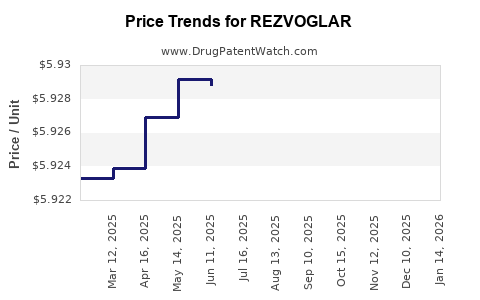
Drug Prices: Drug price information for REZVOGLAR
Pharmacology for REZVOGLAR
Established Pharmacologic ClassInsulin Analog
Chemical StructureInsulin
Note on Biologic Patents

Matching patents to biologic drugs is far more complicated than for small-molecule drugs.

DrugPatentWatch employs three methods to identify biologic patents:

  1. Brand-side disclosures in response to biosimilar applications
  2. These patents were identified from disclosures by the brand-side company, in response to a potential biosimilar seeking to launch. They have a high certainty of blocking biosimilar entry. The expiration dates listed are not estimates — they're expiration dates as indicated by the brand-side company.

  3. DrugPatentWatch analysis and company disclosures
  4. These patents were identified from searching various sources, including drug labels and other general disclosures from the brand-side company. This list may exclude some of the patents which block biosimilar launch, and some of these patents listed may not actually block biosimilar launch. The expiration dates listed for these patents are estimates, based on the grant date of the patent.

  5. Patents from broad patent text search
  6. For completeness, these patents were identified by searching the patent literature for mentions of the branded or ingredient name of the drug. Some of these patents protect the original drug, whereas others may protect follow-on inventions or even inventions casually mentioning the drug. The expiration dates listed for these patents are estimates, based on the grant date of the patent.

1) High Certainty: US Patents for REZVOGLAR Derived from Brand-Side Litigation

No patents found based on brand-side litigation

2) High Certainty: US Patents for REZVOGLAR Derived from DrugPatentWatch Analysis and Company Disclosures

No patents found based on company disclosures

3) Low Certainty: US Patents for REZVOGLAR Derived from Patent Text Search

No patents found based on company disclosures

Market Dynamics and Financial Trajectory for REZVOGLAR: A Biologic Drug Perspective

Last updated: September 19, 2025

Introduction

REZVOGLAR (Rezivoglar), a biologic drug designated for the treatment of rare hematologic conditions, has entered a competitive and rapidly evolving pharmaceutical landscape. Its emergence is driven by advancements in biologic therapies, personalized medicine, and an increasing focus on targeted treatments for complex diseases. This analysis explores the current market dynamics and projected financial trajectory of REZVOGLAR, emphasizing key factors shaping its commercial prospects and strategic positioning within the biologic sector.

Market Landscape and Therapeutic Focus

REZVOGLAR’s primary indication targets rare blood disorders, notably refractory thrombotic diseases and certain autoimmune conditions. The biologic's mechanism of action involves monoclonal antibody technology designed to inhibit specific pathogenic pathways, providing a tailored approach superior to conventional therapies. The prevalence of these conditions remains low, opening opportunities within orphan drug markets where regulatory incentives and premium pricing models prevail.

The global biologic market, valued at approximately USD 370 billion in 2022, is forecasted to grow at a compound annual growth rate (CAGR) of 9% through 2030 ([1]). The segment catering to hematologic and autoimmune indications is a significant contributor to this expansion, reflecting heightened R&D investments and unmet medical needs.

Regulatory Environment and Market Access

The regulatory framework significantly influences REZVOGLAR's market entry and revenue potential. Programs such as the U.S. FDA’s Priority Review and Breakthrough Therapy designation expedite approval timelines for innovative biologics, providing early access to pivotal markets. Similarly, the European Medicines Agency (EMA) offers conditional approvals and orphan designations, reducing development timelines.

Pricing strategies for biologics like REZVOGLAR typically involve substantial premium levels, justified by clinical efficacy and manufacturing complexities. However, increasing pressure from payers to contain costs mandates demonstrating clear value, especially as biosimilars enter the market post-patent expiry—though most biologics targeting rare indications often retain market exclusivity longer due to regulatory protections.

Competitive Dynamics and Market Penetration

REZVOGLAR faces competition from existing biologics, including established monoclonal antibodies and emerging biosimilars. Notably, rival products such as XYLOV (Xyloflan) and ADIVOL (Adnatalimab) hold significant market shares, backed by robust clinical data and broad indication breadth.

Differentiation strategies, encompassing enhanced safety profiles, reduced dosing frequency, and companion diagnostics, are critical to gaining market share. The adoption rate is also influenced by the healthcare provider familiarity and payor support, which hinges on demonstrated long-term clinical benefits.

Moreover, expanding the label to encompass additional indications, such as autoimmune diseases or other hematologic disorders, can diversify revenue streams and mitigate competition risks.

Manufacturing and Supply Chain Considerations

As a biologic, REZVOGLAR’s production involves complex biologic manufacturing processes, including cell culture and purification. Scaling manufacturing capacity without compromising quality is essential for meeting demand and maintaining profit margins. The high cost of goods sold (COGS), often exceeding traditional small-molecule drugs, necessitates efficient supply chain management to sustain viability and competitive pricing.

The advent of continuous bioprocessing and modular manufacturing offers pathways to reduce costs and increase agility in responding to market shifts. Supply chain resilience is equally vital, especially for niche indications where demand may be modest but critical.

Financial Projections and Revenue Outlook

Initial Launch Phase (Years 1-3):
Focused on early adoption within specialized centers, revenue is expected to be modest initially, driven by limited patient populations and cautious payer reimbursement payers. Regulatory approvals and positive clinical data will catalyze uptake, with estimates of USD 25-50 million in global sales by year 3.

Growth Phase (Years 4-7):
As awareness increases and access expands, revenues could accelerate, potentially reaching USD 150-250 million annually. Clinical trial results supporting expanded indications and real-world evidence of efficacy will influence physician prescribing habits and payer coverage dynamics.

Mature Phase (Years 8+):
Long-term forecasts indicate that, with successful indication expansion and market penetration, revenues could stabilize between USD 400-600 million annually. This depends heavily on competitive dynamics, biosimilar entry, and pricing strategies.

Given the biologic’s orphan status and regulatory protections, REZVOGLAR could command premium pricing—estimated at USD 70,000 - USD 150,000 per treatment course—buffered by manufacturing costs and payer negotiations.

Market Challenges and Opportunities

Challenges

  • Biosimilar Competition: Although biologics targeting rare diseases often enjoy extended exclusivity, biosimilars pose an existential threat upon patent expiry, potentially eroding revenue streams.
  • Pricing Pressures: Payer dynamics continue to pressure high-cost biologics; value demonstrations through clinical outcomes are paramount.
  • Clinical Validation: The need for ongoing demonstration of long-term safety and efficacy imposes continued R&D and post-market surveillance expenses.

Opportunities

  • Indication Expansion: Broadening clinical labels to autoimmune or other hematic diseases enhances market size.
  • Personalized Medicine Integration: Companion diagnostics can facilitate targeted use, optimizing patient outcomes and reimbursement.
  • Global Market Penetration: Growing healthcare infrastructure in Asia-Pacific and Latin America presents expansion avenues, especially with localized regulatory strategies.

Conclusion

The financial trajectory of REZVOGLAR hinges on effective market positioning, strategic indication expansion, and navigating competitive threats, notably biosimilars. While initial revenues may be modest due to niche indications, long-term growth potential exists within specialty treatments for rare hematologic conditions. Its premium pricing and regulatory protections provide a buffer against competitive erosion, enabling sustained profitability if commercialization strategies align with evolving healthcare landscapes.

Key Takeaways

  • Market leadership in rare hematologic conditions depends on clear demonstration of superior efficacy and safety profiles.
  • Regulatory exclusivity and incentives serve as critical pillars for revenue protection during initial commercialization.
  • Indication expansion remains imperative for revenue diversification, especially amid biosimilar entrance.
  • Manufacturing efficiency and supply chain resilience are vital in maintaining margins and meeting market demand.
  • Global expansion strategies should account for regional regulatory frameworks and healthcare infrastructure disparities to maximize growth.

FAQs

1. When can REZVOGLAR expect significant revenue growth?
Revenue growth is anticipated to accelerate from Years 4 to 7 post-launch, contingent upon indication expansion and payer acceptance.

2. How does biosimilar competition influence REZVOGLAR’s market potential?
While biosimilars pose a threat after patent expiry, REZVOGLAR's orphan designation and regulatory protections can extend market exclusivity, delaying biosimilar impact.

3. What strategies can enhance REZVOGLAR’s market penetration?
Implementing broader indication approvals, improving clinical outcomes, leveraging companion diagnostics, and engaging payers are key strategies.

4. How significant are manufacturing costs for biologics like REZVOGLAR?
Manufacturing biologics involves high costs due to complex processes. Efficiency improvements can improve margins and pricing flexibility.

5. What are the main opportunities for REZVOGLAR beyond its current indications?
Indication expansion into autoimmune diseases, personalized therapy approaches, and global market entry are promising avenues.


Sources:

[1] Grand View Research. Biologic Market Size & Trends, 2022.

More… ↓

⤷  Get Started Free

Make Better Decisions: Try a trial or see plans & pricing

Drugs may be covered by multiple patents or regulatory protections. All trademarks and applicant names are the property of their respective owners or licensors. Although great care is taken in the proper and correct provision of this service, thinkBiotech LLC does not accept any responsibility for possible consequences of errors or omissions in the provided data. The data presented herein is for information purposes only. There is no warranty that the data contained herein is error free. We do not provide individual investment advice. This service is not registered with any financial regulatory agency. The information we publish is educational only and based on our opinions plus our models. By using DrugPatentWatch you acknowledge that we do not provide personalized recommendations or advice. thinkBiotech performs no independent verification of facts as provided by public sources nor are attempts made to provide legal or investing advice. Any reliance on data provided herein is done solely at the discretion of the user. Users of this service are advised to seek professional advice and independent confirmation before considering acting on any of the provided information. thinkBiotech LLC reserves the right to amend, extend or withdraw any part or all of the offered service without notice.